Running Training Cycles: What Each Block Should Emphasize

Most coaches past their first season can recite the structure without thinking. A macrocycle holds mesocycles, mesocycles hold microcycles. A plan should carry an athlete from general fitness toward race-specific sharpness. The emphases have names, aerobic development, threshold, VO2max, and each is supposed to get its moment. The scaffolding is familiar, but on its own it doesn’t build anyone a plan.
The harder work is turning that vocabulary into a specific run of blocks, each with a clear job and real sessions inside it, arranged so they converge on race day, and then fitting all of it to one athlete whose life does not clear space on request. This article moves through the cycles the way a coach actually assembles them, from the fixed calendar down to the individual workout, and spends most of its time where the decisions live: which emphasis each block should carry, what the workouts that build it look like, and how to prioritize them across an athlete’s real days.
Key Takeaways for Coaches
- Working from general to specific is best understood as extension: broad aerobic and support work early, threshold through the middle, and race-specific pace closest to race day, so specific fitness peaks on the day rather than fading before it.
- The emphases, roughly in order, are aerobic base, support and strength, threshold and sub-threshold, and race-specific work, with VO2max used in small doses as a sharpening tool rather than a foundation.
- Each emphasis has characteristic sessions: sub-threshold as roughly five to six times five to six minutes just under threshold; marathon-specific as goal-pace blocks run on moderately tired legs; VO2max as around five to six times three minutes at 3K to 5K effort.
- The real constraint is rarely the number of days. It is fitting a block’s primary emphasis, one supporting quality, the long run, and enough easy recovery into those days. Protect the primary emphasis first and hold the rest at low frequency.
- When a seven-day week cannot hold the needed quality plus real recovery, stretch the microcycle to nine, ten, or fourteen days so each hard session is followed by genuine recovery, which suits masters, time-crunched, and injury-prone athletes especially.
The Frame the Emphases Sit Inside
Before the emphases, two things about a plan are already fixed, and both belong to the broader periodization plan. The macrocycle’s length is set by the calendar, the weeks between today and the goal race, with the taper reserved before anything else. Within that span, blocks run a few weeks each on a build-to-deload rhythm. Setting those phase lengths and choosing the rhythm for a given athlete is the work our running periodization guide covers in full, and in EndoGusto the Training Arc lays the runway out for you. What follows starts where that leaves off.
That is the frame, and it’s generally easy to build out. Everything that makes a plan good or forgettable happens inside it: what each block is for, and what the athlete actually runs on a given day.
What General to Specific Actually Means
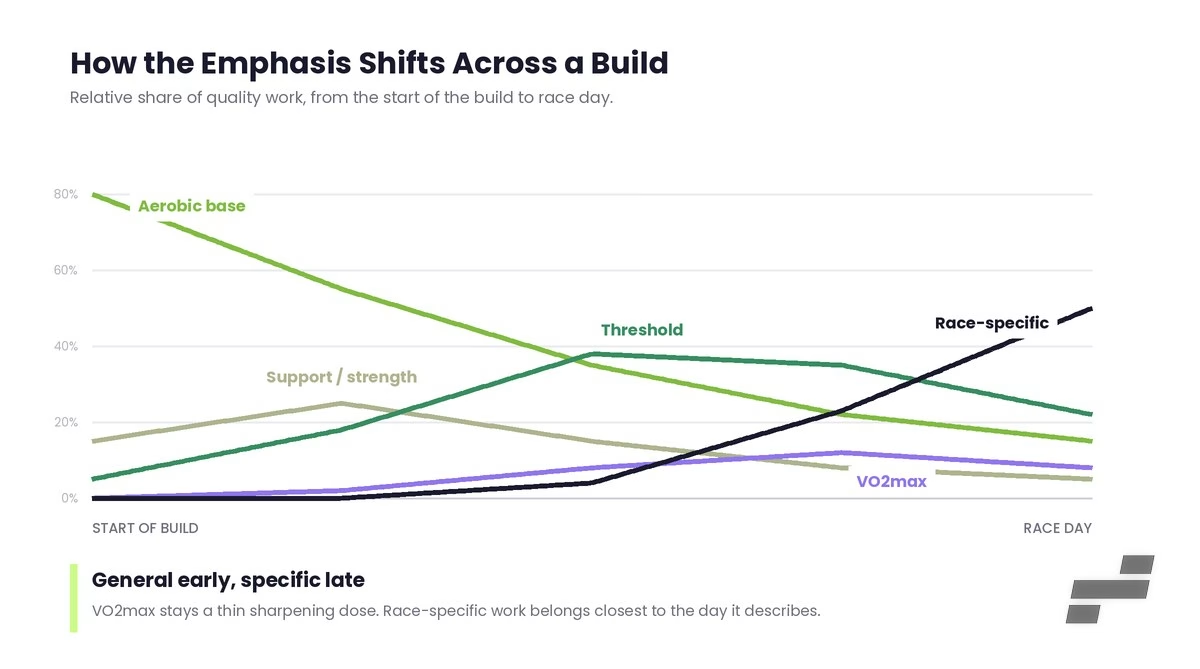
The emphases are usually described as moving from general to specific. The sequencing itself, which quality enters when and why race-specific work waits until last, is periodization’s subject; what matters for choosing an emphasis is what those two words, general and specific, point to. General work develops the broad qualities every distance shares: aerobic capacity, efficiency, the ability to keep going. Specific work rehearses the exact demands of the goal race, its pace, its duration, and the way it feels in the final third.
Specific is defined by the race, not by the workout. Threshold running is general preparation for a marathoner and nearly race-specific for a miler. A three-hour long run is specific for an ultra and pointless for a 5K. When a coach asks what a block should emphasize, the real question is how far that block sits from the goal race, and how close its work should therefore be to the exact thing the athlete is training to do.
The Italian coach Renato Canova gives this progression its sharpest expression. He frames a whole build as extension: the aim is to stretch how long an athlete can hold goal race pace until it covers the full distance. Paces are set as percentages of goal race pace rather than of current fitness, and as the race nears, slower endurance work and faster speed work both converge on race pace from either side. General and specific are not different kinds of training so much as the same target approached from a distance and then closed in on.
The Emphases, and the Workouts That Build Them
With that logic in hand, here are the emphases in the order they usually appear across a build, and the kind of session that carries each one. Treat the workouts as representative starting points rather than prescriptions; the structure matters more than the exact numbers, which you scale to the athlete.
| Emphasis | When (earlier → race day) | General → specific | Representative session |
| Aerobic base | Earliest; most of the build | General | Easy conversational volume; long run built gradually, capped near 2.5 h; 6-8 x 20s hill strides |
| Support and strength | Early to mid; brief, transitional | General | 8-12 x 25-45s hills at ~5K effort, jog-down recovery; 6 x 20s strides twice a week |
| Threshold and sub-threshold | Mid; the main build | General for the marathon, near-specific for shorter races | Sub-threshold 5-6 x 6 min or 8-10 x 1 km just under threshold, short rest; or 2 x 20 min at threshold |
| VO2max | Mid to late; small doses, a few weeks | Support (raises the ceiling) | 5-6 x 3 min at 3K-5K effort, equal jog; or 6 x 1 km near 5K pace |
| Race-specific | Final 6-8 weeks, into taper | Specific | Marathon: goal-pace blocks on tired legs, MP long-run finishes. 5K/10K: 5 x 1 km at 10K pace; 6-8 x 400 m at 5K effort |
Aerobic Base
This is the foundation and it gets the most weeks. The aim is to develop the aerobic engine, the capillary density, mitochondria, and fat metabolism that let an athlete hold a strong pace with room to spare. The work is mostly easy volume run at a genuinely conversational effort, below about seventy percent of max heart rate, plus a weekly long run built gradually. Keep the long run under about two and a half hours even as fitness grows; past that point it adds damage faster than endurance and steals recovery the rest of the week needs. A typical week here is easy running most days, one long run progressing week to week, and a light dose of economy work, for example six to eight times twenty seconds uphill at the end of an easy run. Nothing about this block is dramatic, which is part of why it is the one coaches cut short and later regret.
Support and Strength
As the base matures, a support block sharpens economy and structural resilience so the harder work to come can be absorbed rather than survived. Hills are the workhorse: short reps that build force without the pounding of flat speed. A representative session is eight to twelve times 25-45 seconds uphill at around 5K effort with an easy jog back down, or a set of longer hill reps for a stronger athlete. Strides two or three times a week, six by twenty seconds at a controlled fast pace, keep the legs quick without adding real fatigue. This block is brief and transitional; its job is to prepare the athlete for threshold and race-specific work, not to become a focus of its own.
Threshold and Sub-Threshold
For most distances this is the single largest lever on fitness, because it raises the pace an athlete can hold for roughly an hour. The modern approach spends time just under the lactate threshold rather than on top of it, which lets an athlete accumulate far more quality volume for the same fatigue. A sub-threshold session runs at an effort you could just sustain, around two and a half to three and a half millimoles of lactate if you measure, roughly five to ten seconds per kilometer slower than true threshold pace, broken into intervals: five to six times six minutes, or eight to ten times one kilometer, with short recoveries. Two of these a week is plenty, with the combined quality time held to about twenty to twenty-five percent of weekly volume and everything else kept easy. Traditional threshold blocks of two times twenty minutes at threshold still work; the sub-threshold version simply lets the athlete do more of it.
A useful field gauge is a continuous sub-threshold effort of ten to fourteen kilometers. Run closer to the duration and feel of the race than a brief threshold test, it exposes how well an athlete holds pace as fatigue builds, which is much of what the half marathon asks. If you want the anatomy of building one of these sessions well, how to structure a running workout session walks through it. Doubling threshold into two sub-threshold sessions in one day is a real method, but it is an advanced tool that demands a high base and a clean injury history; hold most athletes to one quality session per day.
VO2max
VO2max work raises the ceiling of the aerobic range, the top end that threshold work presses up against. It is a sharpening tool, used in smaller doses in the middle to late part of a build, not a base to be laid. A representative session is five to six times three minutes at 3K to 5K effort with equal jog recovery, or six times one kilometer near 5K pace, and the mechanics of interval sessions are worth getting right at this intensity. Two things keep it honest. It is expensive to recover from, so the dose stays small and rarely runs more than a few weeks. And it is a ceiling rather than a separate training zone; the three-zone model an athlete actually lives in is defined by the two thresholds beneath it, LT1 and LT2, with VO2max sitting above as a limit to nudge upward, not a boundary the everyday system is built around.
Race-Specific
This is where the blocks converge on the race, and what it contains depends entirely on the distance. For the marathon, specific work means sustained running at goal pace, often deliberately on moderately tired legs so the athlete rehearses the real problem of the event, holding pace when fresh is a memory. A long run with its final chunk at marathon pace, or a strength run slightly faster than goal pace after a few days of steady volume, both build that. Marathon-specific work also leans on fuel economy, teaching the body to spare glycogen at race effort, and it is the natural place to dial in a race-day fueling plan, where a tool like NooMinds helps translate the effort into actual carbohydrate targets. Aim the pacing toward a race that finishes strong: a well-run marathon or half is negatively split, and for most amateurs a realistic target is a final portion two and a half to three and a half minutes quicker than the first, with the closing 10K of a marathon its fastest stretch.
For 5K and 10K, specific work moves toward and just above race pace: five times one kilometer at 10K pace, or six to eight times four hundred meters near 5K effort with a little controlled work above threshold. Whatever the distance, this block belongs last, in the final six to eight weeks, closest to the day it describes.
Canova’s marathon work makes that extension concrete. Rather than chasing faster intervals, the athlete accumulates more and more volume at or near goal pace as the race approaches, until goal pace stops feeling like a target and starts feeling like a default. As race day nears, spend more of the quality budget at the exact pace the race will demand.
Putting the Emphases in Order
Put those emphases in order and a season stops being abstract. Take an intermediate marathoner with, say, sixteen working weeks before the taper and a three-to-one rhythm. The first block is aerobic base: easy volume, a long run climbing toward its cap, hill strides for economy. The second turns toward support and threshold, hills giving way to the first sub-threshold sessions as the base holds. The third is the threshold peak with race-specific work entering underneath it, sub-threshold volume at its highest and the first blocks of marathon-pace running appearing in the long run. The fourth is race-specific and then taper: marathon-pace long runs and strength runs, the last true long run at least three weeks out, then two to three weeks of falling volume into race day.
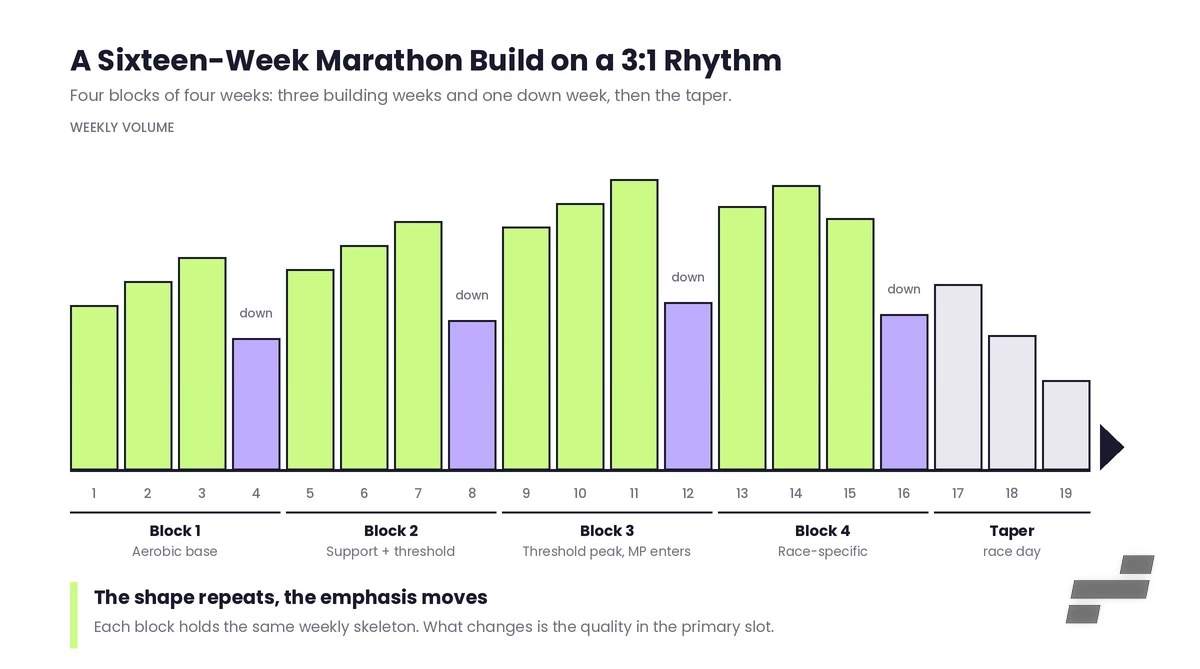
Notice what moves and what does not across those blocks. The structure barely changes, the same few quality slots, the same easy days, a long run anchoring the week. What changes is the emphasis in the primary slot and the anchor paces underneath it. As threshold fitness climbs, the pace that counts as threshold climbs with it, and marathon pace with it; the zones do not move, their anchor values do. A season is largely one well-built week run again and again, with the emphasis sliding toward the race and the numbers inside the week creeping up.
That is the ideal version, on a calendar that cooperates and an athlete who recovers on schedule. Most builds are not that, which is where the actual coaching starts.
When the Week Will Not Hold It
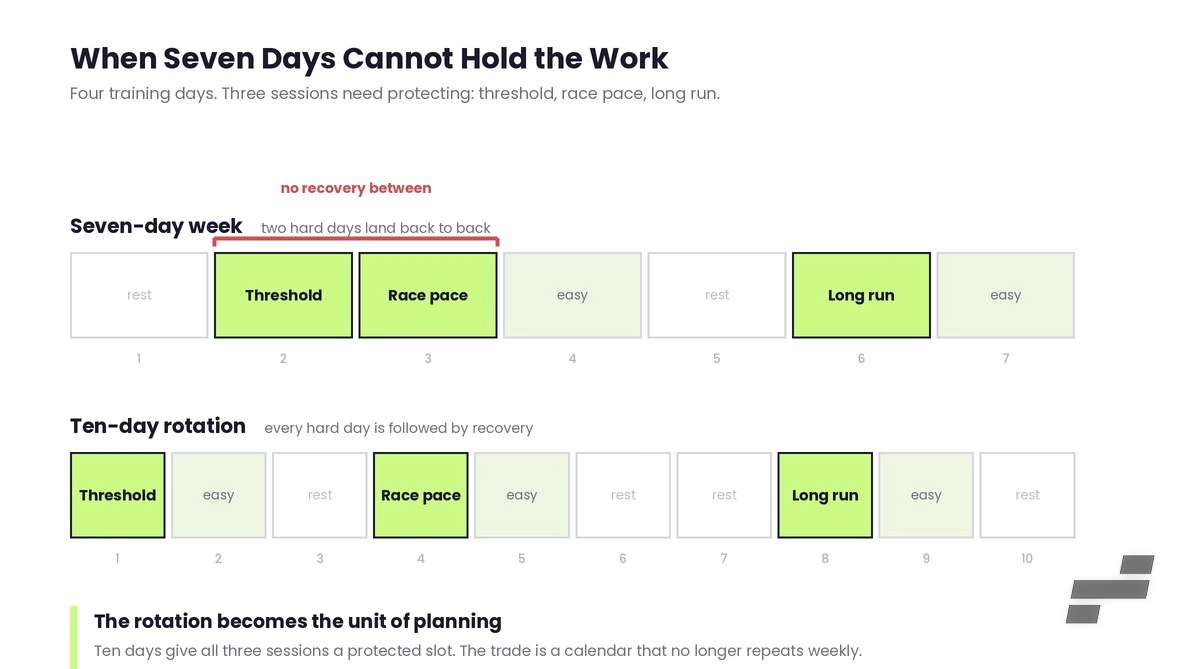
The difficulty is rarely that an athlete has only three or four days. It is that a block’s emphasis, its one supporting quality, the long run, and enough easy recovery all want a place in those days, and they do not all fit. The instinct is to squeeze everything into seven days, which forces quality onto back-to-back days and quietly converts development into fatigue. The better move starts with priority.
Prioritize Before You Squeeze
Protect the block’s primary emphasis first. It gets the best-recovered day and the protected slot, whatever else has to move. A second quality, the one the block is maintaining rather than building, takes a single low-frequency slot with easy days on either side. Everything else is easy volume, and easy volume earns its keep by aiding recovery and holding aerobic fitness, not by adding another dose of stress. And read the whole athlete, not just the log: recovery capacity is a life number, drawn down by sleep, work, and stress as much as by mileage, so the same plan sits differently on a night-shift parent than on a retiree.
When to Stretch the Microcycle
When the required quality simply will not fit a seven-day week with real recovery between hard days, stop forcing it into seven. Stretch the microcycle. A nine, ten, or fourteen-day rotation lets each hard session be followed by the recovery it needs, at the cost of a tidy weekly calendar. Take an athlete who can train four days a week and whose block needs a long run, a threshold session, and some race-pace work. Crammed into seven days, two of those land back to back and the third gets shortchanged. Spread across ten days, each gets its own protected slot with easy or rest days between, and the athlete absorbs all three instead of half-absorbing them. The rotation, not the week, becomes the unit of planning.
Spreading work across a longer rotation also makes the load harder to read at a glance, which is where an objective measure earns its place. The Spanish Objective Load Scale, or ECOs, from Cejuela and Esteve-Lanao, gives each session a single load number by weighting time in each intensity zone by intensity, the weight climbing steeply from easy running through threshold. Totalled across the rotation, it shows whether the work is genuinely spread or whether two hard days are still sitting too close together.
This is not a workaround for weak athletes; it is often the right structure for masters runners, whose recovery windows genuinely run longer, and for anyone balancing serious training against a full life. The seven-day week is a convention of the calendar, not a law of physiology. When it stops serving the training, a coach is free to set it aside.
Where the Arc Comes In
Most of what fills the hours when a coach opens a blank plan is the part just described as default: counting the weeks to the race, laying down the build-and-recover rhythm, spacing the blocks along the runway. That work has to be right, but it does not need a coach’s judgment, and it should not be where the judgment goes.
This is what the Training Arc in EndoGusto is built to carry. It counts the span from the race date and lays the building and down weeks out on a build-and-recover rhythm across the runway, so a coach starts from a sound structure rather than an empty grid. That leaves the coaching for the parts that actually need it: choosing each block’s emphasis, selecting the sessions that deliver it, and spreading them across the athlete’s real days without stacking fatigue. The Arc handles the calendar. The coach handles the athlete.
Build the Plan Your Athlete’s Week Can Hold
Set the race, let the Arc lay down the span and the rhythm, and put your attention where it counts, on the emphases each block carries and the life the plan has to fit around.

Build the Plan Your Athlete’s Week Can Hold
Suggested References
- Casado, González-Mohíno, González-Ravé & Foster (2022), Training Periodization, Methods, Intensity Distribution, and Volume in Highly Trained and Elite Distance Runners, IJSPP 17(6), 820–833.
- Casado, A., Foster, C., Bakken, M., & Tjelta, L. I. (2023). Does lactate-guided threshold interval training within a high-volume low-intensity approach represent the “next step” in the evolution of distance running training? International Journal of Environmental Research and Public Health, 20(5), 3782. https://doi.org/10.3390/ijerph20053782
- Faude, O., Kindermann, W., & Meyer, T. (2009). Lactate threshold concepts: How valid are they? Sports Medicine, 39(6), 469–490. https://doi.org/10.2165/00007256-200939060-00003
- Llanos-Lagos, C., Ramirez-Campillo, R., Moran, J., & Sáez de Villarreal, E. (2024). Effect of strength training programs in middle- and long-distance runners’ economy at different running speeds: A systematic review with meta-analysis. Sports Medicine, 54(4), 895–932. https://doi.org/10.1007/s40279-023-01978-y
- Cejuela, R., & Esteve-Lanao, J. (2011). Training load quantification in triathlon. Journal of Human Sport and Exercise, 6(2), 218–232.
- Cardona, C., Cejuela, R., & Esteve-Lanao, J. (2019). Manual para entrenar deportes de resistencia. All In Your Mind Training System.
- Magness, S. (2014). The science of running: How to find your limit and train to maximize your performance. Origin Press.
- Kjaer, M., Langberg, H., Heinemeier, K., Bayer, M. L., Hansen, M., Holm, L., Doessing, S., Kongsgaard, M., Krogsgaard, M. R., & Magnusson, S. P. (2009). From mechanical loading to collagen synthesis, structural changes and function in human tendon. Scandinavian Journal of Medicine & Science in Sports, 19(4), 500–510. https://doi.org/10.1111/j.1600-0838.2009.00986.x