Hill Repeats for Running: The Variables That Shape Strength and Speed Gains

Hill repeats are a family of sessions, not a workout. Grade, rep duration, recovery length, and rep count are the four dials, and each combination points the work at a different system. Eight seconds up a steep pitch with a full walk-down trains force production and recruitment. Three minutes up a moderate grade with a jog-down recovery trains aerobic power.
That range is also what makes hill repeats workable almost anywhere. An athlete with one rise near home and 40 minutes to spend can train force one block and aerobic power the next, because three of the four settings move independently of the terrain. Sessions built around the hill and the time an athlete actually has get run week after week, and that consistency is where the adaptation comes from.
This article treats the hill session as a set of decisions rather than a workout to copy. It covers what inclines change physiologically, how each of the four variables shifts the training target, three complete sessions, where hill work belongs across a season, what the data from a rep actually tells you, and how to progress the work without breaking the athlete.
Key Takeaways for Coaches
- Grade, rep duration, recovery length, and rep count are the four variables that determine whether a hill session trains maximal strength, aerobic power, or speed endurance.
- Short steep efforts of 8 to 12 seconds with full rest for recovery build force production and recruitment while creating almost no metabolic fatigue.
- Hill repeats of 1 to 4 minutes on moderate grades deliver VO2max-level work at lower impact forces than the same intensity run on flat ground.
- Recovery length is the dial that reclassifies a session; shortening it turns neuromuscular work metabolic, which changes the target rather than just the difficulty.
- Progress one variable at a time, extending duration, adding reps, or steepening grade in separate steps, never two in the same week.
- Rep-to-rep pace or power decay on a fixed hill is the cleanest stop signal available in the file.
What Hill Repeats Train, and Why the Terrain Does the Work
Hill repeats are structured uphill efforts, run hard and repeated, with a descent or rest between them. The incline raises the force each stride must produce, so the session builds leg strength, power, and running economy alongside its cardiovascular effect. At the same running speed, the incline also removes much of the impact spike that flat running produces at footstrike, which is why coaches use hills as running-specific resistance training.
Every stride uphill has to lift the athlete’s body mass against gravity, so the propulsive muscles work harder per step while ground contact stays comparatively gentle. Gottschall and Kram (2005) measured this directly, running ten athletes on a force treadmill set level and on inclines up to 9 degrees, about 16 percent. Propulsive force peaks rose by 75 percent on the steepest grade, while the impact force peak disappeared altogether. For a coach, that is the trade in one sentence: more push, less landing shock, at a fixed speed. As a result, the session loads the muscular and neuromuscular systems in ways flat running rarely reaches, yet spares the tissues that fast flat running stresses most. The heart and lungs respond to the workload, not the speed, so the cardiovascular system receives a full interval stimulus even though the pace on the watch looks slow.
The research on uphill running workouts supports both effects at once. Barnes, Hopkins, McGuigan, and Kilding (2013) assigned twenty well-trained runners to five different uphill interval programs across six weeks, ranging from long moderate climbs to short steep sprints, and found improvements in running economy and 5 km time-trial performance across the intensity spectrum. The dose-response design matters more than the headline number. Different programs shifted different measures, aerobic in some, neuromuscular in others, which is evidence that the variables of a hill session determine what it trains.
A hill is not a workout; it is a resistance setting. Its grade determines which sessions are available on it, and duration, recovery, and rep count determine which one the athlete actually runs.
The Four Variables of a Hill Repeat Workout
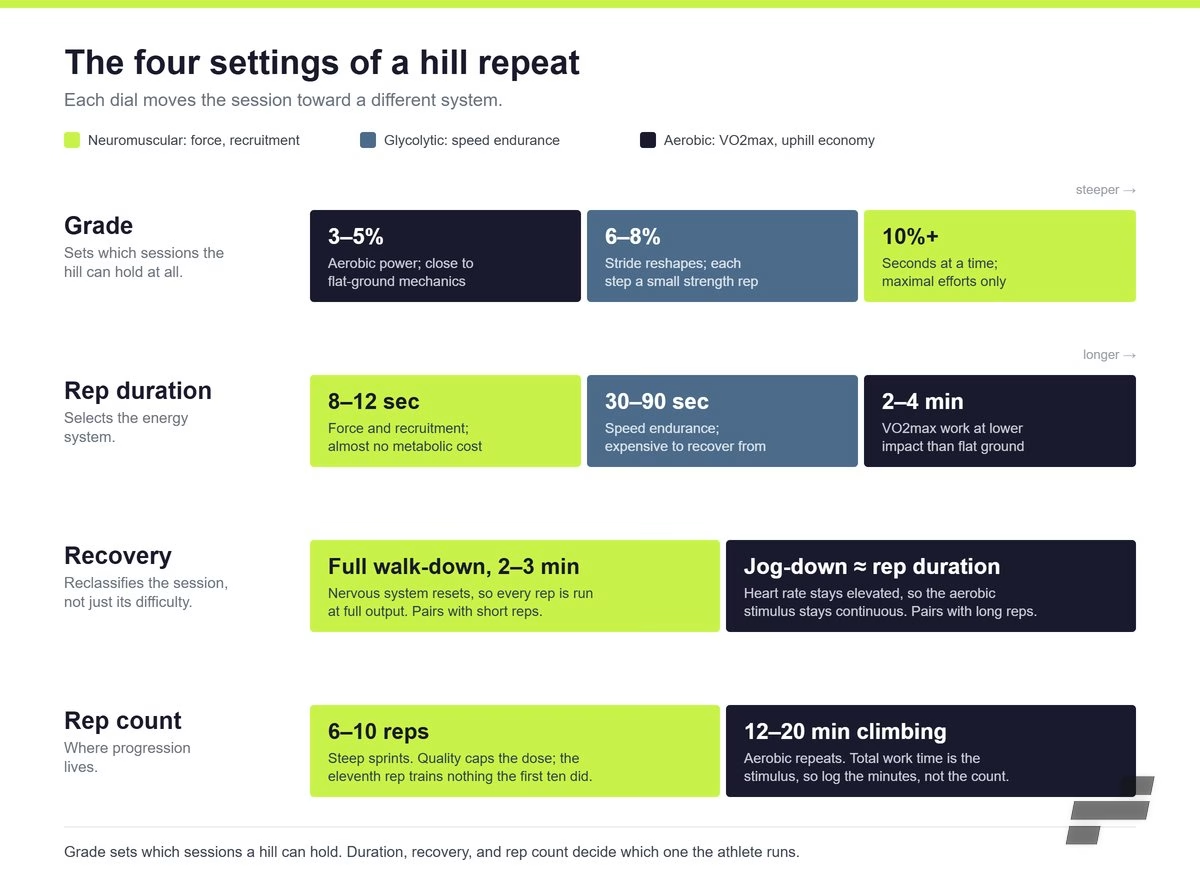
Every hill session is a combination of four settings: how steep, how long, how much recovery, and how many times. Coaches who prescribe hill repeats by naming the four values, rather than by naming a hill, keep control of what the session trains.
Grade
Grade determines what kind of effort is mechanically possible. On a 3 to 5 percent slope, an athlete can still run with something close to flat-ground mechanics, so the grade adds resistance without rebuilding the stride. This is the range for longer repeats, where the goal is aerobic power and the incline’s job is to raise workload while capping impact. At 6 to 8 percent, stride mechanics change meaningfully; knee drive rises, the foot lands under a more flexed leg, and each step becomes a small strength exercise. Beyond 10 percent, running at speed stops being sustainable for more than seconds at a time, which makes steep pitches the natural home of short maximal efforts and nothing else.
One hill covers more of that range than its number suggests. Take an athlete whose only option is a 4 percent rise. Reps of 3 minutes there deliver aerobic power exactly as prescribed, and 10-second maximal efforts on that same slope still recruit high-threshold fibers, though at higher speed and lower force per stride than the same effort on a 10 percent pitch. The emphasis shifts toward speed rather than disappearing. A steeper stretch, a stairwell, or a parking ramp sharpens the force end when a block asks for it.
Rep Duration
Duration selects the energy system. Efforts of 8 to 12 seconds end before meaningful lactate accumulates, so the work stays neuromuscular; the athlete trains force output and fiber recruitment while the metabolic cost stays close to zero. Stretch the rep to 30 to 90 seconds and the session moves into glycolytic territory, hard and fatiguing, useful for speed endurance and race-specific strength but expensive to recover from. At 2 to 4 minutes, the reps function as VO2max intervals with the impact advantage of the slope; this is where hill interval training overlaps with classic flat interval work, covered in depth in Interval Training for Running. The bands are not interchangeable. A coach who wants strength and prescribes 60-second reps gets fatigue instead, because duration, not intention, determines the stimulus.
Recovery
Recovery is the dial that reclassifies the session. A full walk-down after a 10-second effort, often 2 to 3 minutes, lets the nervous system reset so the next rep is performed at full output. Shorten that recovery and output drops, and the session quietly stops training maximal force; it becomes metabolic conditioning at a lower quality of movement. For longer repeats the logic inverts. A jog-down recovery of roughly the rep’s own duration holds heart rate elevated and keeps the aerobic stimulus continuous, whereas a long standing rest fragments it. So the rule reads simply: short reps earn long recoveries, long reps earn short ones, and cutting recovery to make a session “harder” changes what the session is, not just how it feels.
Rep Count and Total Volume
Rep count is where progression lives, and its meaning depends on which end of the spectrum the session sits. For steep sprints, volume caps are strict because quality is the entire point; 6 to 10 reps is a full dose, and the eleventh rep at diminished output trains nothing the first ten did not. For aerobic repeats, volume is the stimulus itself, so total climbing time matters more than the count; 12 to 20 minutes of accumulated uphill work is a substantial session for most distance runners. Consequently, “add a rep” is a small adjustment at one end and a meaningful load increase at the other. Coaches tracking weekly load should log hill sessions by total work time and grade, not by rep count alone, because eight reps can describe a four-minute session or a half-hour one.
Three Hill Repeat Sessions and What Each One Builds
Set together, the four variables answer one question: what is this session for? The three sessions below answer it three different ways, each a complete prescription a coach can assign as written.
| Session | Grade | Effort | Recovery | Target adaptation |
| Strength: 7 × 10 seconds | 10–12% | Near-maximal effort, full mechanics | 3-minute walk-down | Force production, recruitment, stiffness |
| Aerobic power: 5 × 3 minutes | 4–5% | Strong and even, roughly 10K effort | Jog-down, ~3 minutes | VO2max, uphill economy |
| Speed endurance: 2 × (4 × 45 seconds) | 6–7% | Hard, controlled to the top | 90-second jog-down; 5 minutes between sets | Sustained high output, race-specific strength |
The strength session lives or dies on output quality. Every rep should look like the first one: aggressive knee drive, full arm swing, no grinding. The 3-minute walk feels excessive to athletes and is exactly right; the moment reps start slowing, the session is over regardless of the number remaining. Because the metabolic cost is minimal, this session pairs well with an easy run the next day and slots into weeks where the aerobic load is already high.
The aerobic power session is an interval workout wearing different clothes. The 4 to 5 percent grade lets the athlete hold honest mechanics for the full 3 minutes while the slope does the intensity work. Even pacing matters here; a rep that starts too hard decays visibly, and the decay compounds across five reps in a way flat intervals partially hide. On a treadmill, the same session runs at 4 to 5 percent incline with the belt speed held constant across reps, which makes it one of the easiest quality sessions to replicate indoors.
The speed endurance session is the most expensive of the three and the least frequently needed. Forty-five seconds at a hard effort on a 6 to 7 percent pitch accumulates lactate fast, and the set structure exists to keep quality from collapsing in the back half. This is a session for a race-prep block, not a habit, and it earns its cost only when the goal race actually demands surging or sustained climbing.
On the longer hill sessions the downhill is recovery, run slow and relaxed. Downhill running at speed is its own stimulus, eccentric and heavily quad-loading, and belongs in a plan only as a specific choice for a descent-heavy goal race, introduced in small doses because the soreness cost is real.
Where Hill Work Sits Across the Season
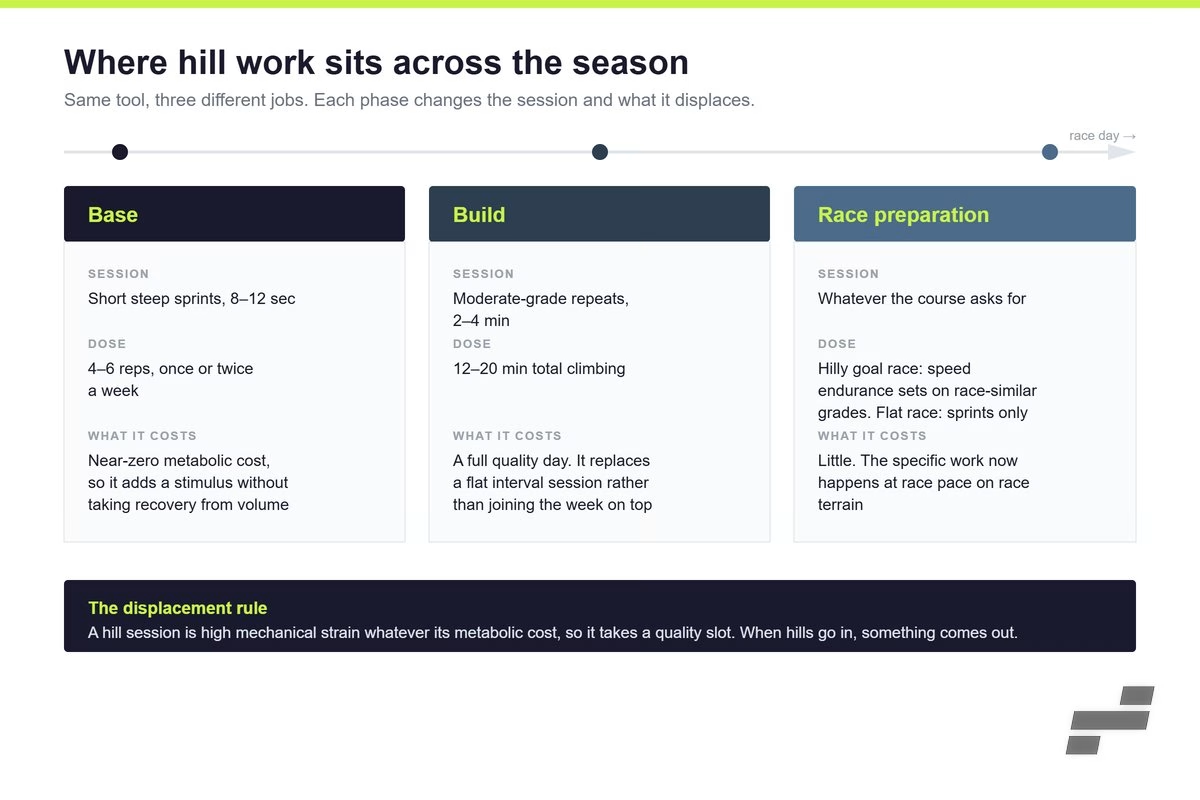
Hill repeats earn a place in every phase of the season, with the session changing as the athlete’s focus does. The phase structure itself, and the decisions behind it, are covered in Running Periodization; what belongs here is which hill work fits where, and what it displaces when it arrives.
In the base phase, hills serve strength. Short steep sprints in small doses, once or twice a week at 4 to 10 reps, build force and protect neuromuscular sharpness while the aerobic volume climbs around them. Their near-zero metabolic cost is the reason they fit; they add a stimulus the easy miles don’t provide without stealing recovery from the work that defines the phase: the long aerobic development described in Base Training in Running.
In the build phase, the aerobic power session takes over. Repeats of 2 to 4 minutes on moderate grades can carry a share of the week’s VO2max work, and for athletes with a history of impact-related injuries they can carry most of it, since the slope delivers the intensity at lower ground forces. However, this version of hill work is a full quality session and must be counted as one. It replaces a flat interval day; it does not join the week on top of one.
In race preparation, hill work narrows to what the goal race demands. A hilly course justifies speed endurance reps and rehearsal on race-similar grades. A flat goal race justifies almost nothing beyond maintenance sprints, because the specific work now happens at race pace on race terrain.
The displacement principle holds across all three phases, and it is the one that keeps athletes healthy. A hill session is high mechanical strain whatever its metabolic cost, so it occupies a quality slot in the week. When a coach adds hills, something comes out: an interval day, a tempo, or a portion of volume. The plans that break athletes are the ones where hills arrive as a bonus.
Reading Hill Repeats From the Data
A hill rep produces the most misleading pace numbers in an athlete’s file and some of the most useful ones, depending on what is being read. Raw pace on a climb is noise; a 4:50 per kilometer split on an 8 percent grade and the same split on flat road describe two different athletes. Grade-adjusted pace corrects for the slope and turns the number back into a comparable measure of output, which makes it the first field worth checking on any uphill running workout reviewed remotely.
Running power, where available, steers uphill work better than pace ever will. Power responds to workload directly, so it stays stable across a climb of varying steepness while pace swings with every change in grade. For repeat sessions this stability matters twice over: it lets an athlete hold even output within a rep, and it lets the coach compare rep one against rep seven without correcting for anything. On EndoGusto, where intensity is read from pace and power before heart rate, hill sessions are exactly the case that ordering exists for.
Heart rate earns its place last for a structural reason. Bunc, Heller, and Leso (1988) measured how long the response takes to arrive and found that trained athletes need about 24 seconds just to reach half of it, with untrained subjects closer to 47. A 10-second hill sprint is finished before heart rate is halfway to the truth, and even a 3-minute rep spends its opening third registering artificially low. Heart rate tells a useful story about the session’s total cost afterward; it cannot direct a rep while it happens.
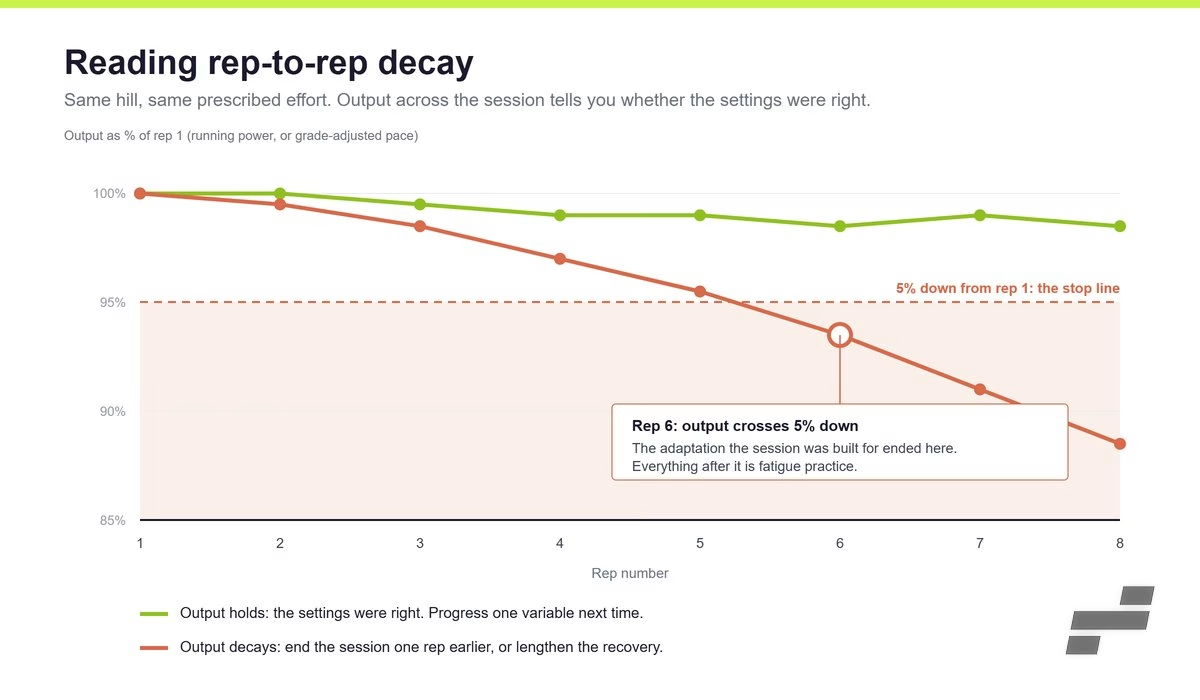
The single most valuable signal in a hill file is rep-to-rep decay. On a fixed hill with fixed effort, output should hold nearly flat across the session. When power or grade-adjusted pace drops 5 percent or more from the early reps, the athlete has left the adaptation the session was built for, and everything after that point is fatigue practice. A coach reviewing files can spot the decay point in seconds, and the fix is simple: next time, the session ends one rep earlier, or the recovery gets longer.
Progressing Uphill Running Workouts Without Breaking the Athlete
Hill progression follows one rule that outranks all others: move one variable at a time. Extend the reps, or add a rep, or steepen the grade, and then hold the other settings until the athlete absorbs the change. Two variables moved in the same week create a load jump the coach can no longer attribute, so when the Achilles complains ten days later, there is no way to know which change caused it or which one to walk back.
The order of progression depends on the goal. On the strength path, duration stays fixed near 10 seconds permanently, because lengthening it abandons the neuromuscular target; progression runs through rep count first, from 5 toward 10, and grade second, only after output holds flat across a full set. On the aerobic path, the sequence inverts: total climbing time grows first, through longer or additional reps, while grade stays moderate, since steepening an aerobic session mostly degrades mechanics without adding useful stimulus.
The eager responder is one failure mode: three weeks into hill work and feeling strong, the athlete steepens the pitch and stretches the reps in the same session because both felt easy separately. The combined jump in tendon load arrives on a structure still adapting to the first dose, and the calf strain that follows reads as bad luck when it was arithmetic. The quieter failure is the athlete whose recovery jog down the hill quickens each week until the file shows no recovery at all, just 40 minutes of continuous hard running. The session drifted from repeats to a threshold grind, and the flat, fatigued reps in the back half were the evidence.
The Hill Session You Write Next
The next hill session you write is a chance to test the model against one athlete. Pick the adaptation the athlete actually needs for this block, set the four variables to serve it, and write the numbers into the plan rather than the hill’s name. Then read the file afterward with one question: did output hold across the reps? If it held, the settings were right and the progression rule says which dial moves next. If it decayed, you’ve found the athlete’s current edge, which is information worth more than the workout itself. Coaches who run this loop for a season end up with something better than a favorite hill workout; they end up knowing, for each athlete, exactly what a given slope is for.

Set hill sessions by output, not guesswork
Suggested References
- Barnes, K. R., Hopkins, W. G., McGuigan, M. R., & Kilding, A. E. (2013). Effects of different uphill interval-training programs on running economy and performance. International Journal of Sports Physiology and Performance, 8(6), 639–647. https://pubmed.ncbi.nlm.nih.gov/23538293/
- Bunc, V., Heller, J., & Leso, J. (1988). Kinetics of heart rate responses to exercise. Journal of Sports Sciences, 6(1), 39–48. https://doi.org/10.1080/02640418808729792
- Gottschall, J. S., & Kram, R. (2005). Ground reaction forces during downhill and uphill running. Journal of Biomechanics, 38(3), 445–452. https://pubmed.ncbi.nlm.nih.gov/15652542/