Full-distance Triathlon Length and Training Load Decisions

Intro
Somewhere around week fourteen of a full-distance build, a coach notices the pattern. The athlete is hitting every session. Volume is climbing on schedule. Long rides are getting longer. Then the long run goes sideways. Not catastrophically, just a few minutes slower, heavier legs, a text message afterward that says “felt flat from the start.” The training log looks fine. The athlete does not. This is the central tension in full-distance triathlon length.
The race itself, 3.8 km of swimming, 180 km of cycling, and 42.2 km of running, is fixed. What is not fixed is the athlete’s capacity to absorb the preparation required to complete it well. Two athletes targeting the same ten-hour finish time may need radically different weekly structures. One absorbs fourteen hours without trouble. The other breaks down at twelve unless recovery is carefully managed.
Most training plans solve for distance. They count backward from race day and fill weeks with progressively longer sessions. However, the coaches who produce consistent full-distance results tend to solve for a different problem: how much organized stress can this specific athlete absorb, and where should it be placed? This article offers a practical framework for making those decisions.
Key Takeaways for Coaches
- Full-distance triathlon length is governed by time under stress, not distance on paper.
- Long ride placement anchors the week; everything else protects it or builds toward it.
- Fueling capacity directly modifies how much training load an athlete can tolerate.
- Recovery weeks function as structural tools that consolidate adaptation, not as passive breaks.
- Why run frequency protects durability better than extending the long run.
What the Full-Distance Triathlon Length Actually Demands
The numbers are familiar to most coaches. A 3.8 km swim, a 180 km bike, and a 42.2 km marathon, often referred to collectively as IRONMAN triathlon length. For age-group athletes, race durations typically fall between nine and fourteen hours. That range matters because it reframes the coaching problem. This is not a fitness test. It is an exercise in sustained output management.
This distinction changes the coaching problem. At sprint distance, a fifteen-second pacing error on the bike might cost thirty seconds on the run. At full distance, riding just eight watts above sustainable power for the first ninety kilometers can quietly drain glycogen reserves and cost fifteen to twenty minutes across the marathon. The scale of consequence grows with the scale of duration, and that is why full-distance triathlon length reshapes training decisions from the ground up.
Why Duration Changes the Training Problem
As race distance increases from sprint through full, weekly volume grows, but so does the complexity of managing it. At sprint distance, a coach sequences three or four quality sessions around recovery days. At full distance, the coach must also account for how a Tuesday threshold swim interacts with a Thursday tempo ride, which interacts with Saturday’s four-hour endurance ride, which determines whether Sunday’s ninety-minute run produces adaptation or just fatigue.
The practical consequence is that session placement matters as much as session content. A well-designed sixteen-hour week can produce better outcomes than a poorly sequenced twenty-hour one. Preparing for the full-distance triathlon length therefore rewards planning precision over raw volume accumulation.
How Training Demands Shift Across Formats
The table below illustrates how training emphasis changes as race distance increases. Coaches can use it as a quick reference when shifting an athlete between formats.
| Distance | Typical Weekly Hours | Primary Stress Type | Central Planning Focus |
| Sprint | 6–8 hours | High relative intensity | Speed development + recovery density |
| Olympic | 8–10 hours | Mixed intensity + volume | Pacing discipline + load balance |
| 70.3 (Half) | 10–14 hours | Sustained sub-threshold load | Fueling execution + durability |
| Full-Distance triathlon length (IRONMAN) | 12–18+ hours | Extended time under stress | Fatigue management + progression control |

Manage Full-Distance Load With Clarity
A Training Load Framework for the Full-Distance Triathlon Length
Many coaches begin full-distance planning by setting weekly hours. Start with twelve, build to sixteen, peak at eighteen. However, that approach treats all athletes as interchangeable. A more effective sequence begins with the athlete, not the calendar.
Step 1: Profile the Athlete
Every full-distance athlete arrives with a specific combination of strengths and vulnerabilities. A former competitive cyclist might have a deep aerobic base on the bike but limited run resilience. A marathon runner moving into triathlon might tolerate high weekly run volume but lack the positional endurance for five hours in aero. A younger athlete with two years of Olympic-distance experience might have the fitness to absorb higher loads but lack the patience to execute conservative long sessions.
Profiling is not about categorizing athletes into boxes. It is about identifying which part of the full-distance triathlon training load will challenge them most, so the plan addresses that constraint first.
Step 2: Identify the Primary Limiter
Before expanding volume, coaches should answer one question: what will most likely compromise this athlete’s race? Common limiters at full distance include late-race energy collapse (typically a fueling problem), run form deterioration after the bike (a durability or pacing problem), inability to recover between key training sessions (a load management problem), and gastrointestinal breakdown under race-intensity carbohydrate intake (a gut tolerance problem).
The limiter shapes the entire build. For instance, if an athlete’s primary limiter is gut tolerance, the training architecture should integrate progressive carbohydrate loading into long rides from the earliest build phase, rather than treating nutrition as a separate race-week concern.
Step 3: Match Load Decisions to the Limiter
Once the limiter is identified, training load decisions become more specific. If run resilience is the concern, the plan emphasizes run frequency (five sessions per week rather than three) while keeping individual run duration moderate. When recovery capacity is the bottleneck, the plan reduces intensity density, perhaps dropping from three hard sessions per week to two, before adding total hours. If sustained power is the issue, the long ride includes more structured steady-state blocks rather than simply extending duration.
This approach inverts the common planning sequence. Instead of asking “how much should the athlete train?” the coach asks “what should training specifically address, and how much volume does that require?”
The Long Ride as the Structural Anchor
In preparing for the full-distance length, the long ride typically becomes the most important session of the week. Everything else in the microcycle either builds toward it or recovers from it. However, the long ride is not a single-purpose session. Its intent should evolve across the training block.
Early Build: Aerobic Foundation and Fueling Introduction
In the first four to six weeks, long rides of 2.5-3 hours serve two purposes. First, they develop steady aerobic output at a heart rate and power the athlete can sustain without drift. Second, they introduce fueling practice. At this stage, the athlete might target 50 grams of carbohydrate per hour, focusing on timing and tolerance rather than maximizing intake.
Mid Build: Structured Endurance and Metabolic Progression
As the block progresses, rides extend to 3.5-4.5 hours. Coaches embed 20-30 minute tempo segments within the aerobic effort. These blocks teach the athlete to maintain controlled output when concentration drifts and legs grow heavy. Simultaneously, carbohydrate targets increase, perhaps to 70 grams per hour, so the athlete practices absorbing fuel under genuine fatigue rather than fresh conditions.
Late Build: Race Simulation and Confidence Building
In the final weeks before taper, the long ride becomes a rehearsal. Duration reaches 4.5-5.5 hours. The athlete executes race-intended pacing, full fueling protocols (80 to 90+ grams per hour where tolerated), and maintains positional discipline throughout. Coaches should watch for power variability, cadence decay, and fueling compliance. These sessions build confidence as much as fitness. An athlete who has successfully executed a five-hour ride at race pace, with race nutrition, arrives at the start line trusting the process.
Long Run Progression: Frequency Over Distance
The marathon at full distance is where preparation either holds together or falls apart. Cardiovascular capacity is almost never the limiting factor. Instead, athletes fail because connective tissue breaks down, running mechanics deteriorate under accumulated fatigue, or conservative pacing collapses in the final twelve kilometers.
For this reason, full-distance triathlon training load for the run should prioritize frequency and consistency over aggressive single-session extension. An athlete who runs five times per week, with a longest run of 100 minutes, builds more structural resilience than one who runs three times per week but regularly pushes to 2.5 hours. Tendons and ligaments respond to repeated moderate stimulus. They do not respond well to infrequent high-volume stress. As explored in our article on building aerobic endurance for full-distance triathlon racing, durability under prolonged stress is what separates a controlled marathon from a survival march.
Managing Brick Sessions for Run Quality
Brick sessions, where a run immediately follows a bike ride, deserve particular attention at full distance. Their purpose is not to simulate race duration. A 15-20 minute run after a long ride teaches the athlete to find rhythm on pre-fatigued legs, to stabilize cadence when everything feels heavy, and to resist the urge to push pace before the body has adjusted. Coaches should keep brick runs short and controlled in the early build, then gradually extend them as the athlete’s durability improves. A common error is prescribing 45 minute brick runs too early, which generates orthopedic stress without proportionate adaptation.
Fueling as a Training Load Modifier
Fueling is often treated as a race-day concern, separate from training structure. At the full-distance triathlon length, though, it functions as a genuine load modifier. Two athletes can complete identical four-hour rides. If one takes in 80 grams of carbohydrate per hour and the other takes in 40, their recovery timelines will differ substantially. The underfueled athlete may need forty-eight hours before they can produce quality output again. The well-fueled one might be ready in twenty-four.
This has direct implications for weekly training load capacity. An athlete who fuels properly during long sessions can absorb more total weekly volume because individual sessions cost less in recovery terms. Coaches should therefore treat fueling progression as a parallel track alongside volume progression, not an afterthought.
Progressive Gut Training
Research from Jeukendrup (2017) has demonstrated that the gut adapts to carbohydrate intake during exercise, increasing gastric emptying rate and intestinal absorption with consistent practice. Coaches should begin fueling rehearsals at least eight to ten weeks before race day, starting at 50 grams per hour and increasing by 5 to 10 grams per week. The goal is for the athlete to comfortably tolerate their race-day target (typically 80 to 90 grams per hour) at race intensity by the final long rides. Athletes who skip this progression and attempt high intake on race day are gambling with a variable they could have controlled.
Recovery as Architectural Design
Recovery at full distance is not something that happens between hard days. It is a structural element of the entire plan. Weekly volume at this level is high enough that even moderate sessions contribute to cumulative load. Accordingly, coaches need to think about recovery in layers: within-week recovery days, scheduled deload weeks, and longer absorption phases before race-specific blocks.
Deload Weeks as Planning Tools
Most full-distance athletes benefit from a deload every three to four weeks, with volume reduced by roughly 20 to 30 percent. The mistake many coaches make is treating these weeks as lost time. They are not. Deload weeks are when the body consolidates the work from the preceding block. Skip them consistently, and the athlete may still look fine at week ten but fall apart at week fourteen.
An effective deload preserves session frequency but reduces duration. Instead of eliminating the long ride entirely, for example, the coach shortens it from five hours to three and drops the intensity targets. The swim stays at the same number of sessions but with shorter main sets. The run keeps its usual days but pulls back to easy aerobic efforts. This maintains training rhythm while allowing physiological absorption. As covered in our guide on triathlon periodization and burnout prevention, the pattern of loading and unloading is what makes long-term progression sustainable.
Monitoring Fatigue Before It Becomes a Problem
Cumulative fatigue at full-distance volumes rarely announces itself with a single bad workout. Instead, it shows up as a pattern: resting heart rate creeping up two to three beats per minute across a week, pace-to-heart-rate ratios drifting in the wrong direction, or an athlete reporting that sessions feel harder despite stable external metrics. Coaches who wait for a dramatic breakdown have waited too long.
Simple tracking helps. A weekly check of HRV trends, a short subjective wellness questionnaire, and one or two benchmark sessions per mesocycle (such as a repeatable 20-minute threshold test on the bike) give coaches enough signal to intervene early. If multiple markers point downward simultaneously, the right response is usually to insert an unscheduled recovery day or bring the deload forward rather than push through.
Full-Distance Training Load Decisions at a Glance
The following table summarizes key load variables coaches manage across a full-distance build, along with practical guidelines and the consequences of getting them wrong.
| Variable | Coaching Guideline | Risk if Mismanaged |
| Long Ride Progression | Increase 15–20 min per block; embed tempo in mid/late build | Structural overload; accumulated fatigue carryover |
| Long Run Growth | Conservative weekly extension; prioritize frequency | Tendon stress; Achilles and IT band injury |
| Intensity Placement | Buffer threshold sessions 48+ hours from long sessions | Compromised long-session quality; poor recovery |
| Brick Frequency | Short early bricks (15–20 min); extend in late build | Early overuse; run-form breakdown |
| Weekly Volume Growth | 5–10% increase across training blocks | Chronic fatigue; hormonal disruption |
| Recovery Weeks | Every 3–4 weeks; 20–30% volume reduction | Performance plateau; illness risk |
| Fueling Integration | Progressive carb scaling from 50 to 90 g/hr | GI distress on race day; energy collapse |
Three Coaching Scenarios in Practice
Theory is useful. Application is better. The following scenarios illustrate how the framework above translates into concrete training decisions.
Scenario 1: The Cyclist Who Cannot Run
Athlete profile: a forty-two-year-old former road cyclist with a 280-watt FTP and strong aerobic base on the bike. Run history is limited to two years of inconsistent training. Longest run in training is seventy-five minutes before knee soreness appears.
The limiter here is structural run resilience. The coaching response is to maintain bike aerobic volume (which costs little in terms of orthopedic stress) while building run frequency to five short sessions per week. Three of those sessions stay under forty-five minutes. The long run progresses conservatively, adding five minutes every two weeks rather than the ten minutes per week that the athlete’s cardiovascular fitness could handle. Brick runs start at ten minutes and stay there for four weeks before extending to fifteen. The athlete’s cardiovascular system is not the constraint; their connective tissue is.
Scenario 2: The Fader
Athlete profile: a 36-year-old with three half-distance finishes. Strong first-half splits in every race. Marathon pace collapses after kilometer twenty-five with reported dizziness and loss of concentration.
This profile suggests two overlapping limiters: fueling execution and sustained aerobic output. The coaching response focuses the long ride on metabolic discipline. From week one of the build, the athlete practices carbohydrate intake at escalating targets: 55 grams per hour in weeks one through three, 65 in weeks four through six, 75 in weeks seven through nine, and 85+ in the final race-specific block. Simultaneously, long rides include progressively longer steady-state segments at race power, teaching the athlete to maintain output when fuel is being processed and concentration wanders. This athlete does not need more volume. They need better execution during the volume they already handle.
Scenario 3: The Plateau
Athlete profile: a 39-year-old preparing for a second full-distance race. Training volume has increased from fourteen to seventeen hours per week, yet benchmark sessions (a monthly thirty-minute bike time trial and a monthly ten-kilometer run) show no improvement across six weeks.
Stagnation despite rising volume almost always signals insufficient recovery. The coaching response is to insert an unscheduled deload week immediately, reducing volume to twelve hours. After the deload, the plan restructures to cap at fifteen hours, with clearer separation between hard and easy days. Specifically, the athlete was running “easy” sessions at a pace that still generated moderate cardiovascular load, which blunted the adaptation stimulus from their harder sessions. Lowering easy-day intensity (running truly easy, cycling truly easy) and concentrating quality into fewer, sharper sessions typically restarts progression within three to four weeks.
Where Intensity Fits in Full-Distance Preparation
Full-distance racing is predominantly aerobic. At race intensity, most athletes operate between 55 and 68% of FTP on the bike and well below lactate threshold on the run. Consequently, some coaches conclude that intensity work has no place in full-distance preparation. This is a mistake.
Targeted tempo and threshold sessions serve specific purposes even in a long-course build. Tempos improve neuromuscular efficiency, allowing the athlete to produce the same watts at lower perceived effort. They raise the sustainable ceiling, so that race pace sits at a more comfortable fraction of capacity. They also break the monotony of long aerobic blocks, which helps athletes stay engaged through twenty-week preparation cycles.
The key is placement. A twenty-minute threshold effort on the bike should land at least forty-eight hours before the next long ride. A tempo run should not follow a high-volume bike day. Intensity supports the long-session architecture. It should never compromise it.
Structuring a 16 to 24 Week Full-Distance Build
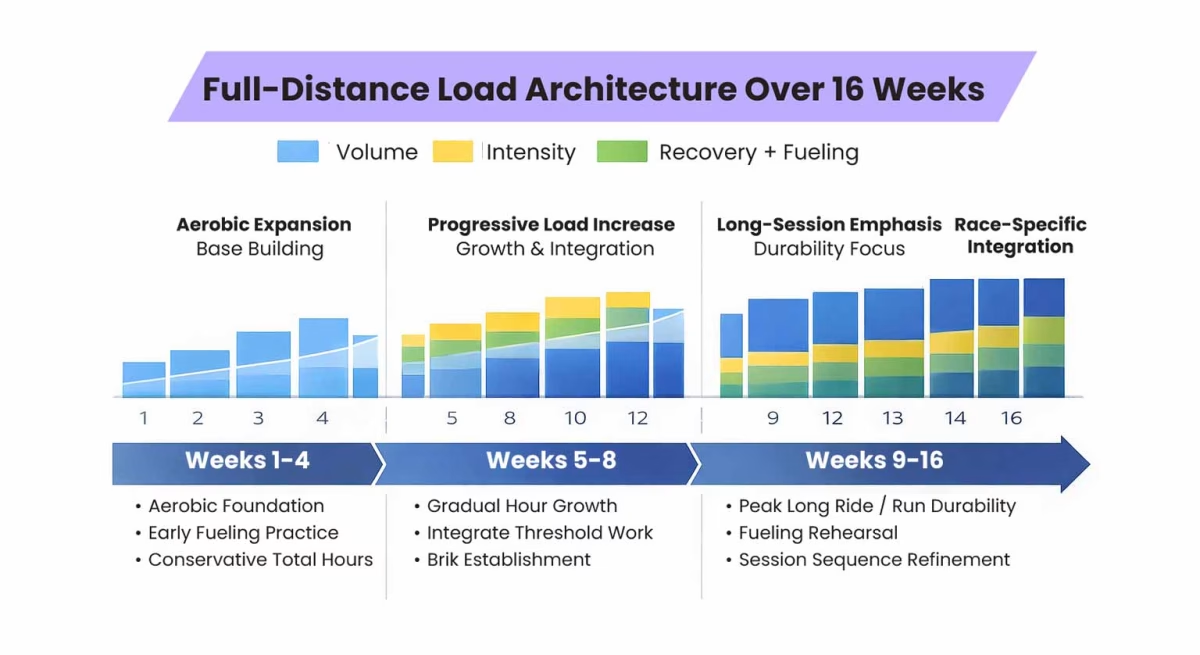
Full-distance preparation is not a straight line of rising volume. It follows a phased architecture, and each phase has a distinct purpose.
In the first four to six weeks, the focus is aerobic expansion: rebuilding or extending the athlete’s baseline capacity with moderate, consistent volume. Long rides might sit between three and four hours. Long runs stay under two hours. The primary goal is regularity, not ambition.
The next six to eight weeks shift into progressive long-session development. This is where long rides extend toward five or six hours, brick runs appear regularly, and fueling practice becomes deliberate. Intensity remains modest in absolute terms, but the sustained nature of key sessions creates significant physiological stress. Deload weeks become essential here, typically every third or fourth week.
Finally, the last four to six weeks move into race-specific integration and taper. Long sessions include full dress rehearsals at race pace and race nutrition. Volume begins a controlled decline, typically 10 to 15 percent per week in the final two weeks. The athlete should arrive at the start line feeling slightly undertrained rather than slightly fatigued. As a comprehensive study by Mujika and Padilla (2003) on tapering in endurance sports confirmed, well-executed tapers improve endurance performance by two to six percent, a margin that translates to significant time savings at full distance.
Building Full-Distance Athletes, Not Full-Distance Plans
Load decision for the full-distance triathlon length are not solved by a spreadsheet. They are solved by understanding the athlete in front of you, identifying what will most likely limit their race, and structuring stress so that adaptation accumulates without breakdown. The strongest long-course preparations are not the most aggressive. They are the most coherent.
EndoGusto supports full-distance coaching by providing a clear overview of training load distribution, discipline balance, and progression trends across extended preparation cycles. By centralizing planning, monitoring, and athlete communication, coaches can structure aerobic development, long-session placement, and recovery rhythm with precision rather than guesswork. When training load is sequenced with intention, athletes arrive at race-specific phases stable, adaptable, and ready.