Triathlon Periodization: Balancing Three Sports Without Burnout

Designing an effective triathlon training plan is more complex than simply combining swim, bike, and run sessions into one calendar. Each discipline creates a different type of stress, and when these stressors are layered without structure, performance stagnates, and burnout becomes inevitable.
As race demands increase, from Sprint to Olympic triathlon distances, and ultimately to full-distance racing, the interaction between volume, intensity, and recovery becomes exponentially more challenging. Many athletes preparing for the IRONMAN triathlon length quickly discover that what worked at shorter distances no longer holds up under higher cumulative fatigue.
For coaches, this means that programming cannot rely on generic templates. A high-performance triathlon training plan must:
- Account for race-specific physiological demands
- Balance orthopedic and metabolic stress
- Periodize intensity across phases
- Progress volume without compromising recovery
In this guide, we break down how to structure and periodize a triathlon training plan across all race distances, providing practical coaching examples, weekly volume ranges, and discipline-specific stress management strategies.
Whether you’re coaching Sprint athletes or preparing someone for full-distance, the principles remain the same: structure drives adaptation, and balance prevents burnout.
Key Takeaways for Coaches
- Triathlon programming requires managing three distinct stress profiles — not just total weekly volume.
- Race distance determines intensity distribution, long-session progression, and taper strategy.
- As race duration increases, durability and recovery management become more important than raw intensity.
- Run progression must be conservative, especially when bike load increases.
- Periodization is essential to prevent cumulative fatigue and stagnation.
- Structured load tracking across swim, bike, and run improves long-term athlete consistency.
Performance in triathlon is not built by doing more.
It is built by sequencing stress intelligently.
What Makes a Triathlon Training Plan Different?
A triathlon training plan is fundamentally different from a single-sport endurance program. It must balance three distinct disciplines, each with unique physiological demands, fatigue patterns, and injury risks, within the same weekly structure.
In running or cycling alone, fatigue accumulates linearly. In triathlon, fatigue accumulates multidirectionally.
- The bike contributes the highest total training load (TSS).
- The run produces the highest orthopedic stress.
- The swim is technically demanding but often underestimated in recovery planning.
If these stressors are layered incorrectly, cumulative fatigue escalates quickly, especially as triathlon length increases.
The Three-Sport Interference Effect
Triathlon programming must account for what coaches often call “interference”:
- A high-intensity bike session reduces neuromuscular freshness for run intervals.
- Long aerobic rides impair long-run quality.
- Swim fatigue can subtly reduce upper-body posture efficiency in cycling.
Unlike single-sport planning, you cannot optimize all three disciplines simultaneously at peak intensity.
This is why periodization is not optional in a triathlon training plan; it is structural.
Load Increases Are Exponential, Not Linear
As race distance increases, weekly volume doesn’t simply “add a few hours.” It expands exponentially.
Typical weekly ranges:
| Distance | Beginner | Intermediate | Advanced |
| Sprint | 4–6 hrs | 6–8 hrs | 8–10 hrs |
| Olympic triathlon distances | 6–8 hrs | 8–12 hrs | 12–14 hrs |
| Half distance | 8–10 hrs | 10–14 hrs | 14–16 hrs |
| Full distance | 10–12 hrs | 14–18 hrs | 18–22+ hrs |
The jump from Olympic to full distance is not incremental; it fundamentally changes:
- Recovery requirements
- Fueling strategy
- Long session frequency
- Mental fatigue exposure
Many athletes preparing for the full-distance triathlon length racing underestimate how dramatically load management must evolve.
Why Generic Triathlon Training Plans Fail
Most downloadable “triathlon training plans” fail for three reasons:
- They distribute volume equally across disciplines.
- They increase load in all three sports simultaneously.
- They ignore recovery cycling.
A high-performing triathlon training plan instead:
- Rotates discipline emphasis
- Manages weekly stress oscillation
- Periodizes intensity across phases
- Aligns structure with race-specific demands
This complexity is exactly why coaches need structured planning frameworks, not just session lists.
Triathlon Race Distances and Their Physiological Demands
Before structuring a season, coaches must understand how race demands evolve across distances. Training for a Sprint event is not a scaled-down version of full-distance preparation; it is physiologically different.
Rather than repeating a full breakdown here, we’ve covered the detailed structure of each race format in our guide to triathlon distances.
Below is a coaching-focused summary to frame programming decisions.
Sprint Distance
Characteristics
- High relative intensity
- Strong reliance on anaerobic capacity
- Short recovery window between disciplines
Programming Implications
- Greater emphasis on speed and threshold work
- Shorter long sessions
- Frequent high-quality bricks
- Weekly volume typically ranges from 4–10 hours, depending onthe level
Sprint athletes tolerate more intensity but require careful management of run stress due to faster pacing.
Olympic Distance
Characteristics
- Sustained threshold effort
- Greater aerobic durability
- Increased pacing precision
Programming Implications
- Balanced distribution of tempo and threshold work
- Structured long ride (90–150 minutes depending on level)
- Moderate long run progression
- Weekly volume typically ranges from 6–14 hours
Here, efficiency becomes as important as raw fitness.
Half Distance
Characteristics
- Heavy aerobic emphasis
- Muscular endurance on the bike
- Nutrition strategy becomes critical
Programming Implications
- Longer aerobic rides (2.5–4 hours)
- Gradual long run progression
- Reduced high-intensity frequency
- Weekly volume typically ranges from 8–16 hours
Load accumulation starts to become the central coaching challenge.
Full Distance
Characteristics
- Extreme aerobic durability
- Fatigue resistance across 8–15 hours of racing
- High fueling precision
Preparation for what many refer to as the full-distance triathlon length requires a fundamental shift in training design. The objective is no longer maximizing intensity, but sustaining efficiency under prolonged fatigue.
Programming Implications
- Long rides of 4–6+ hours
- Carefully progressed long runs
- Lower relative intensity distribution
- Weekly volume often ranging from 12–22+ hours depending on level
At this level, recovery strategy becomes as important as session design.
Why Distance Changes Everything
As race length increases:
- Intensity distribution shifts downward
- Long-session frequency increases
- Recovery cycles must be more structured
- Psychological fatigue becomes a performance variable
This is why a structured framework, not a generic template, is essential.
In the next section, we’ll break down how periodization shapes this structure across the season.
How Periodization Shapes a Triathlon Training Plan
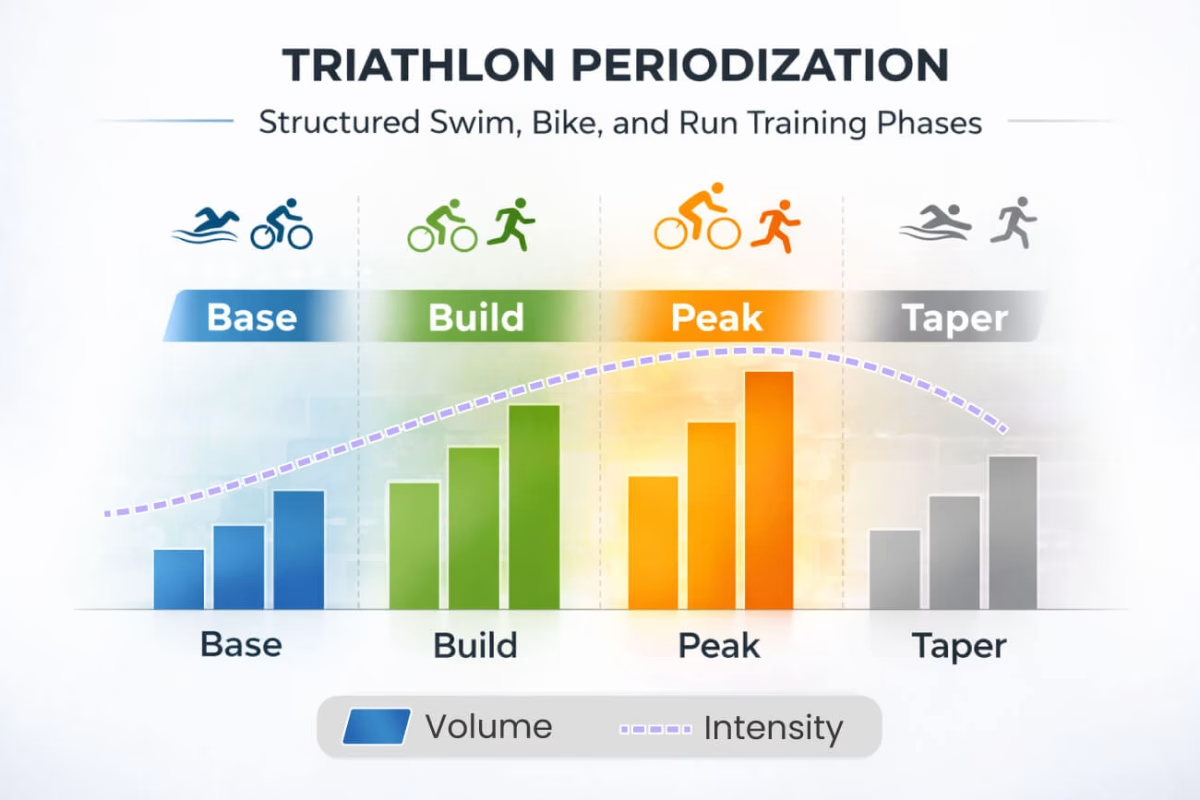
A well-structured season is not built by stacking sessions. It is built by sequencing stress.
Periodization provides that sequence. It organizes training into phases where volume, intensity, and discipline emphasis evolve progressively — allowing adaptation without excessive fatigue accumulation.
For a deeper exploration of linear, block, and other periodization models, including when and why to apply each, see our detailed guide on Periodization Models in Endurance Sports.
Below, we focus specifically on how those models apply in triathlon coaching practice.
The Four Core Phases in Triathlon Programming
While models vary, most structured plans move through four broad phases:
- Base
- Build
- Peak
- Taper
The distinction lies not just in intensity, but in how the three disciplines are prioritized within each phase.
1.Base Phase: Building Aerobic Capacity and Technical Efficiency
Primary Objectives
- Develop aerobic foundation
- Improve movement economy
- Establish durable weekly volume
- Reinforce technical swim efficiency
During this phase, volume increases gradually while intensity remains controlled.
Typical characteristics:
| Variable | Focus in Base Phase |
| Swim | Technique + aerobic intervals |
| Bike | Aerobic endurance rides |
| Run | Low-intensity volume progression |
| Intensity Distribution | ~80–90% low intensity |
| Brick Frequency | Low to moderate |
Weekly hours vary by race distance and athlete level, but the emphasis remains durability over speed.
For longer race formats, the base phase is typically extended to ensure tissue resilience before adding race-specific load.
2.Build Phase: Introducing Specific Intensity
This is where programming becomes more complex.
Primary Objectives
- Raise lactate threshold
- Introduce race-pace efforts
- Increase fatigue resistance
- Begin structured brick integration
Characteristics:
| Variable | Focus in Base Phase |
| Swim | Threshold sets + pacing control |
| Bike | Sweet spot / threshold intervals |
| Run | Tempo + controlled intervals |
| Intensity Distribution | 70–80% low intensity |
| Brick Frequency | 1 per week typical |
The key coaching challenge here is preventing simultaneous overload across all three disciplines.
For example:
- If bike intensity increases, run volume may need temporary stabilization.
- If long runs extend, high-intensity bike sessions may need reduction.
This rotational stress management is what separates structured plans from generic ones.
3.Peak Phase: Specificity Over Volume
In the peak phase, training shifts toward race simulation.
Primary Objectives
- Sharpen race pace
- Optimize pacing control
- Refine fueling strategy
- Maintain fitness while reducing cumulative fatigue
Characteristics:
| Variable | Focus in Base Phase |
| Swim | Race-pace sets |
| Bike | Race simulation efforts |
| Run | Controlled race-pace segments |
| Volume | Slight reduction |
| Intensity | Maintained but targeted |
For shorter races, intensity remains relatively high.
For longer races, specificity means longer controlled efforts rather than high-intensity intervals.
4.Taper Phase: Reducing Fatigue Without Losing Sharpness
Tapering must reflect race demands.
General patterns:
| Distance | Typical Taper Duration | Volume Reduction |
| Sprint | 5–7 days | 30–40% |
| Olympic distances | 7–10 days | 30–40% |
| Half distance | 10–14 days | 40–50% |
| Full distance | 14–21 days | 40–60% |
The longer the race, the more cumulative fatigue must be dissipated.
However, intensity does not disappear; it becomes brief and precise.
Practical Coaching Example: Phase Distribution by Distance
To visualize how structure changes, here’s a simplified macrocycle comparison:
| Distance | Base Duration | Build Duration | Peak | Taper |
| Sprint | 6–8 weeks | 4–6 weeks | 2–3 weeks | 1 week |
| Olympic distances | 8–10 weeks | 6–8 weeks | 2–3 weeks | 1–2 weeks |
| Half distance | 10–12 weeks | 8–10 weeks | 3–4 weeks | 2 weeks |
| Full distance | 12–16+ weeks | 10–12 weeks | 3–4 weeks | 2–3 weeks |
Notice how longer distances require extended base development and longer taper windows.
The Key Principle: You Cannot Maximize Everything at Once
The biggest mistake coaches make is trying to:
- Increase swim volume
- Increase bike intensity
- Increase run mileage
… within the same mesocycle.
Periodization forces prioritization.
In triathlon coaching, progress comes from controlled overload in one variable while stabilizing the others, not from simultaneous escalation.

Simplify Periodization Planning
How Training Structure Changes Based on Distance
While the phases of periodization remain conceptually similar across race formats, weekly structure changes significantly depending on race demands.
Training for a Sprint event is not a compressed version of full-distance preparation. The balance between intensity, long sessions, and recovery shifts as race duration increases.
Below is a practical comparison to guide coaching decisions.
Weekly Structure Comparison by Race Distance
| Distance | Weekly Hours (Intermediate) | Long Ride | Long Run | Brick Frequency | Intensity Emphasis |
| Sprint | 6–8 hrs | 60–90 min | 45–60 min | 1 per week | Threshold & VO₂ |
| Olympic | 8–12 hrs | 90–150 min | 60–75 min | 1 per week | Threshold dominant |
| Half | 10–14 hrs | 2.5–4 hrs | 75–90 min | 1 every 7–10 days | Tempo + endurance |
| Full | 14–18+ hrs | 4–6+ hrs | 90–120 min | 1 every 10–14 days | Aerobic durability |
Now let’s break down what this means in practical programming terms.
Sprint Distance: High Quality, Controlled Volume
Sprint preparation allows:
- Higher relative intensity
- Shorter long sessions
- Faster recovery between key workouts
A typical structure might include:
- Tuesday: Bike threshold intervals
- Wednesday: Swim speed + short aerobic run
- Friday: Run intervals
- Weekend: Short brick (bike + fast run)
The focus is neuromuscular sharpness and race-pace familiarity. Total fatigue remains manageable due to lower volume.
Olympic Distance: Sustainable Threshold Control
At this level, pacing becomes more critical.
Weekly structure often includes:
- One threshold bike session
- One tempo or threshold run
- A progressively extended long ride
- One race-pace brick
Recovery between sessions becomes more important, particularly for the run.
Intensity remains central, but volume begins to challenge recovery capacity.
Half Distance: Aerobic Strength and Fatigue Resistance
Programming shifts toward:
- Longer aerobic rides
- Moderate but controlled run intensity
- Increased brick duration
- Greater emphasis on fueling practice
A typical weekend may include:
- Long ride (3–4 hours)
- Short transition run (20–40 minutes controlled)
The main risk at this distance is accumulating too much moderate intensity across disciplines.
Coaches must actively protect low-intensity days.
Full Distance: Durability Above All
Preparing for full-distance racing requires a fundamental shift in planning philosophy.
Here, the objective is not maximizing speed, it is sustaining efficiency for 8–15 hours.
Key structural changes include:
- Extended long rides (4–6+ hours)
- Carefully progressed long runs (without excessive intensity)
- Reduced frequency of high-intensity sessions
- Longer recovery windows
A common mistake is carrying Olympic-style intensity into full-distance programming. This often results in chronic fatigue by mid-build phase.
For full-distance athletes, durability, fueling strategy, and recovery management are the primary performance variables.
The Progression Principle
As distance increases:
- Long-session length increases disproportionately
- Intensity frequency decreases
- Recovery blocks become more deliberate
- Psychological load becomes relevant in planning
The weekly schedule must reflect these realities.
A well-designed triathlon training plan adjusts structure, not just volume, according to race demands.
Balancing Swim, Bike, and Run Stress
One of the biggest mistakes in triathlon programming is assuming that total weekly hours reflect total stress.
They don’t.
Ten hours heavily weighted toward running creates a completely different fatigue profile than ten hours dominated by cycling. A well-designed triathlon training plan must consider not just volume, but type of load.
Each discipline stresses the body differently.
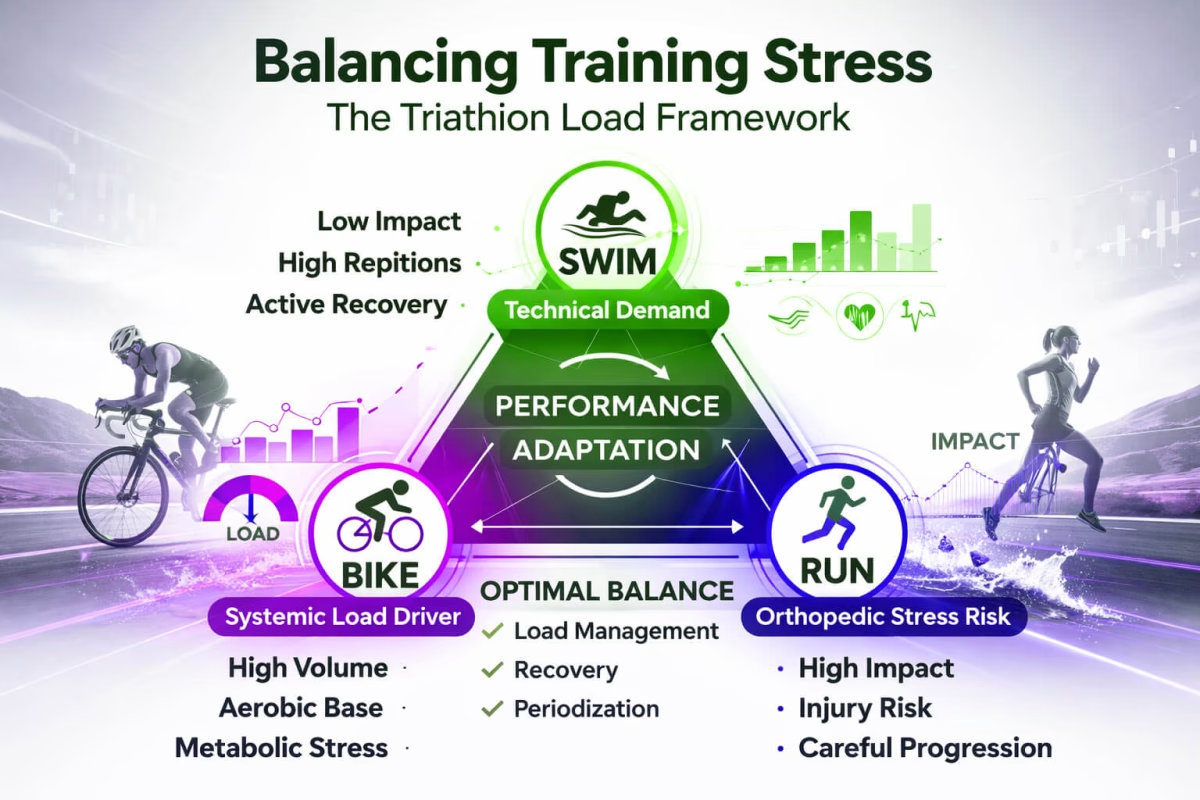
Discipline-Specific Fatigue Profiles
| Discipline | Primary Fatigue Type | Injury Risk | Recovery Demand | Coaching Priority |
| Swim | Technical + upper-body muscular | Low orthopedic | Moderate neuromuscular | Efficiency & economy |
| Bike | Metabolic + muscular endurance | Low impact | High systemic fatigue | Load driver |
| Run | Orthopedic + neuromuscular | Highest | High tissue stress | Injury management |
Key Coaching Insight:
- The bike often drives overall training load.
- The run drives injury risk.
- The swim drives technical consistency.
Balancing these variables is the real art of triathlon coaching.
The Run: The Limiting Factor
Across all race distances, the run is typically the most fragile discipline.
Why?
- Ground reaction forces
- Accumulated fatigue from prior disciplines
- Higher injury probability
For many athletes, run progression must be conservative — especially when bike volume increases.
A common strategy:
- Increase long ride duration first
- Stabilize run volume during that block
- Progress long run only once bike adaptation stabilizes
Trying to push both simultaneously often leads to breakdown.
The Bike: The Hidden Load Multiplier
Cycling allows large volume accumulation with lower orthopedic cost. This makes it attractive for aerobic development, especially in longer race formats.
However, high bike load:
- Elevates systemic fatigue
- Impairs run quality
- Increases recovery time
Coaches must monitor not just hours, but intensity distribution and accumulated stress from long rides.
The Swim: The Recovery Paradox
Swimming is often treated as “recovery.” But high-intensity swim sessions can create significant neuromuscular fatigue, especially in athletes with technical inefficiencies.
Strategically, swim sessions can:
- Reinforce aerobic development
- Improve efficiency without adding run stress
- Provide active recovery when structured correctly
But they should not be randomly intensified during heavy bike/run weeks.
Practical Weekly Stress Distribution Strategy
A simple rotation principle works well:
High Bike Week
- Increase long ride duration
- Maintain run volume
- Reduce high-intensity run work
Run Emphasis Week
- Maintain bike volume
- Reduce bike intensity
- Progress long run slightly
Recovery Week
- Reduce overall volume by 30–40%
- Maintain short intensity touches
- Prioritize sleep and nutrition
This oscillation prevents cumulative overload while still progressing fitness.
The 48-Hour Rule
In practical scheduling:
- Avoid stacking high-intensity bike and run sessions within 24 hours.
- Separate long ride and long run by at least one lower-load day.
- Avoid placing key run sessions immediately after high-intensity bike intervals.
Small scheduling decisions often determine whether adaptation occurs, or fatigue accumulates.
Balancing stress across three disciplines is not about equality. It is about intelligent prioritization.
In the final section, we’ll translate this into a structured workflow coaches can use when building season plans.
Common Mistakes in Triathlon Training Plans
Even experienced coaches can fall into predictable traps when managing three disciplines simultaneously. Most issues do not come from lack of knowledge; they come from poor load coordination.
Here are the most common structural mistakes.
1. Increasing Volume in All Three Sports at Once
Progression should be selective.
When swim, bike, and run volume all increase in the same mesocycle, cumulative fatigue rises faster than adaptation. This often shows up as:
- Flat power numbers
- Sluggish run pacing
- Elevated perceived exertion
- Mood changes
Structured progression means advancing one key variable while stabilizing the others.
2. Treating Every Week the Same
Triathlon programming requires oscillation.
If every week contains:
- One long ride
- One long run
- Two intensity sessions
- Two swim sessions
Without structured deloads, fatigue accumulates invisibly.
Recovery weeks are not optional — they are programmed.
3. Overusing Moderate Intensity
This is especially common in half and full-distance preparation.
Too many sessions fall into the “comfortably hard” zone, not easy enough for recovery, not hard enough for adaptation.
Over time, this leads to stagnation rather than progress.
Clear intensity distribution protects long-term development.
4. Ignoring the Run as the Injury Bottleneck
Run durability develops more slowly than aerobic fitness.
Aggressive run progression, particularly under bike fatigue, is one of the fastest ways to derail a season.
Conservative run build-ups often produce more consistent performance over time.
5. Copying Generic Templates
A downloadable triathlon training plan cannot account for:
- Athlete training history
- Recovery capacity
- Work-life stress
- Injury patterns
- Race calendar complexity
Templates provide structure, but coaching requires adaptation.
How Coaches Can Build Smarter Triathlon Training Plans
Designing a structured season on paper is one thing. Managing it across multiple athletes, race distances, and fatigue profiles is another.
As training complexity increases, particularly when working with Olympic, half, and full-distance athletes simultaneously, coaches need visibility across three disciplines, not just session lists.
A practical workflow looks like this:
1. Define Race Demands Clearly
Before building weekly sessions:
- Clarify race distance and duration
- Estimate realistic weekly volume ranges
- Determine long-session ceilings
- Align taper duration with race demands
Without this clarity, programming becomes reactive instead of strategic.
2. Map the Macrocycle Before the Microcycle
Outline:
- Base development block
- Build phases
- Peak window
- Taper
Only then begin designing weekly schedules.
This prevents overloading early and protects long-term progression.
3. Track Load Across All Three Disciplines
Triathlon is not one training load number, it is the interaction of three separate stress streams.
Coaches need to monitor:
- Swim load trends
- Bike load accumulation
- Run progression and tissue stress
- Long-session clustering
- Intensity distribution
This is where structured coaching platforms become essential.
4. Use Data to Support Planning Decisions
Instead of relying solely on perception:
- Track weekly load trends
- Identify monotony spikes
- Monitor fatigue signals early
- Compare discipline balance over time
EndoGusto allows coaches to:
- Visualize training stress across swim, bike, and run
- Plan structured periodization blocks
- Adjust load distribution based on race distance
- Maintain visibility across multiple athletes simultaneously
Rather than reacting to fatigue, coaches can proactively manage it.
The result is not just better race performance, but more consistent athlete development across seasons.
Coaching Is About Systems, Not Sessions
A triathlon training plan succeeds when structure, monitoring, and progression align.
When planning becomes systematic:
- Stress is controlled
- Recovery is protected
- Adaptation becomes predictable
- Burnout becomes preventable
Smart structure supports smart coaching.