How to Pace a Half Marathon: Build Your Race Plan

At roughly kilometer 13 of any half marathon, you can sort the field just by looking at their body language. One group is exactly where they planned to be, running controlled, passing people. The other is working considerably harder than they expected, trying to hold something together that started unraveling around kilometer 7. From the outside, both groups look like they’re racing. From the inside, those are two completely different experiences. Learning how to pace a half marathon is no easy task.
The split between them almost never happens at kilometer 13. It happens between kilometers 5 and 9, when the pace felt fine, the legs felt fresh, and nobody was paying close attention. That’s the half marathon’s particular trap. It doesn’t punish you with a wall the way a marathon does. There’s no dramatic collapse at kilometer 32, no moment where the wheels visibly fall off. The consequences arrive quieter, and earlier, and they look a lot like just having a bad day.
Learning how to pace a half marathon well means understanding why that early window is so consequential, how to set a goal pace from actual training data rather than a calculator, and how to execute from the first kilometer to the last without leaving time on the course. This article covers all of it, including what to do when the plan stops working at kilometer 14.
Key Takeaways
- Why the half marathon is a lactate event, not a glycogen event, and what that means for how you pace the early kilometers
- How to anchor your goal pace to sustained sub-threshold efforts rather than short tempo tests or a race predictor
- The phase where most half marathons are actually won or lost, and why it’s earlier than most athletes expect
- What to fuel and when, based on your expected finish time
- The two-question diagnostic to use at kilometer 14 when the plan starts coming apart
The Half Marathon’s Real Limiter: Lactate, Not Fuel
The marathon has a hard physiological ceiling that most coaches know well. Glycogen stores run out. The fuel account empties somewhere around the two-hour mark, and if the pace has been even slightly too aggressive, the final miles become a negotiation with a body that has nothing left to spend. That’s the marathon’s failure mode, and it’s relatively well understood.
The half marathon’s failure mode is different, and it’s less often explained clearly. The primary constraint isn’t fuel. It’s lactate clearance.
For most trained runners, half marathon pace sits just below or right at the lactate threshold, the intensity at which lactate begins accumulating in the blood faster than the body can remove it. Research confirms that for intermediate runners, this threshold typically falls between 75 and 85 percent of VO2max, and half marathon race pace runs right in that zone. You’re not cruising aerobically. You’re operating near the edge of what your clearance system can sustain continuously for 90 to 110 minutes, depending on your fitness level.
Why Small Early Surges Become Late-Race Problems
This distinction matters enormously for pacing decisions. At marathon pace, a brief surge of 5 to 10 seconds per kilometer costs relatively little, because you’re running comfortably below threshold and the clearance system has headroom. At half marathon pace, the same surge, say threading past a pack at kilometer 4 or pushing up a short rise at kilometer 7, briefly pushes you above threshold. The resulting lactate doesn’t clear before the next effort. By kilometer 13, that accumulated debt starts collecting interest in the form of pace you can no longer hold.
This is also why “run comfortably hard” doesn’t tell you enough for a half marathon. Comfortably hard covers a wide range of intensities. The relevant question is whether the pace is below the lactate threshold or across it. A pace that feels comfortably hard but is only sustainable for 20 to 25 minutes is 10K pace, not half marathon pace. Many athletes confuse the two in their early kilometers, and pay for it in their final five.
For those wanting to understand the physiology behind lactate threshold training in more detail, this guide on lactate threshold from Marathon Handbook covers the mechanisms clearly.
Setting Your Half Marathon Race Pace from What You’ve Actually Run
Pacing calculators are useful starting points, but they have a gap that matters. They take a recent result and produce a number. What they don’t account for is whether the training build absorbed cleanly, whether residual fatigue is still sitting in the legs two weeks out from race day, or whether that tune-up race was run in ideal conditions on a fast course. Two athletes with identical 10K times can have very different half marathon ceilings, depending on how the preceding twelve weeks actually went.
The conventional approach is to anchor half marathon pace to threshold efforts of 20 to 25 minutes, then add 10 to 15 seconds per kilometer. That method has a problem. A 20-minute threshold test tells you where threshold sits on a given day. It doesn’t tell you whether the athlete can sustain a pace near that threshold for the 90 to 110 minutes a half marathon actually takes. Those are two different questions, and the second one is the one that predicts race-day performance.
What Longer Sub-Threshold Efforts Reveal
A more reliable anchor is recent sub-threshold training performance over longer durations, specifically sustained efforts of 10 to 14 kilometers run at a controlled intensity just below the lactate threshold. These efforts correspond to roughly 85 to 92 percent of threshold pace, depending on the athlete, and they test exactly the capacity the half marathon demands: can you hold a pace near the top of your aerobic range for a duration that actually resembles race conditions?
The research supports this. Lactate threshold itself is practically defined as the pace sustainable for approximately 10 to 15 kilometers, not the pace from a 20-minute test segment. Speed at the respiratory compensation threshold and peak sustained speed have consistently shown the strongest correlations with half marathon performance in the literature. A sustained sub-threshold effort captures both of those markers in a single training session. A 20-minute tempo block does not.
Using Sustained Sub-Threshold Efforts as Your Pacing Anchor
Consider a runner whose sub-threshold long efforts over the last five weeks have consistently landed at 4:40 to 4:45 per kilometer across 12-kilometer sessions. That pace, confirmed across multiple sessions in varying conditions, is their realistic half marathon pace. Not the 4:25 from a strong 20-minute threshold interval last Tuesday. Not the 5:00 from a race six months ago on a bad day. The trend across sustained efforts sets the window.
The advantage of this approach is that it accounts for what short threshold tests miss: cardiac drift, fuel management over time, and attentional fatigue across distance. An athlete who can hold 4:42 per kilometer for 12 kilometers in training has already demonstrated most of what a half marathon will ask of them. An athlete who can hold 4:30 for 20 minutes and then fades has demonstrated fitness that may or may not translate to race day.
How to Choose the Right Pace Range
Where within the window the athlete lines up depends on three things: course profile, race-day temperature, and how the taper has felt. A flat course on a cool morning after a taper that cleared the legs well supports the faster end. A hilly course, temperatures above 15°C, or a taper that felt heavy and unresolved supports the conservative end. This is a judgment call, and it belongs in the pre-race conversation between coach and athlete, not in a calculator.
The table below shows how this sub-threshold-to-race-pace relationship looks across a range of performance levels. The sub-threshold pace column reflects the pace from controlled 10 to 14-kilometer efforts, not short threshold intervals. These are starting points, not guarantees.
| Sub-Threshold Pace (10-14km efforts) | Realistic HM Race Pace Range | Estimated Finish Time |
| 4:05 – 4:10 /km | 4:00 – 4:05 /km | ~1:24 – 1:26 |
| 4:30 – 4:35 /km | 4:25 – 4:30 /km | ~1:33 – 1:35 |
| 5:00 – 5:05/km | 4:55 – 5:00 /km | ~1:44 – 1:46 |
| 5:30 – 5:35 /km | 5:25 – 5:30 /km | ~1:54 – 1:56 |
| 6:00 – 6:05 /km | 5:55 – 6:00 /km | ~2:05 – 2:07 |
Notice that the sub-threshold training pace and the half marathon race pace are nearly identical in the table above. That’s the whole point. If an athlete can hold a given pace for 10 to 14 kilometers in controlled training, they can hold it for 21.1 kilometers on race day with taper, adrenaline, and a field around them. The gap between a 20-minute threshold test and race pace is always an estimate. The gap between a 12-kilometer sub-threshold effort and race pace is much smaller, because you’ve already demonstrated the capacity at a relevant duration.
Secondary Signals That Matter
Secondary signals are worth layering in alongside these efforts. How consistently did the build hold together week to week? One strong session is not a trend. How did the athlete recover from the hardest training weeks? An athlete who absorbed the load cleanly warrants more confidence in the faster end of the range than one who limped through the final block. A tune-up race three to four weeks out, run in controlled conditions, is also a valuable data point, provided it’s treated as one piece of evidence rather than the whole picture.
For coaches thinking about how training load and periodization feed into peak race readiness, the Periodization Models in Endurance Sports article covers the broader framework.
How to Pace a Half Marathon, Phase by Phase
The half marathon has three distinct phases inside one race. Most athletes treat it as a single continuous effort at one pace. That’s a workable plan for the first ten kilometers. It’s not a plan for the final eleven.
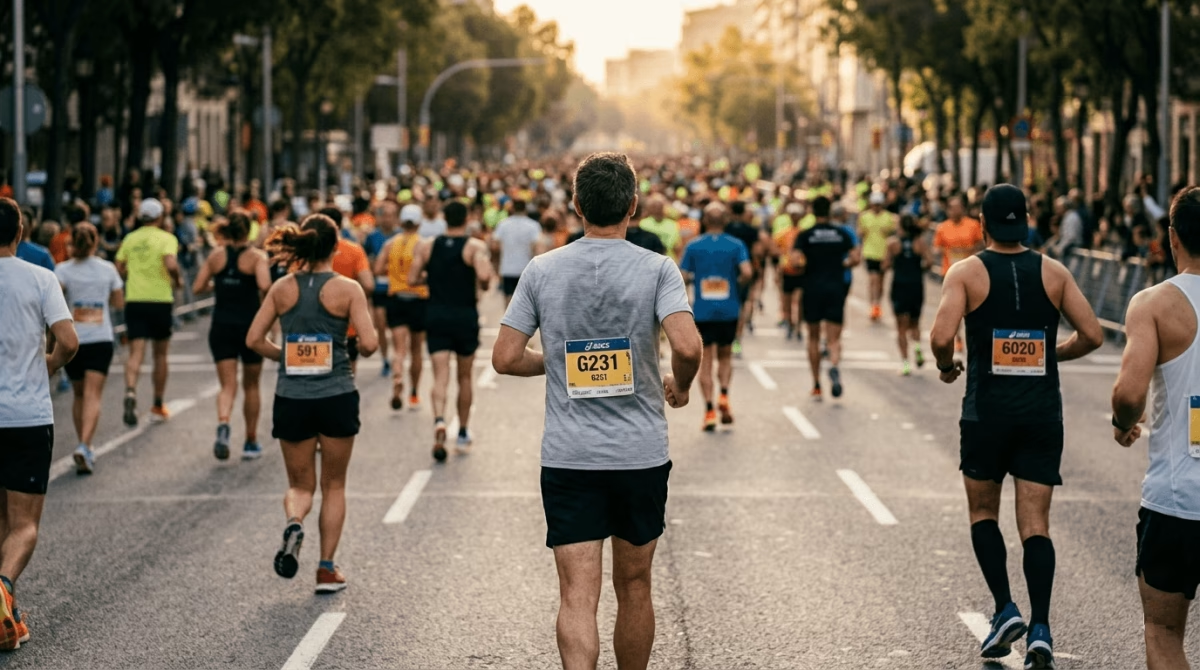
Kilometers 1-5: The Patience Tax
Target 10 to 15 seconds per kilometer slower than goal pace. It will feel slow. In a race with a large field, it will also mean getting passed by athletes who went out too hard and won’t be seen again after kilometer 12.
The first kilometer is the most deceptive stretch of any half marathon. Rested legs and pre-race adrenaline suppress perceived effort significantly. The pace that feels like goal pace is almost certainly 10 to 20 seconds per kilometer faster than it should be. The watch is more honest than the legs at this point, so trust the number, not the feeling.
Crowd navigation carries a hidden cost worth naming. Each small surge to slip past a runner at half marathon intensity briefly pushes you above threshold. Those surges don’t feel expensive in the moment. They accumulate across the first five kilometers and show up as unexplained fatigue at kilometer 14. Seed yourself correctly before the start and let the field spread naturally rather than working through it.
Kilometers 6-15: This Is Where the Race Is Decided
Lock into goal pace. Heart rate should stabilize within the first kilometer of this phase and remain broadly steady through kilometer 15. A heart rate that climbs progressively while pace holds flat is the clearest early signal that something is wrong. It means either the opening kilometers were slightly too fast, dehydration is already a factor, or the heat is affecting output more than expected. Any of those scenarios calls for a small adjustment now rather than a forced one later.
GPS pace on mild inclines is largely noise at this intensity. A short rise will show a pace ten to fifteen seconds slower than goal without any change in effort. Heart rate is the more honest reference across variable terrain. Use the watch for overall split checks, not kilometer-by-kilometer obsession.
Pack running is a legitimate tactical tool across this stretch. Finding a group at goal pace reduces cognitive load, regulates effort, and makes the middle kilometers pass faster. The one caveat: verify the group’s pace before committing. Locking onto athletes running five seconds per kilometer faster than your goal pace is one of the more common ways this phase goes wrong.
Kilometers 16-19: The Honest Kilometers
This is where drift happens. Athletes who ran kilometers 6-15 even slightly too fast first feel the cost here. The diagnostic question at this point is specific: has pace slipped while effort has held steady, or has effort climbed noticeably to hold pace?
The first scenario, pace dropping at steady effort, signals real physiological stress. The response is to pull back five to eight seconds per kilometer, take a gel if you’re past the 80-minute mark, and attempt to rebuild pace for the final two kilometers. The second scenario, effort spiking to hold pace, means earlier overspending. Forcing pace from here accelerates the collapse rather than preventing it. Recalibrating immediately is the more efficient response.
The athletes who pass people in this phase are almost always the ones who ran kilometers 6-15 slightly more controlled than felt strictly necessary at the time.
The Final Two Kilometers
If the prior phases went to plan, these kilometers are earned speed. The runner is passing athletes who went out hard and are now defending. That’s what a well-paced half marathon looks like from the outside: quiet in the early stages, increasingly strong in the final stretch.
If the first nineteen kilometers didn’t go to plan, the goal here is controlled execution to the line. Running the final two with form intact costs less time than the alternatives, and it makes the debrief considerably more useful.
Fueling a Half Marathon: What Actually Matters by Finish Time

Most half marathon pacing guides skip nutrition entirely. That’s a reasonable omission for athletes finishing in 75 minutes. For everyone else, it’s a gap that shows up in the final five kilometers.
The half marathon is short enough that glycogen depletion in the marathon sense is rarely the issue. However, for athletes racing between 90 minutes and two hours or more, carbohydrate availability in the later stages does affect sustainable pace. A gel taken at the right moment doesn’t transform the race. Skipping it entirely when the race runs past 90 minutes, however, often means arriving at kilometer 16 with less in reserve than the pacing plan assumed.
The table below breaks down fueling needs by expected finish time. These are starting points based on broadly agreed sports nutrition guidance, not prescriptions.
| Finish Time | Gels Needed | Timing |
| Under 90 min | 0–1 | 1 gel in warm-up, 15 min before start |
| 90–105 min | 1–2 | First gel at km 7–8, second at km 14 if needed |
| 105–120 min | 2 | First gel at km 7, second at km 14 |
| Over 120 min | 2–3 | First gel at km 6–7, then every 30–35 min |
Two Fueling Rules That Apply to Everyone
Two practical rules apply regardless of finish time. First, nothing new on race day. If a gel hasn’t been tested in training at race intensity, it doesn’t belong in the race plan. GI distress halfway through the half marathon is not a minor inconvenience. Second, take gels with water, not sports drink. Combining the two increases the concentration of carbohydrates in the gut and raises the likelihood of stomach issues.
Should You Use Caffeine?
The performance case for caffeine in endurance racing is well established. The half marathon is long enough to feel a meaningful benefit from a caffeine gel just at around kilometers 12-14. However, athletes who don’t regularly use caffeine in training should not experiment with it on race day. The risk of GI upset or an elevated heart rate response in the final kilometers is not worth the potential upside. For those who have practiced it, a single caffeinated gel in the final third of the race is a reasonable addition to the plan.
The guidelines above are general starting points. Individual tolerances, sweat rates, and carbohydrate absorption vary considerably, and a fueling plan that works for one athlete at a given finish time may cause problems for another at the same pace. For athletes who want a more personalized approach, sports nutritionist Craig Elliott has built a fueling platform at NooMinds that tailors nutrition strategies to the individual athlete and event. Elliott’s approach accounts for the specific demands of endurance racing, including timing, product selection, and how to structure intake across the full duration of a half marathon. It’s a useful step up from general guidance when the race is important enough to get the fueling right.
For the full carbohydrate intake research across exercise durations, Jeukendrup’s 2014 review in Sports Medicine is the primary reference. For personalized race fueling plans, NooMinds offers event-specific nutrition strategies built around your individual needs.
Adjusting How You Pace a Half Marathon for Conditions
A goal pace built for 12°C and a flat course doesn’t hold on a hilly route in 22°C heat. These adjustments belong in the pre-race conversation, ideally the days before the event, not in the decisions being made at kilometer 9 when judgment is already compromised by fatigue.
Heat Changes the Cost of Every Kilometer
Heat is the most consequential variable. Ely and colleagues (2007) quantified the impact of temperature on marathon performance across a wide range of conditions, finding that slower runners are affected more severely than faster ones, and that performance decrements begin meaningfully above roughly 13-15°C. The physiological mechanism applies equally at half marathon intensity: blood is redirected from working muscles to the skin for cooling, which raises the oxygen cost of any given pace and pushes athletes closer to their threshold ceiling earlier in the race. A practical working adjustment for recreational runners: for every 5°C above 15°C, add 8 to 12 seconds per kilometer to goal pace. That adjustment will feel like an unnecessary concession on race morning. By kilometer 17, it will feel exactly right.
How to Pace Hills Without Blowing Up
Hills require a different approach entirely. At half marathon intensity, you’re already running near the lactate threshold. Forcing goal pace up a significant climb means crossing above it, and the cost arrives in the next two or three kilometers, not on the climb itself. The practical rule is simple: let pace drift on climbs, keep effort steady, and return to goal pace on flat ground. Switching the watch display from pace to heart rate on any climb longer than 400 meters removes the temptation to chase a number that doesn’t account for gradient.
Running Into Wind
Wind affects more races than athletes account for in their planning. A sustained headwind of 15 km/h increases the aerobic cost of running meaningfully, in a way that GPS pace cannot capture. If the first half of a course runs into a headwind and the second half runs with it, the effort-based approach solves this naturally: run by feel into the wind, let the tailwind carry pace on the return. Where athletes go wrong is trying to hold goal pace into a headwind by increasing effort, spending too much in the first half, and finding they can’t fully exploit the tailwind when it arrives.
The course you didn’t study is the most avoidable problem on this list. Athletes who race a hilly or exposed course treating it as flat will be positive-splitting by kilometer 15 without understanding why. Study the elevation profile and identify the two or three points where effort management will matter most. On courses with significant elevation change, switching to effort-based pacing from the start, rather than discovering it’s necessary mid-race, is the cleaner approach.
When Your Pacing Plan Comes Apart at Kilometer 14
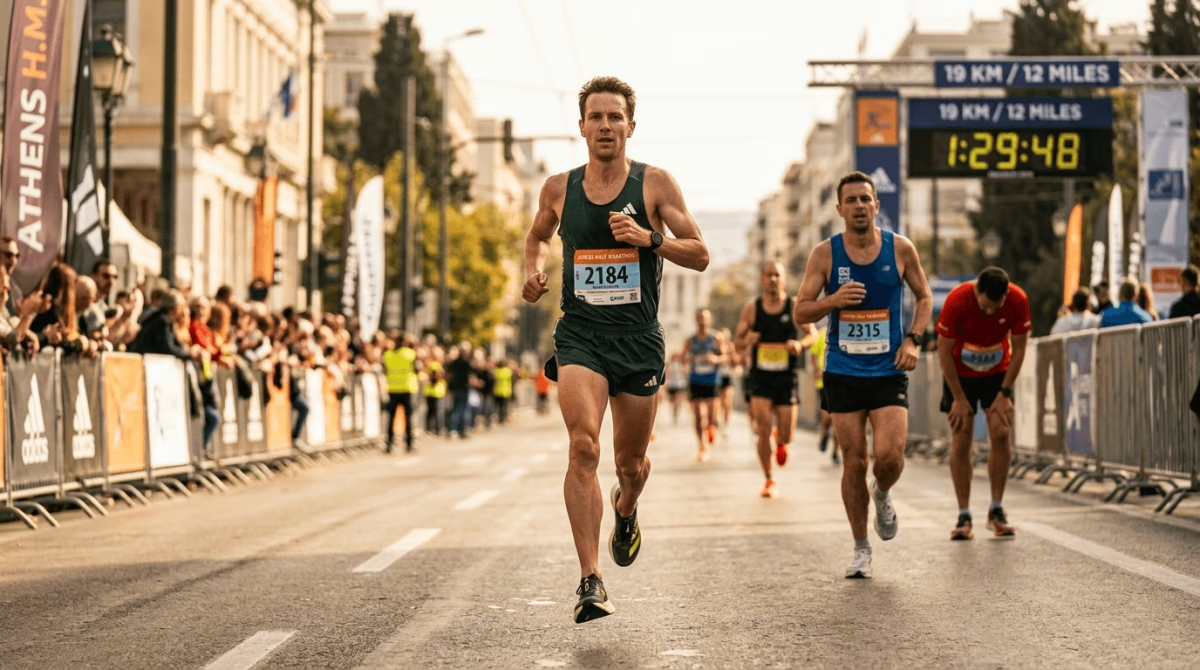
Kilometer 14 is the half marathon’s decision point. It’s where the race either holds together or confirms what the first nine kilometers quietly set in motion.
The failure mode here is different from the marathon’s late-race collapse. At the marathon, the problem at kilometer 32 is usually glycogen depletion, a fuel account that ran dry. At the half marathon, the issue at kilometer 14 is almost always accumulated lactate from a pace that repeatedly crossed the threshold ceiling in the earlier stages. The body isn’t out of fuel. It’s out of clearance capacity. The distinction matters because the responses are different.
Question One: Is Pace Falling at the Same Effort?
Two questions help diagnose what’s actually happening. First: has pace dropped while effort has remained steady? That signals genuine physiological stress, the clearance system is under strain and sustainable pace has dropped. The response is to pull back 8 to 10 seconds per kilometer for one kilometer, take a gel if the race has passed the 80-minute mark, and attempt to rebuild pace for the final stretch. This is not surrendering time. It’s trading a controlled 25-second concession now for the possibility of running the final three kilometers with composure.
Question Two: Is Effort Rising to Hold Pace?
Has effort climbed noticeably while pace has held flat? That means earlier overspending is catching up. Forcing the original pace from this point accelerates the deterioration rather than preventing it. Recalibrating immediately produces a better final time than holding on until being forced into a larger adjustment under more distress later.
When the original goal time is clearly out of reach, the most productive response is to set a revised target quickly and run to it with purpose. Athletes who accept this at kilometer 14 almost always finish in better shape, both on the clock and physically, than those who spend four kilometers in pacing limbo, grinding toward a number that’s already gone. A 1:50 finish where the athlete crosses the line composed, recovers within 48 hours, and has clear data for the next race is a better outcome than a 1:48 where they’re unable to walk down stairs for a week and learn nothing useful from the effort.
Putting It Together
A well-paced half marathon has a specific texture that experienced coaches learn to recognize. The first five kilometers feel slightly underwhelming. The middle stretch feels like genuine work, controlled and deliberate. Kilometers 16 to 19 feel earned but not desperate. The final two kilometers are the release.
The half marathon is a race built on spending effort at exactly the rate the lactate clearance system can handle, for exactly 21.1 kilometers. That’s a narrower window than most athletes appreciate until they’ve raced it a few times with a plan that was built honestly from their training data.
For coaches using this framework with athletes, the Running Race Strategy article covers how half marathon pacing fits within the broader spectrum from 5K to marathon. It’s worth pairing with this guide when building a full race season plan.

Race Smarter With Real Training Data
Suggested References
Jeukendrup, A.E. (2014). A step towards personalized sports nutrition: Carbohydrate intake during exercise. Sports Medicine, 44(Suppl 1), 25–33. https://pmc.ncbi.nlm.nih.gov/articles/PMC4008807/