Hip Strength Exercises for Runners: Hip and Glute Work for a Stable Stride
A sore knee or a cranky hip sends many runners into the same six weeks. Side planks after easy runs, a band around the knees in the living room, bridges before bed. The niggle settles, the stride feels steadier, and the runner comes back stronger than before. Then the legs feel good again, the mileage climbs, and the band ends up in a drawer until the next niggle.
None of these hip strength exercises for runners are secret. Most runners already know the moves help. What decides whether they pay off is whether the work survives the weeks when nothing hurts. In fact, the research points the same way: hip programs that runners kept doing cut overuse injuries, while programs handed out and left to chance did not.
This guide turns the moves into a routine you can keep. It starts with a two-minute self-test for weak hips and glutes, then gives eight exercises with clear doses and a progression from bodyweight to bands to added load. Finally, it covers where the work fits in a running week, a ten-minute version for busy weeks, and how to spread it through a desk day.
Key Takeaways
- A 2024 trial cut overuse injuries in novice runners with a hip and core program, and across studies the programs that worked were the ones runners kept doing.
- A single-leg squat, a side plank hold and single-leg bridge reps, compared left against right, show in two minutes whether your hips are a weak link.
- Two 15 to 20 minute sessions a week of hip strength exercises for runners, done before or after easy runs and progressing from bodyweight to bands to load, build measurable hip strength within about six weeks.
- One session a week keeps the strength you built, while one session every second week lets it slip.
- On a busy day, ten minutes of hip work can replace the last ten minutes of an easy run, or be split into three-minute breaks during a desk day.
What Hip and Glute Strength Does for a Runner
Running is a long series of single-leg landings. Each time a foot lands, one leg holds the whole body while the other swings through. The gluteus medius, on the outside of the hip, keeps the pelvis level on that landing. The gluteus maximus, the large muscle at the back, controls how far the thigh turns inward and drives the hip back at push-off. Two other groups matter too. The hip flexors pull the swing leg forward, and the adductors on the inside of the thigh steady the hip from the other side.
When these muscles tire or lack strength, the pelvis drops toward the swing leg and the knee drifts inward. As a result, more load lands on the tissue around the knee and down the outside of the thigh. That is one reason hip work features in rehab for runner’s knee (patellofemoral pain) and IT band syndrome. For example, in a trial of 199 patients with patellofemoral pain, a hip and core program eased pain about a week sooner than a knee-focused one (Ferber and colleagues, 2015). Hip strength is also one of the limits on raising cadence.
Hip Strength, Stability and Running Form
Strength and stability overlap, but they aren’t the same thing. Strength is how much force a muscle can produce, while stability is how well you control the joint as it does. Good hip stability exercises for runners build control first and then add load as control improves, which is how the routine below is laid out.
Willy and Davis (2011) gave women who ran with excessive inward hip motion six weeks of hip strengthening. Their hips got stronger, yet their running mechanics did not change. Stronger hips give the stride more capacity. Carrying that into how you actually run is the job of running drills and of understanding how form breaks down under fatigue.
What Are the Signs of Weak Hips?
The common signs of weak hips in runners are a pelvis that drops on one side during single-leg movements, a knee that drifts inward when you squat or land on one leg, and recurring niggles on the outside of the hip or the front of the knee. Weak glutes show up the same way, often with legs that fade early on hills. A two-minute self-test tells you more than any single symptom.
A Two-Minute Self-Test for Weak Hips and Glutes
Do each check on both legs, film it from the front with your phone, and write down the numbers.
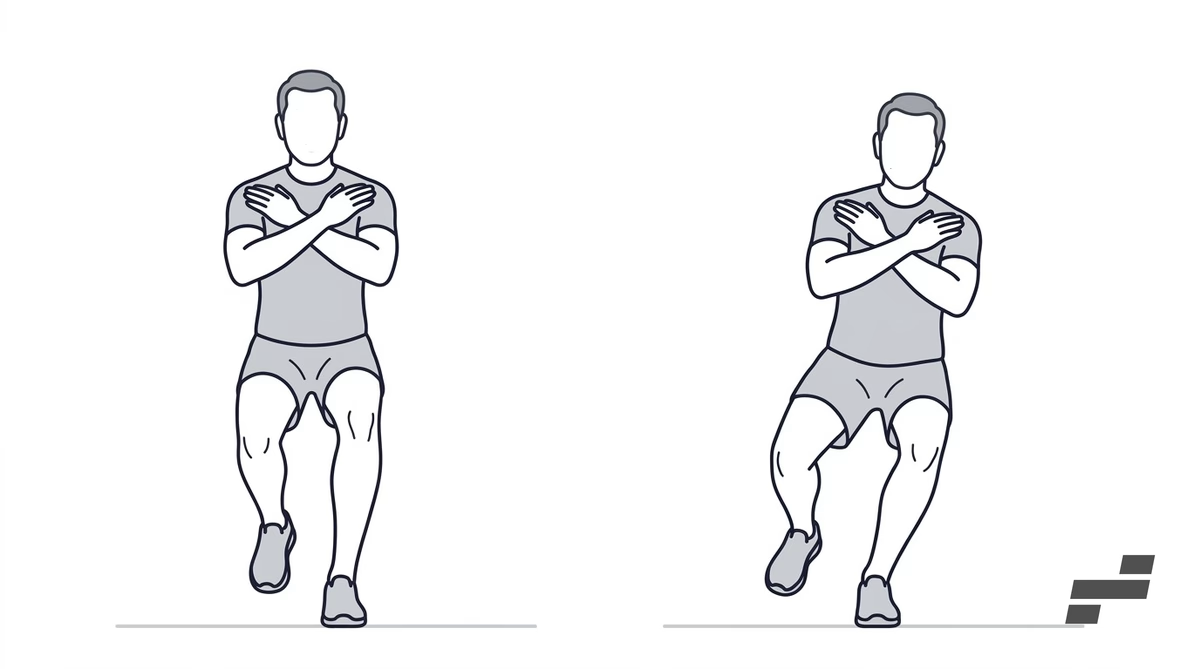
- Single-leg squat. Stand on one leg with arms crossed and squat down five times, about as far as sitting toward a chair. Watch for the hip on the free side dropping, the knee drifting inward past the big toe, or the trunk tipping sideways. Clinicians use this rating, and people rated poor on it tend to have weaker hip abductors (Crossley and colleagues, 2011).
- Side plank hold. Prop up on your forearm and feet with your body in a straight line. Hold until the hips sag, and note the seconds.
- Single-leg bridge. Lie on your back with one foot planted and the other leg straight. Lift and lower the hips until they sag or the back of the thigh cramps, and count the reps.
The comparison matters more than the raw numbers. As a working rule, one side that looks clearly worse on two of the three checks, or a gap of more than about 15 percent between sides, marks your weaker side. Start each exercise in the routine on that side, and retest every six to eight weeks. If any check is painful rather than just hard, see the physical therapist section below before starting.
How to Strengthen Weak Hips for Running
To strengthen weak hips for running, do two 15 to 20 minute sessions of hip strength exercises a week, ideally right before or straight after easy runs. Combine hip abduction work such as side-lying leg raises and side planks with single-leg strength work, plus some hip flexor and inner-thigh work. Start with bodyweight, add resistance bands after two to three weeks, then add load. Most runners gain strength within three to six weeks, and one session a week keeps it.
The dose that builds strength is usually harder than the dose that feels comfortable. Thirty easy side-lying leg raises feel like work, yet once a move stops being hard, it stops asking the muscle to adapt. For that reason, every set in the routine should end with two or three good reps left in you, no more. Olympiatoppen, Norway’s Olympic training center, builds its home strength programs on the same idea. Over time the programs move to fewer reps and more sets, which only works if the resistance goes up: a stiffer band or an ankle weight for the leg raises, and a backpack filled with water bottles for single-leg squats and deadlifts (Olympiatoppen program in Dagbladet).
Their second principle is less technical. Results come from steady work kept up over months, not from short bursts of effort. Two short sessions every week through a whole season do more than a daily routine that lasts a month. The wider case for strength work in distance running, beyond the hips, is covered in why strength work matters for distance runners.
Hip Strength Exercises for Runners
The first five hip strength exercises for runners target the outside of the hip, the inner thigh and the hip flexors. Doses for each stage are in the routine table further down.
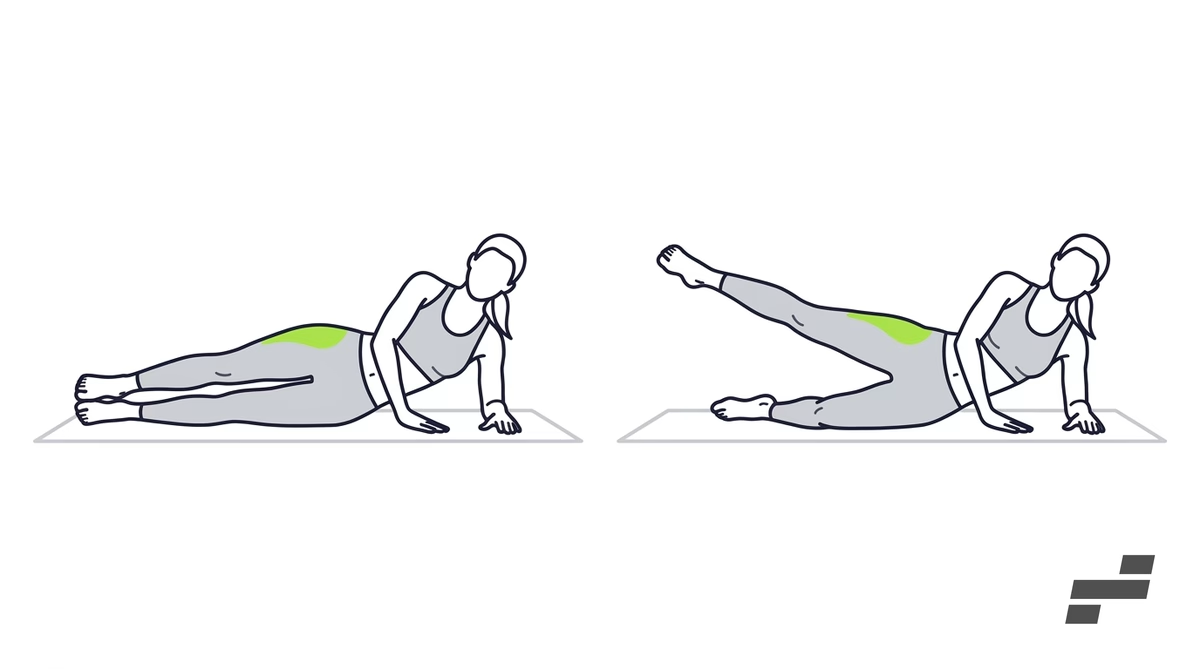
1. Side-Lying Hip Abduction
Lie on your side with the bottom knee bent for balance and the top leg straight, in line with your body. Turn the top toes slightly down and lift the leg to about 30 to 40 degrees, leading with the heel, then lower over three seconds. Keep the leg slightly behind your body line, because if it drifts forward the front of the hip takes over. Studies comparing glute exercises consistently place it among those with the highest gluteus medius activity (DiStefano and colleagues, 2009).
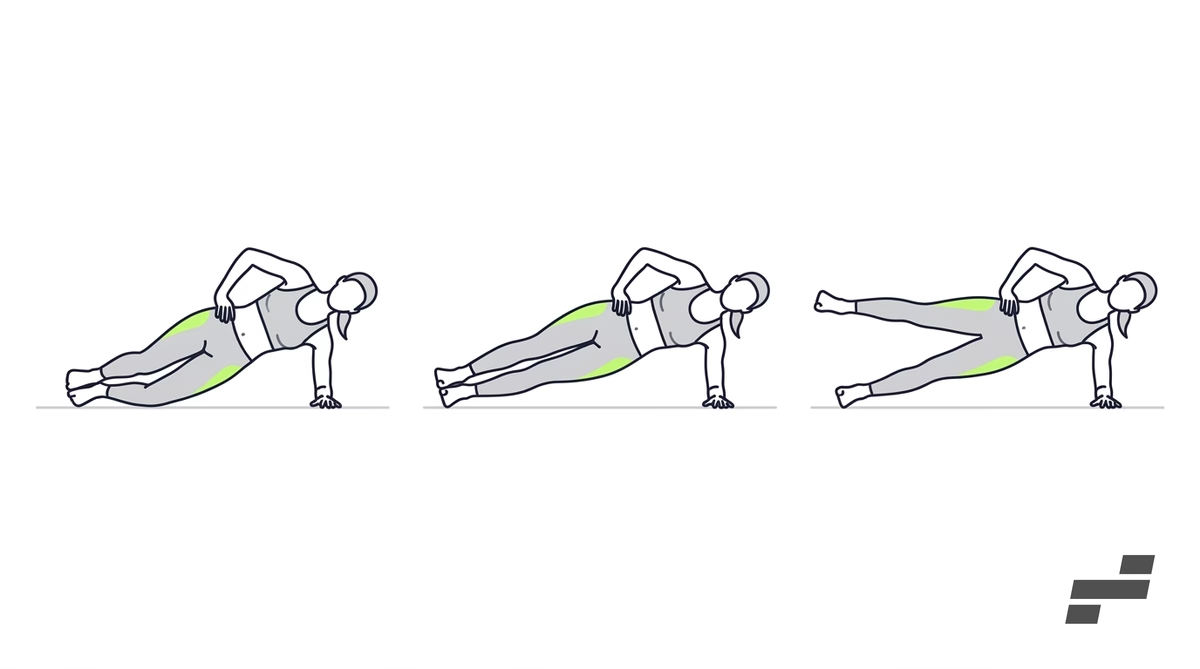
2. Side Plank With Hip Abduction
From a side plank on your forearm, with the bottom knee bent for the easier version, lift the top leg about a foot and lower it with control while the hips stay up. Both hips work at once: the bottom one holds you up, and the top one lifts. Like side-lying abduction, this move ranks among the exercises with the highest gluteus medius activity (Boren and colleagues, 2011).
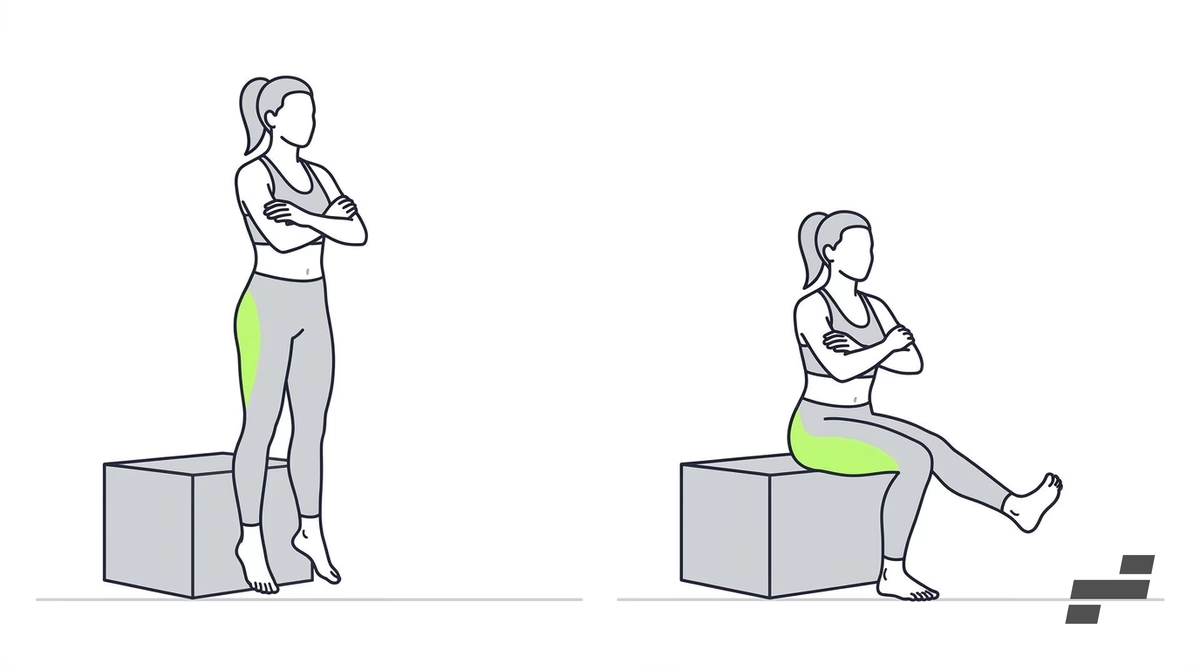
3. Single-Leg Squat to a Box
Stand on one leg in front of a box, bench or chair. Sit back slowly until you touch the seat without resting, then stand. Keep the knee in line with the second toe and the pelvis level. A higher seat makes it easier, a lower seat harder, and a dumbbell held at the chest adds load. It works both glute muscles hard, and it rehearses the exact landing position running asks for. Single-leg balance and ankle work, covered in a separate balance routine, builds the base for it.
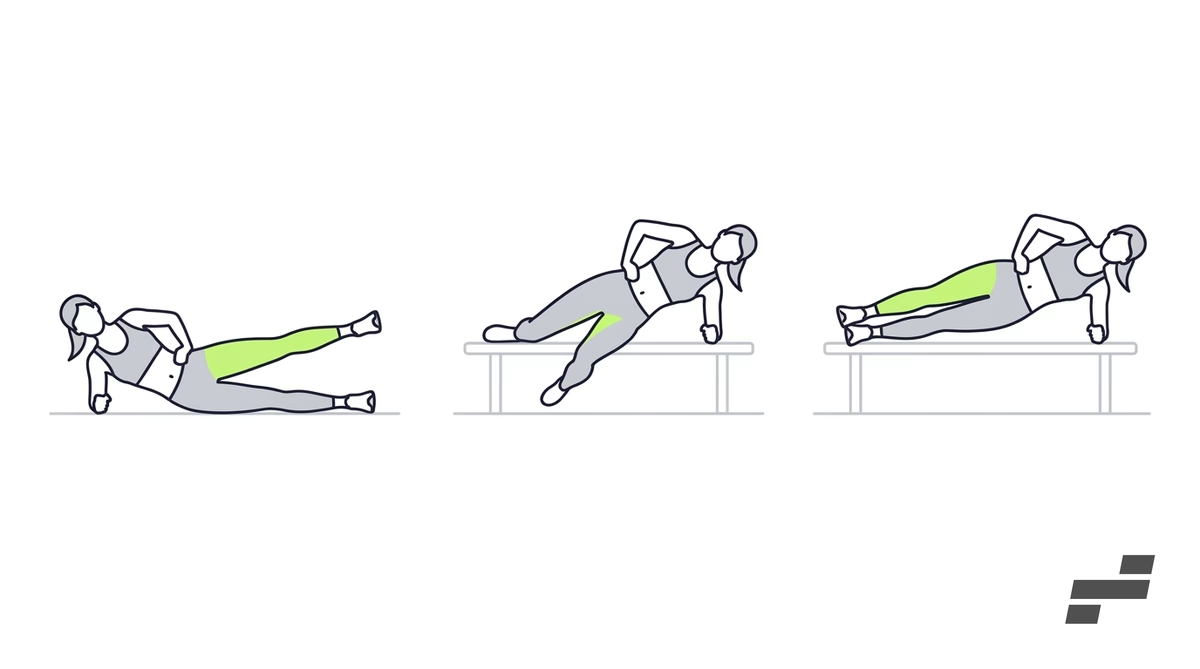
4. Side-Lying Adduction, Building to the Copenhagen Plank
The adductors on the inside of the thigh steady the hip on every landing. Start with side-lying adduction: lie on your side, bend the top leg and plant its foot in front of the bottom knee. Lift the straight bottom leg a few inches and lower it slowly. This is level one of the Adductor Strengthening Programme from the Oslo Sports Trauma Research Center. In Norwegian soccer teams, players on that program were 41 percent less likely to report groin problems (Harøy and colleagues, 2019). Soccer isn’t running, so that number doesn’t carry over directly. However, the same Copenhagen exercise was part of the hip and core program in the 2024 trial with novice runners.
The Copenhagen plank is the goal, not the starting point. Level two is the short-lever version: a side plank with the top knee resting on a bench and the bottom leg hanging free. Move to it only when side-lying adduction is controlled for three sets of 15 on both sides. Level three, with the top ankle on the bench, comes after several weeks of clean short-lever work. Groin pain during any level means stepping back one. Video: Skadefri side-lying adduction and Copenhagen exercises.
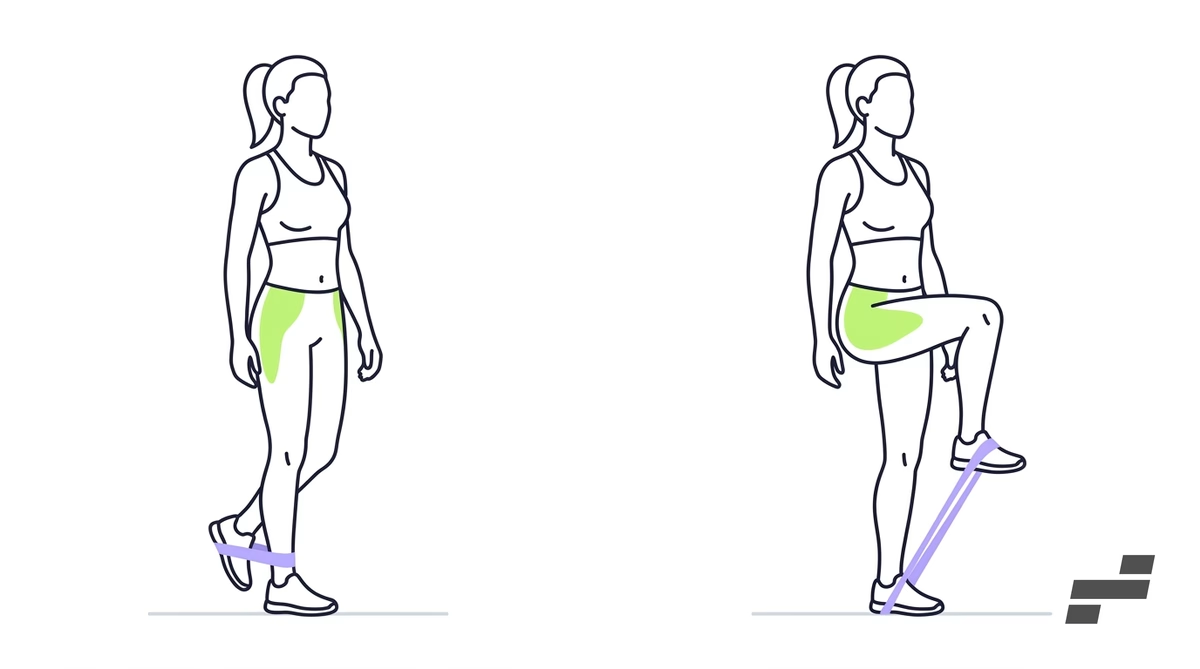
5. Banded Knee Drive
Loop a light band around both feet. Stand tall on one leg, then drive the other knee up to hip height against the band and lower it under control. Keep the standing hip level and the trunk upright, without leaning back. The hip flexors pull the swing leg through every stride. Long hours of sitting keep them in a shortened position without ever asking them to work hard, so they rarely get trained on purpose.
Glute Exercises for Runners
The next three glute exercises for runners shift the work to the gluteus maximus, the muscle that drives the hip back at push-off and controls the thigh as you land.
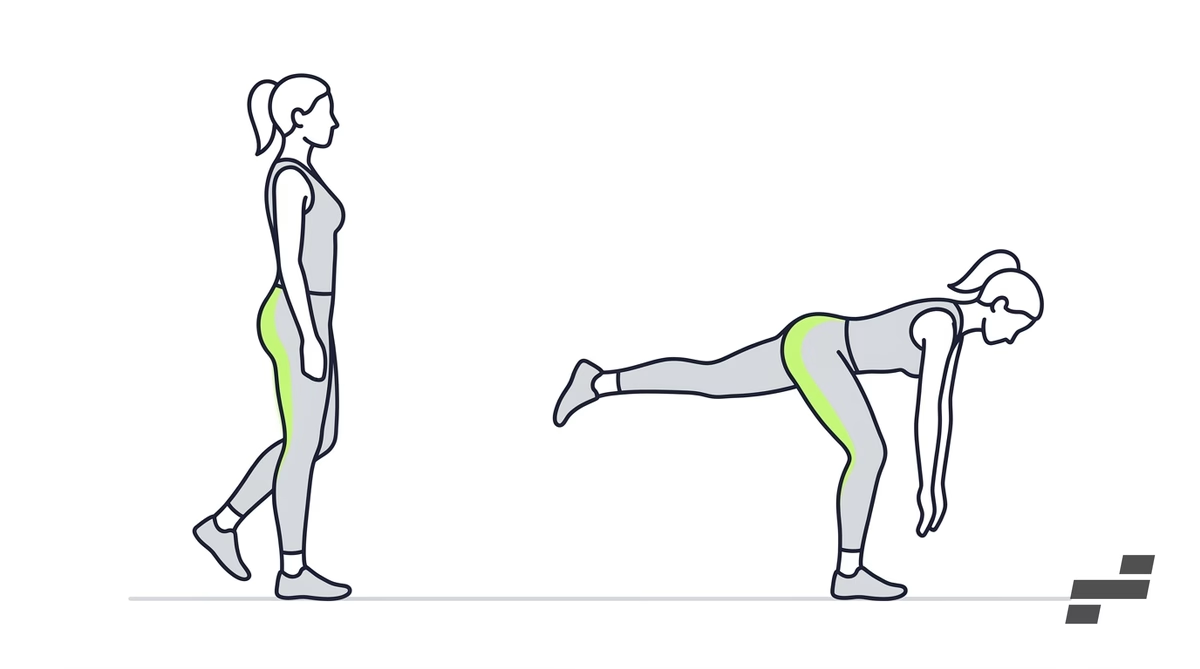
6. Single-Leg Romanian Deadlift
Stand on one leg with a soft knee. Hinge at the hip, reaching your hands toward the floor while the free leg extends behind you. Stop when your trunk is close to horizontal or the back of the standing thigh feels tight, then squeeze the glute to stand. Keep both hip bones pointing at the floor, since the free hip tends to open toward the ceiling. A hand on a wall helps at first, and a dumbbell in the opposite hand adds load later. Together with the single-leg squat, it produced the highest gluteus maximus activity in the 2009 comparison.
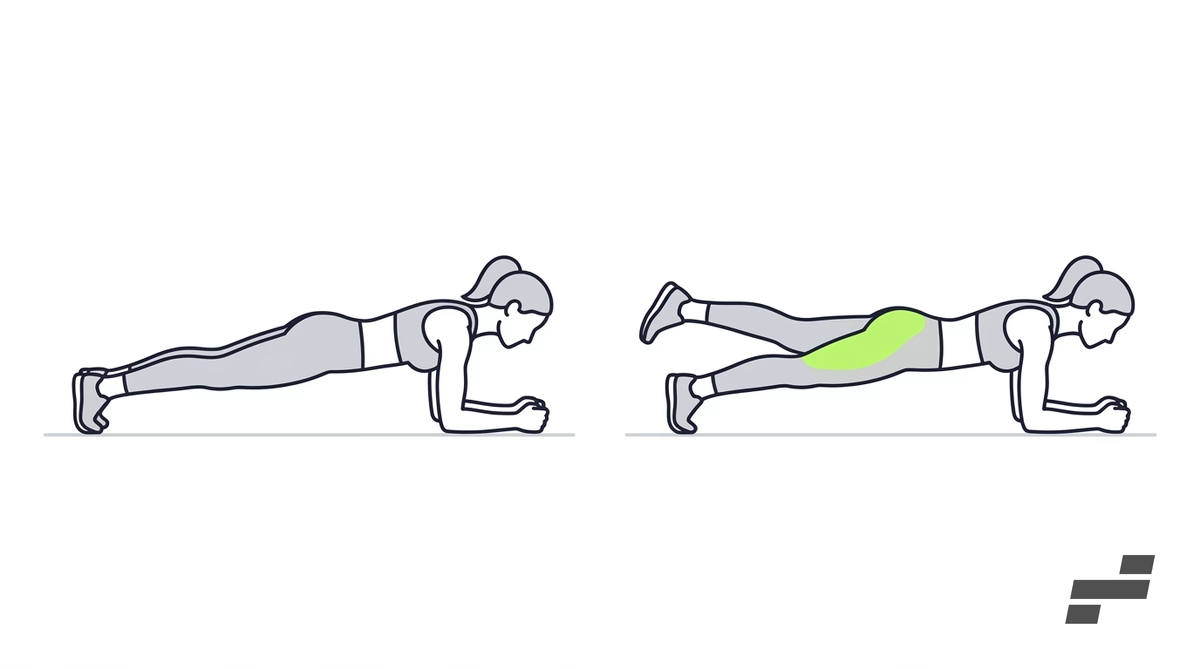
7. Front Plank With Hip Extension
From a forearm plank, squeeze one glute and lift that leg a few inches. Hold for two seconds, lower it, and switch. Don’t let the lower back arch to get the leg higher. This move recorded the highest gluteus maximus activity of the 18 exercises Boren and colleagues tested. It also trains the trunk to stay still while the hip extends, which is what running asks for on every stride. Broader trunk work belongs in a separate core routine.
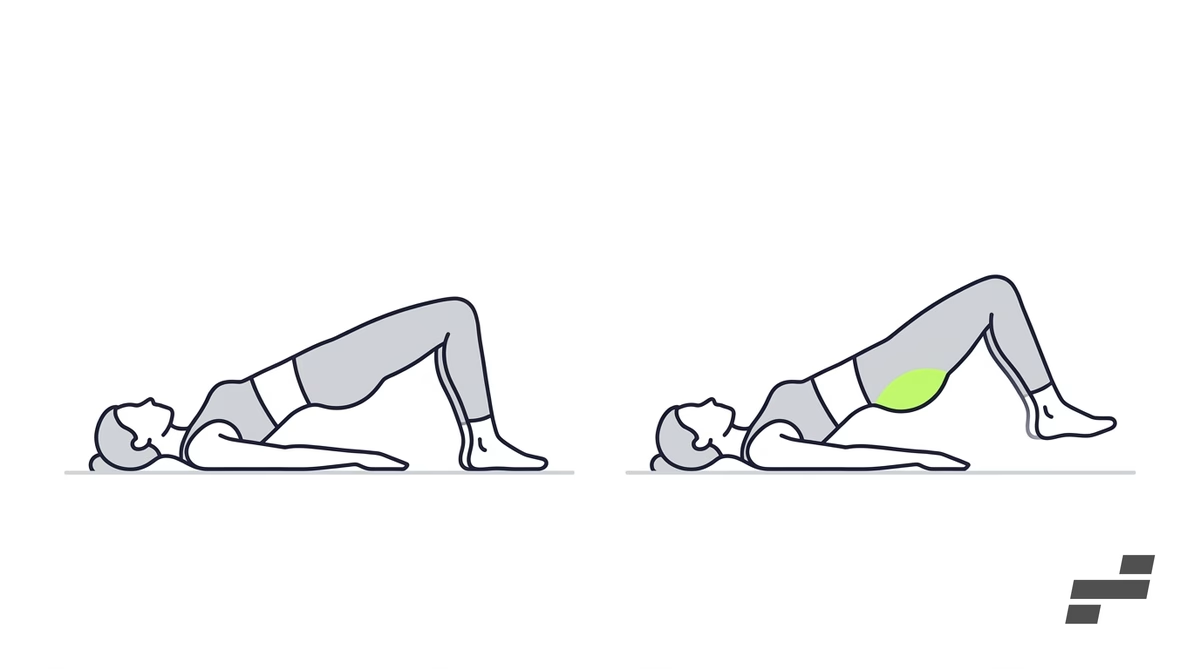
8. Bridge March
Lie on your back with knees bent and lift into a bridge. Holding the hips level, lift one foot an inch off the floor, put it down, then lift the other. Each lift loads the standing glute on its own for a moment, and any dip of the pelvis shows straight away. To progress, march more slowly, hold each lift for three seconds, then add a band above the knees.
Hip Strengthening Exercises for Runners: A Routine From Bodyweight to Load
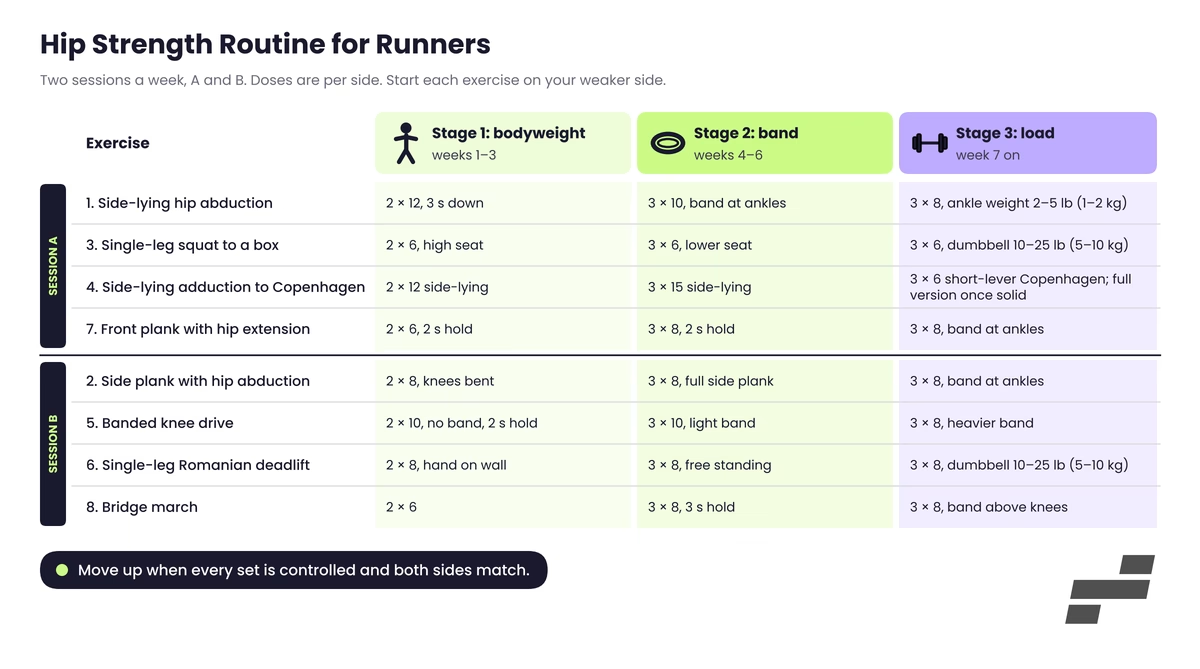
The eight hip strength exercises for runners split into two sessions of four, so each takes 15 to 20 minutes. Do Session A and Session B once each per week. Each stage lasts about three weeks, and every exercise is done on both sides, starting with the weaker side from your self-test. Doses are per side.
| Exercise | Session | Stage 1: bodyweight (weeks 1–3) | Stage 2: band (weeks 4–6) | Stage 3: load (week 7 on) |
| 1. Side-lying hip abduction | A | 2 × 12, 3 s down | 3 × 10, band at ankles | 3 × 8, ankle weight 2–5 lb (1–2 kg) |
| 2. Side plank with hip abduction | B | 2 × 8, knees bent | 3 × 8, full side plank | 3 × 8, band at ankles |
| 3. Single-leg squat to a box | A | 2 × 6, high seat | 3 × 6, lower seat | 3 × 6, dumbbell 10–25 lb (5–10 kg) |
| 4. Side-lying adduction to Copenhagen | A | 2 × 12 side-lying | 3 × 15 side-lying | 3 × 6 short-lever Copenhagen; full version once solid |
| 5. Banded knee drive | B | 2 × 10, no band, 2 s hold | 3 × 10, light band | 3 × 8, heavier band |
| 6. Single-leg Romanian deadlift | B | 2 × 8, hand on wall | 3 × 8, free standing | 3 × 8, dumbbell 10–25 lb (5–10 kg) |
| 7. Front plank with hip extension | A | 2 × 6, 2 s hold | 3 × 8, 2 s hold | 3 × 8, band at ankles |
| 8. Bridge march | B | 2 × 6 | 3 × 8, 3 s hold | 3 × 8, band above knees |
Moving Up a Stage
Run each session as a circuit, the way Olympiatoppen sets up its home programs: all four exercises back to back, then three to four minutes of rest before the next round. In stage 1, the exercises work as hip stability exercises for runners, so the goal is control. The reps should look the same on both sides and on the last rep as on the first. Move an exercise up a stage when every set feels controlled and both sides match, even if other exercises stay behind. If form slips on the last reps, stay where you are for another week.
After stage 3, keep adding load in small steps. At that point the hip work sits well alongside whole-body strength sessions, which our guide to strength training for runners covers in more depth.
Fitting Hip Work Into a Running Week
Before or After Easy Runs, Two Days a Week
Hip strength exercises for runners fit best on easy days, either right before the run or straight after it. Done before, the session gets the glutes working by the first mile, so the stride starts out steadier. That is also the order the 2024 trial used, with the full program done before each run. Done after, you’re already warm and in running clothes. The sessions are light enough that they won’t get in the way of the next day’s run, hard or easy, so the best day is the one you’ll actually do it. If you run three or four days a week, a non-running day works just as well. For a full schedule with hip work built in, see the beginner half marathon training plan.
Trade Ten Minutes of Running
On a busy day, cut a 40-minute easy run to 30 and spend the other ten on hip strength exercises. Ten minutes less of easy running changes the week’s aerobic work very little. In contrast, ten minutes of hip work twice a week is most of what this routine asks for.
The catch is usually the training log. Weekly mileage and minutes are satisfying to watch climb, and strength sessions rarely show up in those totals, so a week with hip work can look smaller than it was. Log each hip session next to your runs, with its time or sets, so the week reflects what you actually did.
Glute Activation Before Runs
On days without a hip session, a short activation routine still gets the hips working before the first mile. It won’t build strength the way the sessions do, but it keeps the habit going. Three minutes is enough:
- Banded lateral walk: 20 seconds each direction, band just above the knees
- Bridge with a two-second hold at the top: 8 reps
- Standing knee drive without a band: 10 per leg
Before speed work or a race, fold these into a warm-up matched to the session.
Microdosing Hip Work Through a Desk Day
A desk job holds the hips bent and the glutes idle for most of the day. Kelly Starrett, the physical therapist behind The Ready State, has long argued that hours of sitting wear down the hip extension running depends on, in Ready to Run and later in Deskbound. His fix pairs position with effort. In a kneeling hip stretch, squeeze the glute of the back leg, so muscle holds the position rather than the joint just hanging in it (Starrett on hip extension).
The weekly dose can also be split up. When total weekly volume is the same, training one day a week or three days a week builds similar strength (Ralston and colleagues, 2018). By the same logic, the same hip work can likely be spread through a working day in short breaks. Research on breaking up sitting has used exactly this format: three-minute bouts of half-squats, calf raises, glute squeezes and knee raises every 30 minutes (Dempsey and colleagues, 2016). That study measured blood sugar, not strength, but it shows the breaks fit easily into an office day.
A Desk-Day Hip Routine
A desk day might look like this, with every move done next to your chair:
- Mid-morning: single-leg squats to a sturdy chair (not one on wheels), 2 × 6 per leg
- Before lunch: single-leg Romanian deadlifts, 2 × 8 per leg
- Mid-afternoon: standing knee drives, 2 × 10 per leg
- Late afternoon: kneeling hip stretch with the back glute squeezed, 30 seconds per side, then 10 standing glute squeezes held for two seconds
That’s four breaks of about three minutes, or 12 minutes in total. On a day when a planned session didn’t happen, it stands in for part of a session. Think of the snacks as a way to stay in contact with your hip strength exercises on busy days, so they don’t fall away altogether. The real strength gains still come from the full sessions, where the load goes up from bodyweight to bands to weights over the months. That rising load is what makes the hips stronger, and it’s where most of the benefit to your running comes from.
Keeping Hip Work In When You Feel Good
The research on hip strength exercises for runners, and on strength work more broadly, says as much about whether people do it as about which exercises they do. In a trial of 720 first-time New York City Marathon runners, a self-directed 12-week strength program did not reduce the overuse injuries that stopped runners finishing (Toresdahl and colleagues, 2020). A 2024 review of nine studies found the same overall result. When it looked only at supervised programs, however, injury risk was clearly lower, likely because supervised runners kept doing the work (Wu and colleagues, 2024). The 2024 trial in novice runners, where overuse injuries were 39 percent less prevalent, was supervised by physiotherapists (Leppänen and colleagues, 2024).
Few runners have a physical therapist checking in twice a week, but the habits supervision creates can be copied: fixed days, a logged session, and a floor you don’t go below. That floor is one session a week. Over a 12-week season, one strength session a week kept professional soccer players’ strength and sprint gains, while one session every second week let both slip (Rønnestad and colleagues, 2011). So when work gets busy or the legs feel great, drop to one session, alternating A and B, rather than to none.
For weeks when even that won’t fit, a ten-minute minimum of hip strength exercises keeps the habit alive: side-lying hip abduction, single-leg squat to a box and single-leg Romanian deadlift, two sets each side at your current stage. Hip work supports the running, but it doesn’t replace sensible training. Olympiatoppen’s head of endurance, Espen Tønnessen, names steady progression in the running itself as the biggest factor in staying injury-free (DN), a theme a full injury prevention guide covers in depth.
When to See a Physical Therapist
See a physical therapist or sports doctor if a self-test or exercise causes sharp pain rather than muscle effort, or if pain lasts more than a few days or wakes you at night. The same applies if the hip or groin hurts at rest, or if a niggle changes how you run. Groin pain in particular can come from several places, including the hip joint itself, so it’s worth having checked. Hip strength exercises are part of rehab for runner’s knee and IT band syndrome too, but the dose and order then depend on the diagnosis.
For Coaches: Screening and Placing Hip Work Across a Block
The self-test works as a screen at the start of a block. It takes two minutes per athlete, shows the weaker side, and gives the athlete a number to improve when it’s repeated every six to eight weeks.
Across the block, a simple pattern holds up:
- Base and early build: two sessions a week, moving through the three stages
- Race-specific weeks: one session a week at stage 3 load, kept short
- Race week: last session, at bodyweight, at least three days before the race
- After the race: restart one stage below where the athlete left off
In the trials, compliance separated the programs that worked from the ones that didn’t. A quick check on hip sessions during the weekly review does part of what supervision did in the research. The athlete who keeps two short sessions going through the good weeks arrives at the next block with stronger hips, and keeps training without the interruptions.
Writing out one athlete’s hip routine is quick. Keeping a whole roster at the right stage takes more tracking, since each athlete moves up when their own sets are controlled. In EndoGusto, a coach can save Session A and Session B as library workouts, one version per stage, and drop the right version into each athlete’s week. The six-to-eight-week retest goes on the same calendar, so every athlete’s next screen happens on schedule.

Keep Every Athlete’s Hip Work on Track
Suggested References
- Boren K, Conrey C, Le Coguic J, et al. (2011). Electromyographic analysis of gluteus medius and gluteus maximus during rehabilitation exercises. International Journal of Sports Physical Therapy, 6(3), 206–223.
- Crossley KM, Zhang WJ, Schache AG, Bryant A, Cowan SM (2011). Performance on the single-leg squat task indicates hip abductor muscle function. American Journal of Sports Medicine, 39(4), 866–873.
- Dempsey PC, Larsen RN, Sethi P, et al. (2016). Benefits for type 2 diabetes of interrupting prolonged sitting with brief bouts of light walking or simple resistance activities. Diabetes Care, 39(6), 964–972.
- DiStefano LJ, Blackburn JT, Marshall SW, Padua DA (2009). Gluteal muscle activation during common therapeutic exercises. Journal of Orthopaedic & Sports Physical Therapy, 39(7), 532–540.
- Ferber R, Bolgla L, Earl-Boehm JE, Emery C, Hamstra-Wright K (2015). Strengthening of the hip and core versus knee muscles for the treatment of patellofemoral pain. Journal of Athletic Training, 50(4), 366–377.
- Harøy J, Clarsen B, Wiger EG, et al. (2019). The Adductor Strengthening Programme prevents groin problems among male football players. British Journal of Sports Medicine, 53(3), 150–157.
- Leppänen M, Viiala J, Kaikkonen P, et al. (2024). Hip and core exercise programme prevents running-related overuse injuries in adult novice recreational runners (Run RCT). British Journal of Sports Medicine, 58(13), 722–732.
- Ralston GW, Kilgore L, Wyatt FB, Buchan D, Baker JS (2018). Weekly training frequency effects on strength gain: a meta-analysis. Sports Medicine – Open, 4, 36.
- Rønnestad BR, Nymark BS, Raastad T (2011). Effects of in-season strength maintenance training frequency in professional soccer players. Journal of Strength and Conditioning Research, 25(10), 2653–2660.
- Starrett K, Murphy TJ (2014). Ready to Run: Unlocking Your Potential to Run Naturally. Victory Belt Publishing.
- Toresdahl BG, McElheny K, Metzl J, et al. (2020). A randomized study of a strength training program to prevent injuries in runners of the New York City Marathon. Sports Health, 12(1), 74–79.
- Willy RW, Davis IS (2011). The effect of a hip-strengthening program on mechanics during running and during a single-leg squat. Journal of Orthopaedic & Sports Physical Therapy, 41(9), 625–632.
- Wu H, Brooke-Wavell K, Fong DTP, Paquette MR, Blagrove RC (2024). Do exercise-based prevention programs reduce injury in endurance runners? Sports Medicine, 54(5), 1249–1267.