Coach Spotlight: Steven James — Just Because You’re Not Fast Doesn’t Mean You Can’t Go Far
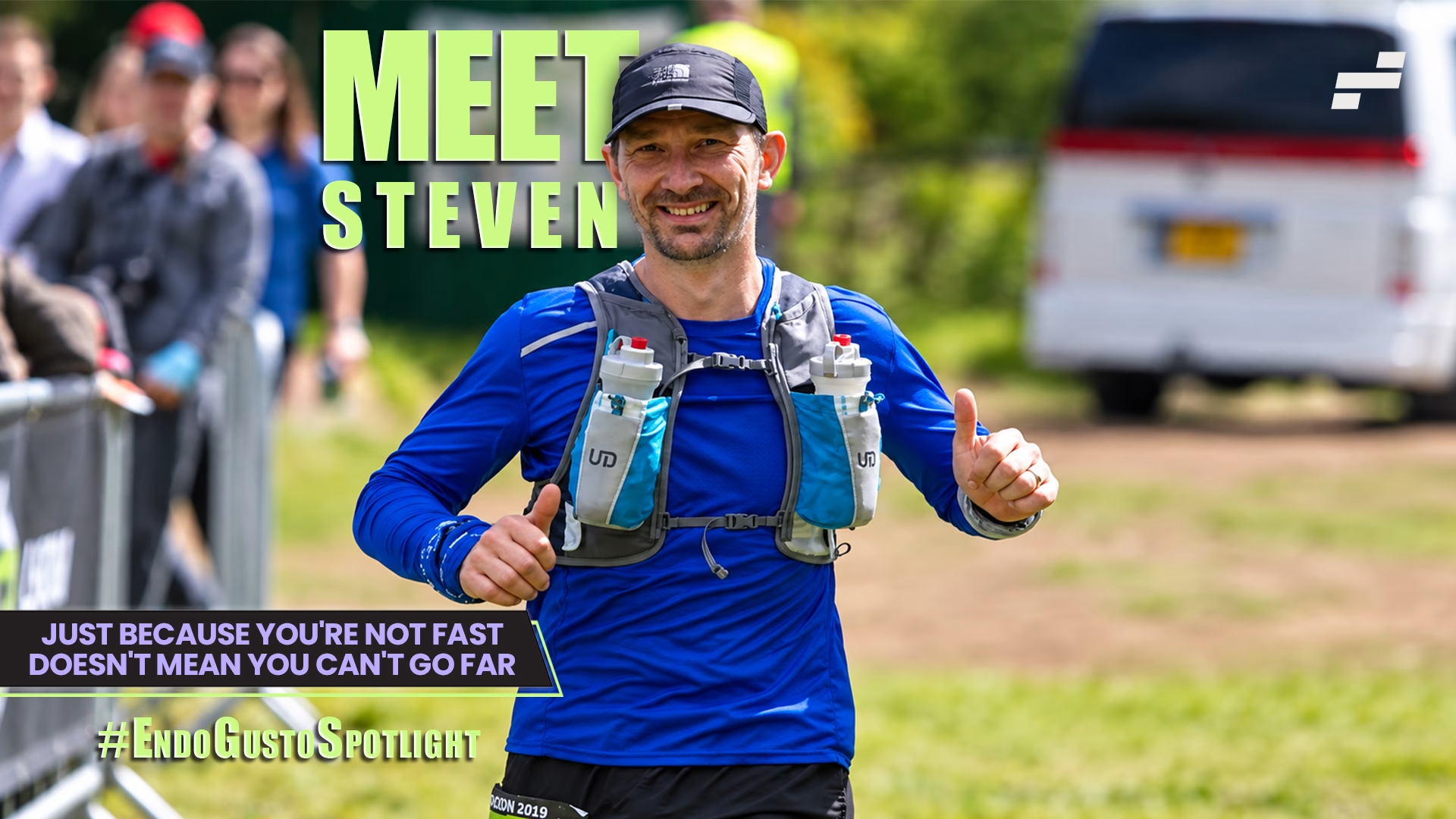
Twenty miles into his first long run, Steven James met a speed bump. It took him five attempts to get over it. His legs would not lift high enough to clear a strip of asphalt on a quiet road, and the London Marathon was a few weeks away.
Ten years later, he has finished more than 100 races, around 30 of them ultramarathons. Several have been over 100 miles and a few past 200. In August 2020 he also set the men’s unsupported Fastest Known Time on the Limestone Way, covering the 46-mile Peak District route in 10 hours and 14 minutes, alone and carrying everything he needed from the start. Most walkers spread it over four days. These days he runs PFM Coaching out of South Wales, working mostly with the kind of runner he used to be: someone with a big idea and very little evidence they can pull it off.
A Promise Made at Twelve
Steven did not grow up in sport. He did not play it and he did not watch it, and by his own account he had no interest in any of it. Then, at about twelve, he saw the London Marathon on television and made an offhand comment that he would run it when he turned 40.
He remembered and just before his fortieth birthday he put in an application, took a charity spot, and went out to buy his first pair of trainers.
“Back in 2016 I couldn’t run a mile. I didn’t do any running, didn’t do any exercise, didn’t do any sports, and I had no interest in any of them. But I did have an interest in doing what I said I’d do when I was 12.”
His knees had always been a problem. If he knelt down in a supermarket, he could be stuck on the floor for minutes. So he did what everyone told him to do and went for a gait analysis at a running shop. The shop refused to sell him shoes. As far as they could tell, he was landing on the side of his foot so badly they couldn’t recommend a pair for him. His first pair of trainers wore through from the outsole to the lining inside 76 miles.
Shortly thereafter, he was sent to a biomechanical sports podiatrist, the same practice that works with the Welsh rugby team. They put him on their books as a case study for their students. He was the worst they had seen, but with custom inserts, he could finally start training more consistently.
He followed a beginner plan he found online and worked up to four miles by February. In March he ran the Silverstone Half in around 2:16. In April he finished London in just under five hours, on fire from the knees down, and spent the next month broken.
He also hated it. Crowds are not his thing and he gets tunnel vision when he runs, so most of the day passed him by. But what stuck was a different kind of logic.
“You can’t train to run 26 miles and then stop. That’s just silly.”
Bigger, Not Faster
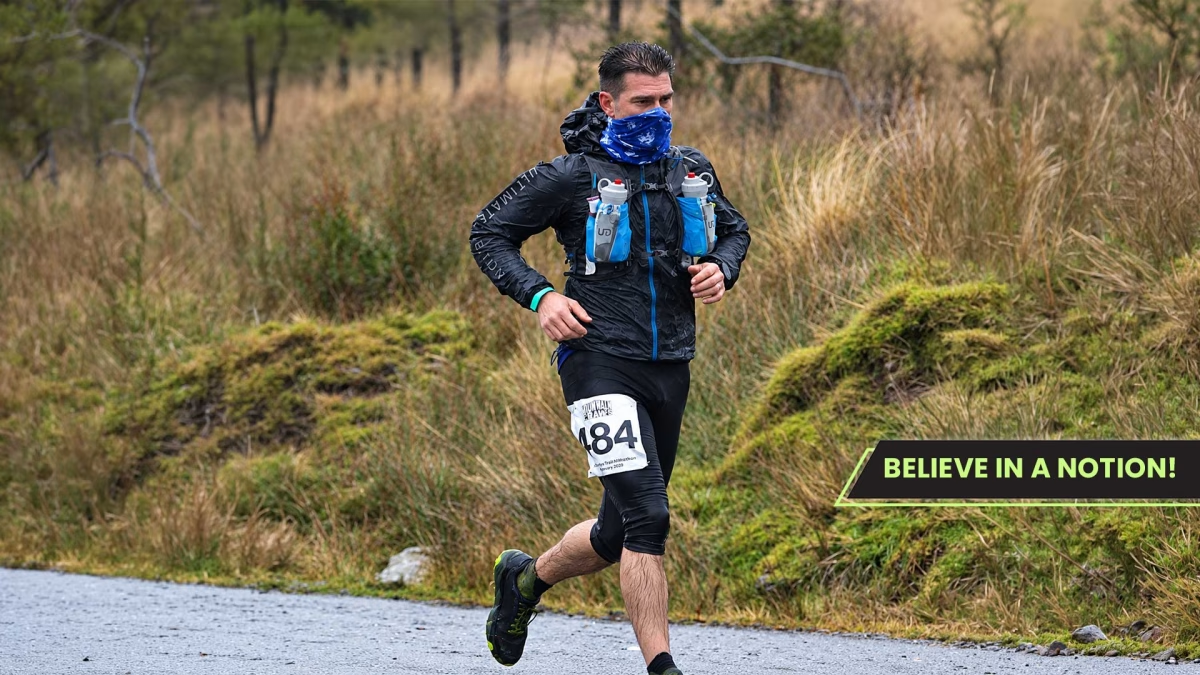
He joined a running club after London, which for most people points the training toward a faster marathon. Steven went the other way. His interest was always in going further.
Next came City to Summit, billed as Scotland’s toughest duathlon, which starts out of Edinburgh and finishes at Fort William after an ascent and descent of Ben Nevis, the UK’s highest summit. He bought the bike in February for an event in the summer, having only ever ridden a few miles casually a decade earlier.
Then came Deadwater, a six-stage ultra that required a 100-mile finish just to enter, with every stage an ultra in its own right. Runners were given water on route and a tent at the end of each day, and carried everything else, food included, for the first three days. A drop bag at the end of stage three resupplied them for the last three. No shops, no outside help.
Through all of it, one idea did the heavy lifting.
“I’m not the greatest runner. So I’ll make up for it with knowledge of how to make sure I don’t run out of energy, how to make sure I don’t get blisters, and how to not waste time at the checkpoints.”
That research habit is now part of what his athletes get. Because he compressed so much into a short span, the mistakes are still fresh. When an athlete brings him a race in the Peak District, he can name the paths they will be on and tell them which section to watch out for, which is unsurprising given he raced 46 miles across it in a single day.
“I set the task. I figure out how to complete the task. Once it’s completed, I pick a new one. I just like doing something I’m not supposed to be able to do yet, and figuring out the how.”
The Club That Said Don’t Bother
Two things pushed Steven from running into coaching. The first was hiring a coach of his own, Nathan Flear. Inside six months he took nearly 90 minutes off his marathon time. He had needed five attempts to break two hours in a half marathon; not long after, he ran 1:30 on a training run, cruising, at the end of a heavy week.
The second was a rejection. When he tried to join one of his local clubs early on, he was told not to bother, because he was not fast enough.
“It bothered me that somebody thinks, just because somebody’s not there yet, they don’t warrant a place, or they don’t warrant the coaching.”
PFM Coaching came out of that. The service is aimed squarely at the everyday club and social runner rather than only at athletes chasing fast times. Steven qualified as a Leader in Running Fitness with UK Athletics, then as a UKA Coach in Running Fitness. He has also completed two UESCA certifications, as a Running Coach and an Ultra Running Coach. He holds a BSc Honours in Sports, Fitness and Coaching, and is currently adding qualifications in sports nutrition and strength training.
The athletes he enjoys most are easy to spot.
“I really like it when somebody comes to me and says, I run three or four times a week and I run 10 miles, but I’d really love to do this 130-mile multi-day event at some point. Do you think we can? Well, not this year maybe, but if you’re willing to train until next year, quite possibly.”
They arrive with an idea and no belief, he says. Only enough to ask the question. That turns out to be enough, because just because a runner is not fast does not mean they cannot go far.
Lose the Ego, Zoom Out, Keep It Fun
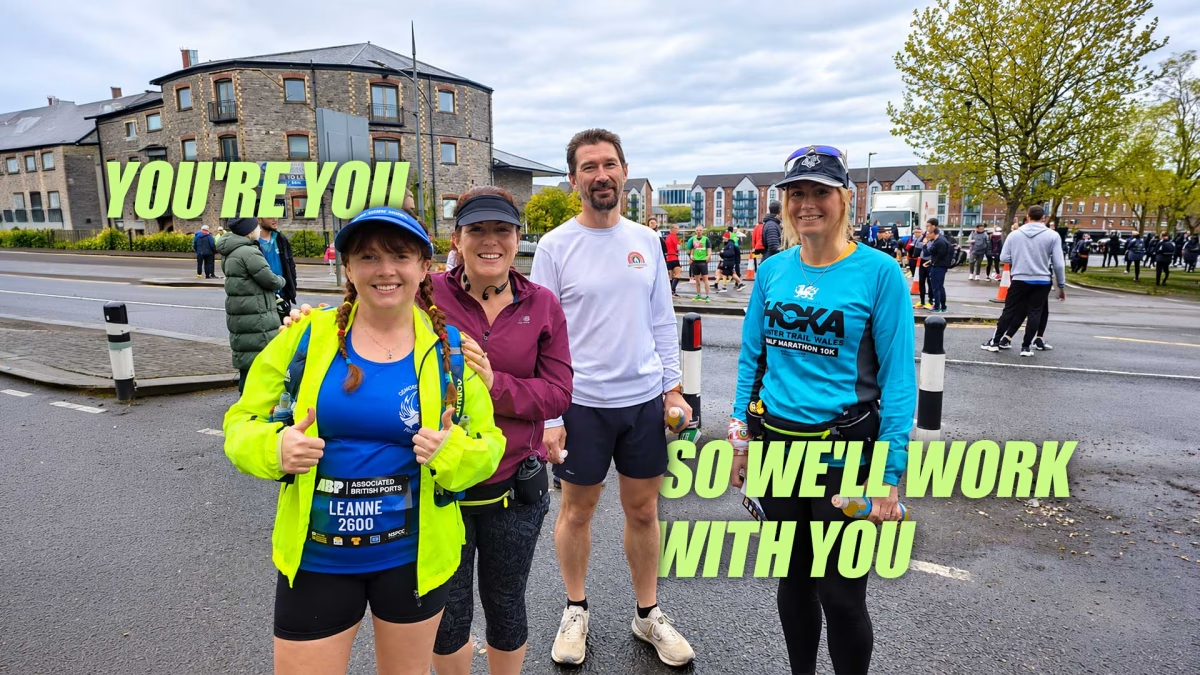
Ask Steven what he repeats most to his athletes and three things come back.
The first is to stop measuring themselves against everyone else. Almost every runner does it, and it most certainly does not add value to what they are trying to accomplish.
“I don’t much care about everybody else. You’re you. So we’ll work with you.”
The second is to stop treating a single workout as a verdict. Athletes beat themselves up over one session, when the session is one of a couple of hundred in a block.
“I don’t even care if they skip their main key workout every single week if it scares them, because that just means I haven’t adjusted right.”
That last part is worth sitting with, because it reverses who owns the problem. A repeatedly skipped session is information for the coach. His response is a conversation about why, followed by a different session that produces a similar adaptation and that the athlete will actually do.
The third is to keep it fun. If an athlete wants to go away for the weekend, the long run moves to Thursday and they get two easy social runs with their mates instead. If they want to stop on a trail to take a photo or get an ice cream, they should.
“It’s supposed to be enjoyable. Maybe don’t stop in the middle of your hard interval, but when you’re doing your long run down the coast, stop and take photos.”
Coaching Around Real Life
Some of the craft is in what a session gets called. Steven has watched an athlete panic at the words “tempo run” and the target pace that came with it. Describe the same session as an easy chunk, then a stretch at 5K pace, then an easy chunk home, and they will go and do it.
“It’s not technically dead on a tempo run, but it’s the same principle. They’ll do the one, they won’t do the other because of the naming. It’s strange but it works.”
The same flexibility applies to a runner’s existing schedule. He will often work around the track club session, rather than build a separate workout. He will often adjust the structure to allow the athlete to participate with the club but also get the expected stimulus from the plan done. Coaching sits alongside the social running an athlete already values, which is a large part of how he answers the assumption that hiring a coach means giving that up.
Persuading people to hire a coach at all is the harder part. In the UK, he says, the instinct across most things is to figure it out yourself.
“Coaching is a lot more than a couple of runs on a sheet. Quite often it’s why they found that day hard, which has nothing to do with running. It’s everything that came before.”
Technology in Service of the Coach
Steven sends every athlete a short weekly form covering sleep, mood, stress, and one metric that is entirely his own: how loud their foot fall sounds, scored out of ten. Heavier landings are one of his early indicators of accumulating fatigue, and it is the kind of signal no device reports.
Responses drop into a spreadsheet, and he reads them as a trend rather than a weekly snapshot. What he is watching for is drift. Stress scores climbing over a month. Perceived effort creeping up while the sessions themselves have stayed the same, which usually means something outside training is moving.
That instinct runs through how he builds training too. A plan is not just a set of sessions but a set of conditions, so terrain, fueling, and the environment an athlete will actually race in all feed into it. Heat and elevation change what a week should look like. So does whether a runner can carry what they need. It is the same practical knowledge that got him through his own long races, applied on someone else’s behalf.
What he does not want is a tool that writes the training for him. The value is in what it surfaces, so that the judgment call still belongs to the coach and arrives better informed.
Which is roughly where his relationship with software sits. Steven is one of the more generous coaches we work with when it comes to feedback: specific, unsentimental, and usually followed by a scenario from his own athlete roster that explains exactly why something does not work yet. Several parts of the EndoGusto Training Arc took the shape they did thanks to his commitment to helping software develop the way it is actually used.
What’s Next for PFM Coaching
Coaching is still part-time alongside a full-time job, and Steven is candid that he would take it full-time tomorrow if the athlete numbers supported it. The pull is not the business.
“I get just as much of a rush out of the coaching as I’ve ever got at any of my own events. When one of my runners finishes, or even just does one of their workouts and says, I didn’t think I could do that, that’s no different to me finishing and being given a medal.”
Somewhere right now, someone is hearing about an impressive endurance event and saying out loud that they are going to do that one day. Most of them will never find out what the first step is supposed to look like.
Steven did not know either, but ten years and thirty ultras later, that is still the runner PFM Coaching is built for. Not the one with a plan. The one with a notion.