Triathlon Training Plans: How Coaches Structure Swim Bike Run
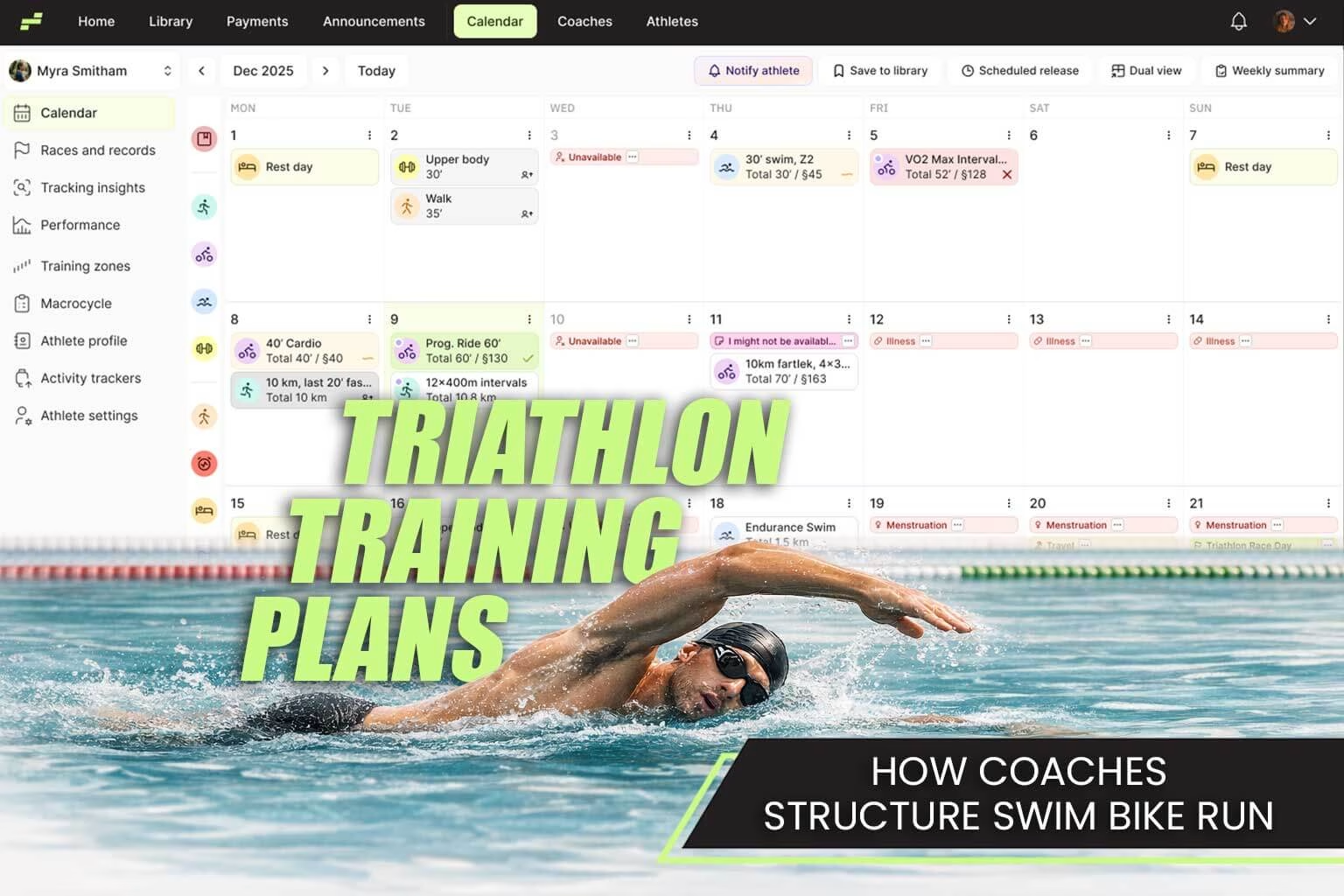
A triathlon training plan is more than a list of workouts dropped into a calendar. In fact, where each session sits relative to the others determines whether the athlete absorbs the training or simply survives it. A threshold ride on Tuesday followed by track intervals on Wednesday might look productive in a training log, but in practice, it produces two mediocre sessions instead of one great one.
An athlete might train nine sessions per week: three swims, three rides, three runs. On paper, the volume looks right. However, every race ends the same way: a solid bike leg followed by a run that falls apart after the first two kilometers. The problem most likely isn’t fitness; it’s typically how those nine sessions are arranged.
Therefore, structuring the week is where planning becomes craft. This article breaks down how to sequence swim, bike, and run sessions across different triathlon distances, from sprint to full. You’ll find practical weekly templates, session pairing logic, and the scheduling mistakes that quietly sabotage months of preparation.
Key Takeaways for Coaches
- Why placing a hard bike before a key run often costs more than the bike session is worth.
- How sprint triathlon distances demand fewer sessions but sharper intensity placement.
- What a functional seven-to-nine-session week looks like for Olympic-distance athletes.
- Why the long ride, not the long run, anchors a half or full-distance training week.
- Which session-pairing patterns protect adaptation, and which ones create interference.
Why Session Order Matters More Than Session Count in a Triathlon Training Plan
Most coaches understand progressive overload, but session sequencing is less easy to grasp. Yet, in a triathlon training plan, where three sports share the same recovery budget, the order of sessions within a week often matters more than total volume.
Fatigue Doesn’t Reset Overnight
A common planning mistake is treating each training day as independent, but It isn’t. A long ride on Saturday leaves residual glycogen depletion and neuromuscular fatigue that carries into Sunday. As a result, the athlete starts that session already compromised. The training log shows two quality sessions, but the body experienced one decent ride and one mediocre run.
This carryover effect is especially pronounced between cycling and running. Both load the quadriceps and hip flexors; both tax the aerobic system at similar intensities. Stacking hard efforts in these two disciplines on consecutive days is one of the fastest ways to flatten an athlete’s run development. Swimming, on the other hand, produces less orthopedic stress. Instead, a moderate swim session between two land-based key days acts as active recovery rather than additional load.
The Interference Problem in Three-Sport Programs
Researchers have long noted that concurrent training in endurance and strength can blunt adaptation in both (Hickson, 1980). In a triathlon training plan, a similar interference exists between disciplines. A high-intensity bike session elevates cortisol and depletes muscle glycogen, which in turn reduces the quality of any run session that follows within 24 hours.
Coaches who build periodized triathlon training plans already manage this across phases. However, the weekly microstructure deserves equal attention. Two athletes can follow the same macrocycle with identical volume targets and produce very different results based solely on how they distribute sessions within each week.
What Sequencing Actually Controls
Session placement determines three things. First, it controls which workouts receive the athlete’s freshest state, and therefore produce the strongest adaptation signal. Second, it dictates recovery windows between sessions targeting the same muscle groups or energy systems. Third, it shapes the athlete’s perceived effort, which over weeks affects motivation and compliance. Consequently, a plan that consistently places key sessions after inadequate recovery doesn’t just underperform. It burns athletes out.
Building the Weekly Skeleton for Each Triathlon Distance
A weekly plan should start with anchor sessions, instead of filling every available slot. Anchor sessions are the one or two workouts per discipline that carry the highest adaptation value for the target race. Everything else supports them, either by building complementary fitness or by protecting recovery. Once the anchors are placed, the remaining sessions fill in around them.
However, this approach changes depending on race distance. Sprint athletes need fewer sessions, but higher intensity. Olympic-distance programs demand a broader spread, while half and full-distance plans require careful management of long-session fatigue. What follows are practical weekly templates for a triathlon training plan built for each distance, based on the sequencing principles covered above.
Sprint Triathlon Distances: Four to Six Sessions That Hit Hard
Athletes preparing for sprint triathlon distances don’t need huge amounts of volume. Instead, they need sharp, race-specific intensity placed on fresh legs. A typical sprint week uses four to six sessions, with two or three designated as key workouts, while the remaining sessions serve as skill maintenance or easy aerobic work.
Because sprint races last roughly 60 to 90 minutes, the primary energy system is VO2max and high-end aerobic capacity. Therefore, the key sessions should target one of these. Spreading intensity across too many sessions dilutes the training stimulus. In practice, a sprint athlete who trains five times per week with two genuinely hard sessions will outperform one who trains seven times with no clear priority.
| Day | Session | Type | Intensity | Notes |
| Monday | Rest | — | — | Full recovery day |
| Tuesday | Bike intervals | Key | 5×3 min at 110% FTP | Primary neuromuscular stimulus |
| Wednesday | Easy swim + drills | Support | Low aerobic | Technique focus, 2,000 m total |
| Thursday | Run intervals | Key | 6×800 m at 5K pace | Second key session on fresh legs |
| Friday | Rest or easy spin | Support | Recovery | 30 min if legs feel good |
| Saturday | Race-pace brick | Key | 20 km bike + 3 km run | Simulate transition at race effort |
| Sunday | Open-water swim | Support | Moderate | Practice sighting, 1,500 m |
In particular, notice the two full rest days. Sprint athletes often resist rest because the training feels low in volume. However, the quality of Tuesday and Thursday depends entirely on what precedes them. Fatigue from a “bonus” Monday run would compromise the bike intervals that matter most.
Olympic Distance: Balancing Volume and Speed Across Seven to Nine Sessions
Olympic-distance racing, covered in depth in our guide Olympic triathlon distances and race tactics, sits in a physiological middle ground. Athletes need enough aerobic volume to sustain roughly two hours of racing, but alos enough intensity work to hold threshold pace across all three legs. This means seven to nine sessions per week, with three to four key sessions spread carefully.
The biggest sequencing challenge at this distance is protecting the key run. Cycling volume tends to creep upward because the bike leg is longest, and coaches consequently default to adding ride time. As a result, the Thursday or Friday run session inherits fatigue from midweek cycling. Placing the week’s hardest run at least 48 hours after the hardest ride solves this.
| Day | Session | Type | Intensity | Notes |
| Monday | Easy swim, 2,500 m | Support | Low aerobic | Recovery from weekend; drill focus |
| Tuesday | Bike tempo | Key | 2×15 min at 95% FTP | Sustained threshold work |
| WednesdayAM | Run intervals | Key | 5×1 km at threshold | 48 hours after Saturday’s long ride |
| WednesdayPM | Easy swim, 2,000 m | Support | Low aerobic | Skills and pacing sets |
| Thursday | Easy spin, 45 min | Support | Recovery | Flush legs before Friday |
| Friday | Swim threshold | Key | 8×200 m at CSS pace | Main swim stimulus for the week |
| Saturday | Long ride, 80–90 km | Key | Mostly Zone 2, final 20 min at tempo | Weekend anchor session |
| Sunday | Moderate long run, 14 km | Support | Zone 2, steady | Build aerobic run base, not a key session |
Two things to notice in this layout. First, the key run on Wednesday sits two full days after Saturday’s long ride and one full day after Tuesday’s bike tempo, giving the legs their best available window. Similarly, Sunday’s long run is deliberately moderate, not a key session, because it follows the week’s biggest ride. Coaches who make both Saturday and Sunday high-effort sessions rarely see athletes complete three consecutive quality weeks.
Half and Full Distance: Managing Twelve-Plus Sessions Without Collapse
As weekly hours climb toward 12 and beyond in a long distance triathlon training plan, the risk shifts from neuromuscular fatigue to accumulation damage. Long sessions become the primary driver of race-specific adaptation at these distances. A single four-hour ride teaches the body more about pacing and fueling for a full-distance bike leg than three 90-minute rides combined. The plan must therefore protect these long anchor sessions above everything else.
For coaches programming at the half or full-distance triathlon level, the weekly structure typically includes 10 to 12 sessions, with the long ride and long run serving as non-negotiable anchors. Intensity work still appears, but in smaller doses and placed early in the week when the athlete is freshest.
| Day | Session | Type | Intensity | Notes |
| Monday | Rest | — | — | Essential after the weekend block |
| TuesdayAM | Swim endurance, 3,500 m | Key | CSS-based main set | Primary swim session of the week |
| TuesdayPM | Bike intervals | Key | 3×8 min at 105% FTP | Intensity on fresh legs after rest day |
| WednesdayAM | Easy run, 8 km | Support | Zone 2 | Aerobic maintenance only |
| WednesdayPM | Easy swim, 2,500 m | Support | Low aerobic, drills | Technique and active recovery |
| Thursday | Bike endurance, 60 km | Support | Zone 2 | Steady volume, no hard efforts |
| FridayAM | Run tempo | Key | 25 min at half-marathon pace | Last key session before the weekend |
| FridayPM | Easy swim, 2,000 m | Support | Low aerobic | Prehab for the long weekend |
| Saturday | Long ride, 140–160 km | Key | Zone 2 with race-pace segments | Weekend anchor, includes fueling practice |
| Sunday | Long run, 22–26 km | Key | Progressive, easy to moderate | Second anchor, off tired legs by design |
The Sunday long run off Saturday’s long ride is intentional at this distance. Unlike the Olympic plan, where Sunday stays moderate, the full-distance athlete must practice running on fatigued legs because that is exactly what race day demands. However, this only works when Monday is a genuine rest day and Tuesday’s intensity session follows a full recovery window. Remove that Monday rest and the whole structure collapses within three weeks.
How Coaches Sequence Swim, Bike, and Run Within a Triathlon Training Plan

The tables above show where sessions land on specific days. However, the logic behind those placements deserves its own explanation. Coaches who understand why certain pairings work, and why others quietly bring on fatigue, can adapt any template to fit their athlete’s schedule without breaking the underlying structure.
The 48-Hour Rule for Same-Discipline Intensity
When two sessions in the same discipline both carry high intensity, they need at least 48 hours of separation. Two hard runs within 36 hours don’t double the adaptation stimulus. Instead, the second session runs on depleted glycogen and compromised neuromuscular function, which shifts the training effect from speed development toward survival. The athlete gets slower, not faster.
This rule applies most strictly to running, where eccentric muscle damage compounds quickly. Cycling is slightly more forgiving because it involves less impact stress and swimming is the most tolerant of close spacing because it is non-weight-bearing. Therefore, a coach can schedule two moderate-to-hard swim sessions 24 hours apart with minimal interference. But trying the same with running almost always costs more than it returns.
Cross-Discipline Pairings That Work
Not all back-to-back sessions create interference. In fact, some combinations are genuinely productive. An easy swim the morning after a hard bike flushes lactate and promotes blood flow without adding orthopedic stress. Similarly, a technique-focused swim before a key run session can serve as an extended warm-up that loosens the shoulders and activates the core without fatiguing the legs.
The bike-to-run pairing also works in specific contexts. Brick sessions, where a ride transitions directly into a short run, train the neuromuscular shift that athletes experience in T2. These belong in the plan as deliberate key sessions, however, not as random scheduling chance. Programming a hard Thursday ride and a hard Friday run hasn’t created a brick. More likely, these are two compromised sessions.
Pairings That Undermine Adaptation
Some combinations look efficient on paper but consistently produce poor results. For example, a long ride followed the next morning by a threshold run is the most common offender. The athlete’s quadriceps and hip flexors are still fatigued from hours of pedaling, so they compensate with altered running mechanics. In time, this pattern doesn’t build toughness, it builds injury risk.
Similarly, placing a hard swim session the evening before a key bike workout can be more costly than coaches expect. The swim itself may not fatigue the legs, but a high-intensity pool session elevates systemic fatigue, disrupts sleep quality, and depletes glycogen stores that the cyclist needs the next morning. For athletes training at half and full triathlon distances, where session density is already high, even small recovery compromises compound across a training block.
A Quick Reference for Session Pairing
Coaches can use these principles as a mental checklist when building or adjusting a weekly plan. Place the week’s most important session on the day with the best recovery window behind it. Surround key sessions with easy or off days, using swimming as the buffer discipline between hard land sessions. And when two key sessions must fall on consecutive days, make sure they target different disciplines and different energy systems.
Common Scheduling Mistakes That Break a Triathlon Training Plan
Even experienced coaches fall into scheduling patterns that look logical but quietly undermine their athletes’ progress. These mistakes rarely cause immediate problems. Instead, they erode consistency over weeks, and by the time the damage shows up in race results, the cause is hard to trace back to the calendar.
Treating Every Run as a Key Session
Running is the discipline most athletes want to improve, so coaches often respond by making every run count. Monday becomes a tempo run. Wednesday becomes intervals. Saturday becomes a long progressive effort. On paper, the athlete is running three quality sessions per week, but in reality, it is questionable how much of these trainings have actually been absorbed.
A more effective approach, however, is to designate one, sometimes two, run sessions per week as key efforts and let the rest serve as easy aerobic volume. The athlete who runs 8 km on Wednesday at an easy pace will produce a far better threshold session on Friday than the one who pushed tempo on Wednesday and shows up to Friday already carrying residual fatigue.
Stacking Key Sessions on Consecutive Days
This is the scheduling equivalent of compound interest working against you. A hard Tuesday ride followed by hard Wednesday intervals followed by a threshold swim on Thursday might fit neatly into a weekly template. However, by Thursday the athlete is operating on accumulated fatigue from two prior key sessions. The swim workout’s intended stimulus, say CSS-pace repetitions, gets compromised because the body is still processing stress from the previous 48 hours.
The fix is simple in theory but requires discipline in practice. Essentially, no more than two key sessions should appear on consecutive days. When they do, they must target different disciplines and different energy systems. A bike tempo on Tuesday paired with a technique-heavy swim on Wednesday works. However, a bike tempo on Tuesday paired with run intervals on Wednesday rarely does.
Ignoring the Recovery Value of Swimming
Many coaches treat swimming as the discipline that gets whatever time is left over. It ends up on random days, squeezed into lunch breaks, or skipped entirely during heavy bike and run blocks, but this is a missed opportunity.
Swimming is the lowest-impact discipline in triathlon. It doesn’t load the joints, it promotes blood flow, and a well-placed easy swim session between two hard land days accelerates recovery rather than adding fatigue. Coaches who build their triathlon training plans with swim sessions placed strategically often find that their athletes’ bike and run quality improves, not because the swimming made them fitter, but rather because it gave their bodies a productive way to recover.
Structure the Week Before You Fill It
A triathlon training plan only works when the architecture is right. Sessions placed without sequencing logic produce inconsistent adaptations, regardless of how well each individual workout is designed. Therefore, the coaches who get the best results from their athletes are rarely the ones writing the hardest sessions. They are the ones placing the right sessions on the right days.
Start with anchor sessions for each discipline. Protect them with recovery windows. Use swimming as the buffer between hard land days. Then fill in the supporting work around what remains. The weekly template shouldn’t be a fixed document; it’s a framework that flexes around the athlete’s life, fatigue state, and race calendar. However, the underlying sequencing logic should stay constant.
When those structural decisions are right, athletes don’t just train more consistently. They arrive at the start line having absorbed the training, not merely completed it.

Build Smarter Triathlon Training Plans With EndoGusto
Suggested References
- Hickson, R.C. (1980). Interference of strength development by simultaneously training for strength and endurance. European Journal of Applied Physiology and Occupational Physiology, 45(2–3), 255–263.
- Bentley, D.J., Millet, G.P., Vleck, V.E., and McNaughton, L.R. (2002). Specific aspects of contemporary triathlon: implications for physiological analysis and performance. Sports Medicine, 32(6), 345–359.
- Mujika, I. (2014). Olympic distance triathlon: elite performance and training. In World Book of Swimming: From Science to Performance. Nova Science Publishers.