Triathlon Season Planning: How to Design a Season With Smart Peaks

Intro
Last April, a coach posted a familiar question in an online coaching forum: “My athlete has five races between May and September. How do I peak for all of them?” The honest answer, which arrived in various forms from a dozen experienced coaches, was blunt: you don’t. The question reveals the triathlon season planning problem that surfaces every season.
Athletes sign up for races. Coaches try to prepare them for each one. The calendar fills up, training blocks compress, recovery gets shortened, and by August the athlete is running on fumes at the event that was supposed to be the highlight of their year. The triathlon training plan looked reasonable on paper. In practice, it tried to do too much.
Season planning in triathlon is fundamentally about making choices. Which races deserve a genuine peak? Which ones serve a different purpose entirely? How much space does an athlete actually need between peak efforts before the next build can begin? These decisions shape everything downstream, from weekly session placement to taper length to how an athlete feels crossing the finish line in September versus limping across it. This article walks through the principles that help coaches design a triathlon training plan with smart, sustainable peaks rather than a crowded calendar of half-prepared performances.
Key Takeaways for Coaches
- A peak is an expression of fitness already built, not a last-minute creation.
- Most athletes can realistically support one to two genuine peaks per season.
- Cumulative fatigue across three disciplines is the variable most likely to undermine a triathlon training plan.
- Anchor races should shape the season structure. Every other event fits around them, not the reverse.
- Triathlon season planning is a long-term development tool. Not every year needs to chase peak performance.
- Why spacing between peak attempts matters more than the quality of any single training block.
What Peaking Actually Means in Triathlon Season Planning
Peaking is one of the most overused and least understood concepts in endurance coaching. Athletes use it casually: “I want to peak for Nationals.” Coaches sometimes treat it as a scheduling trick, something achieved by tapering at the right moment. In reality, a peak is more specific than either of those uses suggest.
A peak represents a temporary window where three conditions overlap. The athlete has accumulated meaningful fitness through weeks of consistent, progressive training. Residual fatigue has been sufficiently reduced through managed recovery. Training specificity has been high enough in recent weeks that the athlete’s body is prepared for the exact demands of the target race. When all three align, performance is expressed. When any one is missing, the athlete races below their potential, sometimes without understanding why.
Why Peaking Is Harder in Triathlon Than Single-Sport Racing
In running or cycling, a coach manages one fatigue stream and one adaptation timeline. In triathlon, they manage three. Each discipline generates its own fatigue signature and adapts at its own pace. Swim-specific neuromuscular patterns can erode within two weeks of reduced volume. Cycling aerobic adaptations tend to be more durable, holding for three to four weeks with minimal maintenance. Run structural resilience, particularly in connective tissue, is the slowest to build and the fastest to lose when training is interrupted.
These mismatched timelines create genuine tension when designing a taper. Reducing swim volume too early may leave the athlete feeling clumsy in the water on race morning. Maintaining run volume too late may leave residual soreness that compromises the bike. There is no universal taper formula for triathlon. Instead, coaches must make discipline-specific adjustments based on how each athlete responds, which is one reason why triathlon season planning rewards experience and observation over rigid templates.
The Difference Between Feeling Fresh and Being Ready
Athletes often conflate freshness with readiness. After a deload week, they feel light and fast, and assume they are at their best. However, freshness without underlying fitness is just rest. An athlete who takes ten days off before a race may feel fantastic on the start line and fade by the halfway point because the fitness to sustain output was never built.
Conversely, an athlete who arrives at race day carrying slight residual fatigue from a well-designed build may not feel their sharpest during warmup but can sustain race-pace output for hours. This is why smart peaks are planned backward from the target race. The taper reveals what the training block produced. It does not create something that was never there.
Why Triathlon Season Planning Requires a Different Planning Logic
Single-sport athletes can often build effective training plans using relatively simple periodization models. A runner targeting a fall marathon might follow a sixteen-week linear progression, with a predictable taper. In triathlon, that approach breaks down almost immediately, because training stress comes from three directions simultaneously and the interactions between them are not always obvious.
Cross-Discipline Fatigue Is the Hidden Variable
Consider a coach who programs a demanding bike-focused week: two threshold sessions on the bike, a long weekend ride, and moderate swim and run work around them. On paper, run volume is reasonable. In practice, the cycling load generates systemic fatigue that depresses run quality for the rest of the week. The athlete’s Tuesday tempo run feels sluggish. Their Thursday easy run is slightly harder than expected. By Saturday’s long ride, they are starting to accumulate a deficit that will not fully resolve before Monday.
This kind of cross-discipline interference is invisible in single-discipline data. A coach tracking bike the bike stress score might conclude the week was well managed. The run data, however, tells a different story. For this reason, effective triathlon season planning must account for global training stress rather than treating each discipline as an independent ledger. As explored in our overview of how triathlon distances shape coaching decisions, the interaction between disciplines intensifies as race distance increases, making integrated load management progressively more important.
Small Errors Compound Across Months
A slightly aggressive volume increase in March feels manageable. The athlete absorbs it and performs well in an April tune-up race. Encouraged, the coach maintains the higher load through May. By June, the athlete’s easy runs are three to five beats per minute higher than expected. Sleep quality dips. A nagging hip flexor tightness appears. None of these signals are alarming in isolation. Together, they indicate that the March decision set a trajectory the athlete could not sustain.
Season-level planning errors rarely announce themselves dramatically. They accumulate quietly, often revealing their cost at the worst possible moment: the priority race in July or August where the athlete was supposed to be at their best. Coaches who plan conservatively and build in margin for the unexpected consistently produce better outcomes than those who optimize every week to its theoretical maximum.
How Many Peaks Can a Triathlon Training Plan Actually Support?
The answer is almost always fewer than the athlete wants to hear. Most age-group triathletes can genuinely peak once or twice per season. Elite athletes with deeper training histories and better recovery infrastructure might manage three. Beyond that, peaks become progressively shallower because the preparation and recovery time they require starts overlapping.
Race Format Constrains Peak Frequency
Sprint and Olympic-distance racing allows tighter spacing between peak efforts because the race-day stress is lower and recovery is faster. An athlete might target a strong Olympic-distance performance in June and another in September, with a meaningful training block between them. At full distance, however, the arithmetic changes dramatically. A single Ironman-distance race can require twelve to twenty weeks of dedicated preparation and four to six weeks of genuine recovery afterward. Fitting two full-distance peaks into one calendar year is possible but leaves almost no room for anything else.
Half-distance racing sits in between. Most athletes can support one to two half-distance peaks per season, provided the races are separated by at least eight to ten weeks and the intervening period includes both recovery and a genuine build phase, not just maintenance.
Priority Races Versus Training Races
A useful distinction that simplifies season planning is the difference between A-races, B-races, and C-races. A-races are the events where the athlete wants to perform at their absolute best. These justify a full taper, peak-specific preparation, and post-race recovery. B-races are important but secondary. The athlete competes seriously but does not taper fully, treating the race as a high-quality training stimulus and execution rehearsal. C-races are training opportunities: chances to practice transitions, test nutrition, or gain open-water experience with no performance expectations.
Most athletes should have one or two A-races per season. Everything else is a B or C. When coaches and athletes agree on this hierarchy early, the triathlon training plan gains structure and direction. When every race is treated as equally important, the plan drifts toward chronic under-recovery and diluted preparation.
Training Age and Resilience Shape the Ceiling
An athlete in their sixth year of triathlon, with consistent year-round training and no major injuries, tolerates a denser race calendar than one in their second season. This is not just about fitness. Experienced athletes have deeper structural resilience (tendons, ligaments, and bones that have adapted to repetitive load), more efficient movement patterns that reduce the metabolic cost of racing, and better self-regulation skills that allow them to race at B-effort without accidentally turning every event into a peak attempt. Newer athletes often lack these buffers, which means each race exacts a higher cost and each recovery takes longer.

Turn Season Strategy Into Structured Training
Placing Smart Peaks Across the Season
Once the number of realistic peaks is established, the next question is where they go. The answer starts with the A-races and works backward.
Anchor the Season Around A-Races
A-races are fixed points. The rest of the season orbits around them. A practical approach is to start by marking the A-race dates on the calendar, then working backward to block out the preparation phases each one requires. For an Olympic-distance A-race, that might mean an eight-to-ten-week build phase plus a ten-to-fourteen-day taper. For a full-distance race, twelve to twenty weeks of build plus a two-to-three-week taper. After each A-race, block out two to four weeks of recovery (longer for full distance). Whatever calendar space remains is where B-races, C-races, and general development training fit.
This approach prevents a common planning mistake: scheduling a B-race three weeks before an A-race, then realizing the B-race disrupts the final build phase. When the A-race dates are established first, conflicts become visible early enough to resolve them.
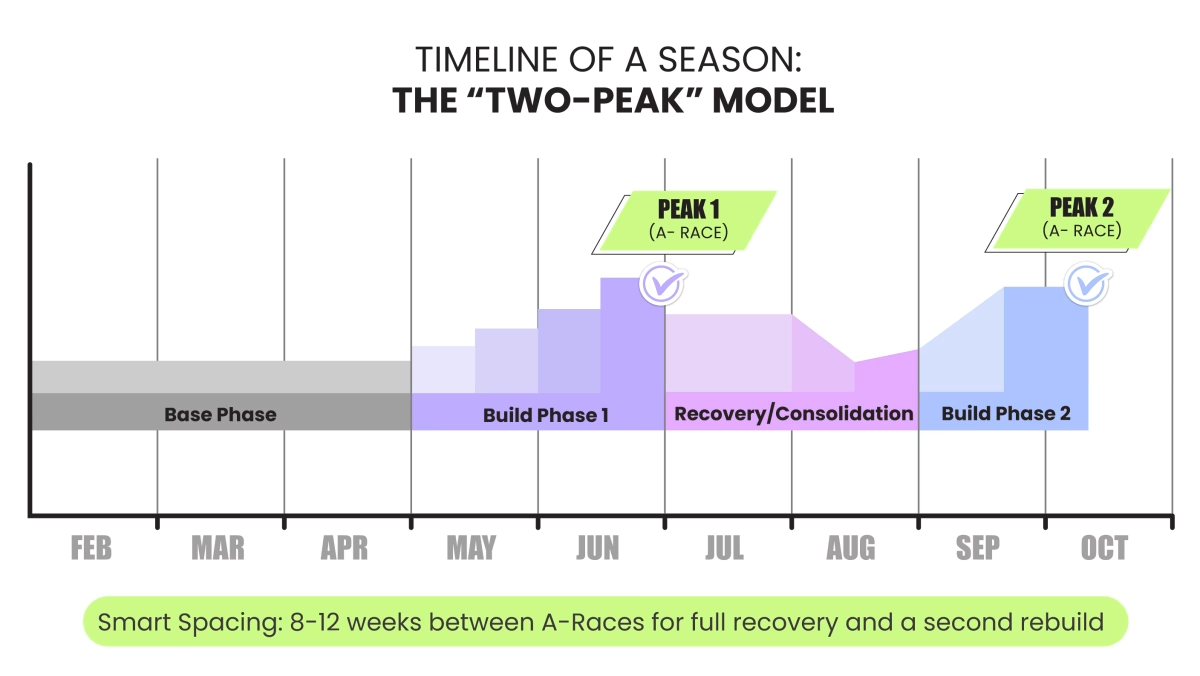
Spacing Peaks to Protect Adaptation
The minimum viable spacing between genuine peaks depends on race format and athlete resilience. For sprint and Olympic distance, six to eight weeks between A-races is typically sufficient. At the half-distance, ten to twelve weeks. For full distance, most athletes need sixteen weeks or more between peak efforts, and many coaches recommend only one full-distance A-race per year.
These intervals are not arbitrary. They reflect the time required to recover from peak-effort racing, rebuild training load, achieve meaningful adaptation, and then taper again. Compressing this cycle produces progressively weaker peaks. The first race may go well. The second feels harder than expected. The third, if attempted, often falls well below the athlete’s potential.
What Happens Between Peaks
The period between A-races is not dead time. It is where the real work happens. A coach might use the first two weeks for active recovery and reduced volume, the next four to six weeks for a genuine training block that addresses limiters exposed by the previous race, and the final two to three weeks for race-specific preparation and taper. B-races can slot into the middle of this period as fitness checks or execution rehearsals, provided they do not disrupt the underlying training progression.
The mistake to avoid is treating the inter-peak period as maintenance. If the athlete is merely holding fitness rather than building it, the second peak will be no better than the first. Worse, the athlete may have lost structural durability during the post-race recovery, leaving them more vulnerable to breakdown in the next build.
Building Training Blocks That Actually Produce a Peak
A smart peak is the visible output of invisible work done weeks earlier. The final ten days before an A-race mostly just manage fatigue. The fitness that determines race-day performance was built in weeks four through ten of the preceding training block. Coaches who understand this sequence plan differently than those who try to cram preparation into the final stretch.
Phase 1: Aerobic Foundation and Limiter Identification
The first three to four weeks of a training block establish the aerobic base that everything else sits on. Volume increases gradually. Intensity stays moderate. The coach observes how the athlete responds: which discipline absorbs load easily, which one creates disproportionate fatigue, and where execution breaks down first. These observations shape the rest of the block. An athlete whose easy-pace running heart rate is drifting upward needs a different plan than one whose swim technique deteriorates under fatigue.
Phase 2: Progressive Overload and Specificity
Weeks five through eight (or ten, for longer builds) are where targeted adaptation happens. Training stress increases in the areas that matter most for the target race. For an Olympic-distance peak, this might mean sustained threshold work on the bike and tempo runs at projected race pace. For a half-distance peak, it might emphasize longer steady-state rides with embedded fueling practice and progressive brick sessions. The specificity principle applies: the closer the training resembles race demands, the more effectively the body prepares for those exact demands.
Throughout this phase, coaches must resist the temptation to increase everything simultaneously. A common error in triathlon season planning design is raising bike volume, run intensity, and swim frequency all in the same week. The systemic load often exceeds what any single discipline’s data would predict. Instead, stagger increases across 2-3 week windows, allowing the athlete to absorb one stimulus before adding the next.
Phase 3: Consolidation and Taper
The final phase before the A-race is about subtraction, not addition. Volume decreases. The remaining sessions maintain intensity briefly but reduce duration. The athlete sleeps more, fuels well, and arrives at race day with their accumulated fitness intact and their fatigue substantially reduced.
A common coaching mistake during this phase is second-guessing the training block. The athlete feels sluggish in the first few days of taper (this is normal). The coach worries they have not done enough and adds an extra threshold session. That session generates fresh fatigue that does not resolve before race day. A better approach is to trust the preparation, keep the taper plan intact, and remind the athlete that feeling slightly heavy early in the taper is a sign that the body is absorbing the previous weeks of work.
Common Season Planning Mistakes That Undermine Triathlon Season Planning
Treating Every Race as an A-Race
This is the most common planning error and the most damaging. When every race on the calendar receives full taper treatment, the season fragments into a series of mini-peaks separated by inadequate build phases. The athlete never trains long enough to produce meaningful adaptation, because every three to four weeks the plan shifts into taper mode. By midsummer, they have raced five times and improved at nothing.
The solution is straightforward: assign a clear hierarchy before the season begins. Most athletes need to hear that racing at 90% effort with a slightly compromised taper is not a failure. It is, in fact, a more productive use of the B-race than sacrificing three weeks of training for a marginally better result.
Underestimating Recovery Between Peaks
Recovery debt is the quietest threat in triathlon season planning. An athlete finishes an A-race on Sunday, feels good by Wednesday, and wants to resume training. Three weeks later, they catch a cold that sidelines them for ten days. The cold is not bad luck. It is the immune suppression that follows sustained high-level effort, compounded by returning to training before systemic recovery was complete.
Coaches should plan recovery windows that feel slightly too long rather than slightly too short. A genuinely recovered athlete rebuilds faster and absorbs the next training block more effectively than one who returned to hard training prematurely. Two extra days of easy movement in June often pay for themselves with a stronger August.
Planning Each Discipline in Isolation
Swim coaches, bike coaches, and run coaches each optimize their own discipline. A triathlon coach must optimize the interaction between all three. When a triathlon training plan is built discipline by discipline, without accounting for systemic load, the result is often an athlete who looks well prepared on paper and shows up to races chronically fatigued. Each discipline’s plan might be perfectly reasonable in isolation; combined, they exceed the athlete’s capacity to absorb.
Integrated planning means tracking total training stress (not just discipline-specific metrics), monitoring recovery indicators that reflect systemic load (resting heart rate trends, sleep quality, perceived effort at easy intensity), and being willing to cut a swim session to protect a key bike-run day. The disciplines are not independent. The plan should not treat them as though they are.
Compressing the Build Phase
Athletes often register for races late and then ask their coach to prepare them in eight weeks instead of fourteen. The coach, wanting to be accommodating, compresses the plan. Volume ramps faster. Specificity arrives earlier. Recovery weeks get shortened or skipped. The athlete may still finish the race. They rarely race well, and the accelerated build frequently produces an injury or illness that disrupts training for weeks afterward.
Honest communication early protects the season. Telling an athlete that they can race but should not expect a peak performance is better than engineering a compressed build that risks their health and their subsequent training block.
Season Planning as Long-Term Athlete Development
Not every season needs to target peak performance. This is one of the hardest concepts to sell to competitive athletes, but it is one of the most important principles a triathlon training plan can reflect.
Some seasons are best used for foundation building: developing aerobic capacity, strengthening connective tissue, addressing technical weaknesses, and accumulating training volume that the athlete has never previously sustained. These seasons may include races, but the races serve as checkpoints rather than climaxes. The athlete might race a B-effort Olympic distance in June to assess pacing discipline and then race another in September to measure improvement, without ever fully tapering for either.
Development Seasons Build Capacity for Performance Seasons
An athlete who spends one season building a robust aerobic base, improving swim mechanics, and learning to sustain eighty grams of carbohydrate per hour on the bike is not wasting a year. They are expanding the ceiling for every future season. When they do target an A-race the following year, the preparation starts from a higher baseline, the build phase is more productive, and the peak is higher because it sits on top of deeper fitness.
Coaches who explain this trajectory clearly, and who frame development seasons as investment rather than sacrifice, tend to retain athletes through the patience-testing middle years of their careers. Athletes who understand that their third season of triathlon is building the foundation for their seventh are more likely to stay engaged than those who expect a personal best every six months.
Managing Expectations Without Losing Motivation
Clear communication is the practical mechanism that makes development seasons work. At the start of the year, the coach explains which objectives matter this season, why certain races are classified as B or C events, and what measurable progress will look like even without a dramatic race result. Intermediate markers like heart rate efficiency trends on the bike, pace-to-effort ratios on the run, and improved stroke mechanics in the pool keep the athlete engaged with concrete evidence that the work is producing returns, even when the returns are not yet visible on a race clock.
Designing the Season Before Filling the Weeks
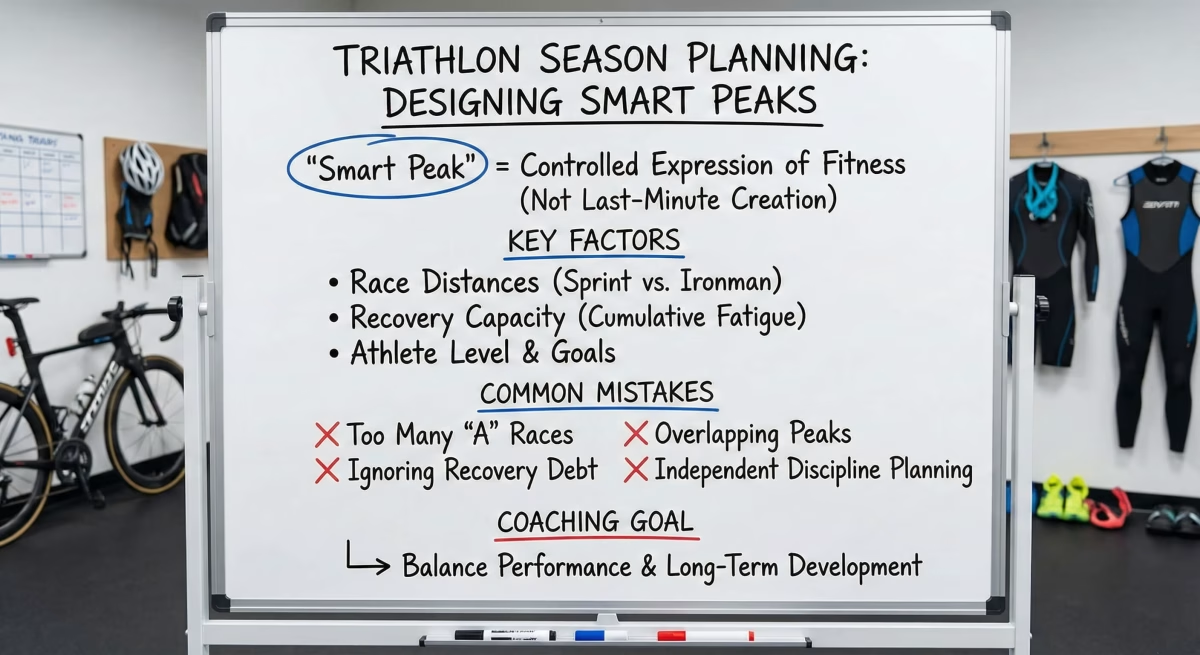
Triathlon season planning is only as strong as the season structure underneath it. Weekly sessions, interval prescriptions, and long-ride targets all matter. But they matter less if the season itself is poorly designed: too many peaks, too little recovery, no clear hierarchy between races, and no space for the athlete to actually adapt between efforts.
Smart season planning starts with a small number of decisions that shape everything else. Which races are A-races? How much preparation and recovery time does each one require? What happens in the space between them? When those questions are answered clearly, weekly planning becomes dramatically simpler. When they are avoided, every week becomes a negotiation between competing priorities.
EndoGusto supports coaches in translating season-level decisions into structured, visible training plans. By providing a clear view of training load, discipline balance, and progression trends across weeks and months, the platform helps coaches monitor whether the season is tracking toward its intended peaks or drifting off course. Season planning requires judgment. EndoGusto provides the clarity that lets that judgment land where it should.