Helping Beginner Triathletes Choose the Right Distance
Choosing the right triathlon distance is one of the most important early decisions a beginner triathlete will make.
For many athletes, the choice is emotional. They see friends racing a 70.3, hear stories about full-distance events, or assume that “longer equals better.” But for coaches working with beginners, the decision should be based on readiness, not ambition.
The distance an athlete chooses affects:
- Weekly training volume
- Recovery demands
- Injury risk
- Motivation sustainability
- Long-term development
Selecting the wrong triathlon distance too early can lead to burnout, frustration, or unnecessary setbacks. Selecting the right one builds confidence, consistency, and progression.
This article is designed to help coaches guide beginner athletes toward the most appropriate starting point, with long-term development in mind.
Key Takeaways for Coaches
- The “best” triathlon distance depends on training history, not ambition.
- Sprint is not automatically easier — it requires intensity tolerance.
- Olympic introduces meaningful endurance load and structure.
- 70.3 and full-distance events require significant lifestyle commitment.
- Long-term consistency matters more than choosing the longest distance early.
- A confident first experience increases athlete retention and motivation.
What Defines a Triathlon Distance?
At its core, a triathlon distance is defined by the length of the swim, bike, and run segments.
The most common formats include:
- Super Sprint (shorter than Sprint, often beginner-friendly events)
- Sprint
- Olympic
- 70.3 (half-distance)
- Full-distance
Each format represents not just a longer race, but a different training commitment and physiological demand.
If you’d like a more detailed breakdown of how each triathlon distance compares structurally, you can explore our full guide to Triathlon Distances Explained for Coaches.
For beginners, the key question shouldn’t be “how far is it?, but “what does preparing for this distance require?” The answer changes significantly from one format to the next.

Super Sprint and Sprint Triathlon Distances — Who Are They For?
For most beginners, Super Sprint and Sprint triathlon distances provide the most accessible entry point into the sport. Accessible, however, does not mean effortless.
Super Sprint — The Confidence Builder
Super Sprint events are shorter than traditional sprint formats and are often designed to attract first-time participants.
They are particularly suitable for athletes who are completely new to endurance sport, returning after a long break, or managing limited weekly training time. In many cases, 4–6 hours of consistent weekly training is enough to prepare successfully.
At this stage, the objective is not performance optimization. It is exposure and adaptation.
Athletes learn how to:
- Navigate open water without panic
- Manage basic transitions
- Handle equipment confidently
- Pace themselves across three disciplines
For beginners with a limited aerobic background, Super Sprint can provide the right balance between challenge and confidence. A positive first race experience often determines whether an athlete stays in the sport.
Sprint Triathlon Distances — The True Entry Standard
When most athletes talk about doing their first triathlon, they are usually referring to sprint triathlon distances.
The typical format includes a 750 m swim, 20 km bike, and 5 km run, a race that demands both aerobic fitness and intensity tolerance.
Sprint is often labeled as the “beginner distance,” but that description can be misleading. Because race duration is shorter, sprint racing is performed at a higher relative intensity, requiring athletes to sustain strong output across all three disciplines with little room for pacing errors.
For beginners who already have a basic endurance background and can train consistently five to eight hours per week, sprint can be an excellent starting point. But for those without structured training experience, the intensity component may feel surprisingly demanding.
Coaches should evaluate not only whether an athlete can complete the distance, but whether they can prepare for it safely and consistently.
For a deeper look at how to structure preparation for this format, see our article on Sprint Triathlon Coaching: Intensity Over Volume.
Coaching Perspective
When helping a beginner decide between Super Sprint and Sprint, the most important factors are training consistency and recovery capacity. Starting slightly shorter than an athlete believes they are capable of often results in better long-term progression.
The goal is not to prove fitness, but to build it.
Olympic Triathlon Distances — The First Real Endurance Step
For many athletes, Olympic triathlon distances represent the first meaningful shift from participation to endurance performance.
The standard Olympic format, 1.5 km swim, 40 km bike, 10 km run, doubles the swim and run of a sprint and significantly increases the aerobic demand of the bike. But the real change is not just numerical. It is structural.
Preparation for Olympic triathlon distances requires more consistent training, more deliberate load progression, and greater recovery awareness.
Unlike shorter formats, where intensity dominates, Olympic racing requires sustained aerobic output across two to three hours of continuous effort. Athletes must not only tolerate intensity, but manage it.
For beginner athletes, this distance becomes appropriate when they:
- Have completed at least one sprint comfortably
- Can train consistently 6–10 hours per week
- Demonstrate stable recovery patterns
- Show staying power in both bike and run sessions
- Even then, the transition should be intentional.
As explored in our article on From Sprint to Olympic: Managing the Transition Safely, the jump is not simply about adding distance. It requires adjusting pacing strategy, long-session progression, and overall weekly structure.
One of the most common coaching errors is assuming that athletes who finish a sprint “easily” are automatically ready for the Olympic distance. Finishing one and preparing for the other are different challenges.
At this level, coaches must begin managing long-ride progression, introducing more structured tempo work, extending the long run gradually, and monitoring fatigue across the week.
Olympic triathlon distances often serve as the first format where athletes feel the cumulative effect of three disciplines trained together. Fatigue becomes visible. Recovery becomes essential.
Is 70.3 a Good First Triathlon Distance?
This is one of the most common questions coaches hear from ambitious beginners.
The appeal is understandable. A 70.3 event feels substantial. It carries prestige. It represents a serious athletic challenge.
But the real question is not whether an athlete can complete a half-distance triathlon, it is whether they can prepare for it safely, consistently, and sustainably.
A 70.3 triathlon includes:
- 1.9 km swim
- 90 km bike
- 21.1 km run
For beginners, this typically requires 8–12+ hours of structured weekly training during peak preparation. Long rides extend beyond three hours. Long runs approach 90 minutes or more. Fueling becomes a mandatory skill, not an optional strategy.
Unlike sprint or Olympic formats, where pacing errors may be uncomfortable but manageable, half-distance racing exposes small mistakes in load management and energy balance.
That does not mean 70.3 is inappropriate for all beginners.
It may be reasonable when an athlete:
- Has a strong endurance background in cycling or running
- Can commit consistent weekly training time
- Demonstrates patience in progression
- And, has at least 4–6 months before race day.
However, coaches must guard against emotional decision-making.
Many athletes are drawn to half-distance events because they seem like the “next step.” But progression is not linear by default. A well-executed sprint or Olympic season often builds stronger long-term development than rushing into longer racing.
We explore the structural and performance demands of this format in more detail in our guide to 70.3 Triathlon Distances: Coaching the Middle Ground.
For beginners without a stable endurance base, 70.3 is often better approached as a second or third season objective rather than a starting point.
Why Full-Distance Is Rarely a Beginner Starting Point
Full-distance triathlon represents one of the most demanding formats in endurance sport. The real challenge for beginners is sustaining the preparation required to get to race day.
Training for a full-distance triathlon typically involves:
- Consistent weekly volume often exceeding 10–14 hours
- Long rides extending beyond four hours
- Progressive long runs approaching two hours
- Structured fueling rehearsal
- Careful fatigue management
Without prior experience in multi-sport load balancing, beginners are exposed to a high risk of overuse injury, burnout, or stalled progression.
Unlike sprint or Olympic formats, where a beginner can “complete the experience” with modest preparation, full-distance racing demands durability that develops over time.
Athletes who build through sprint, Olympic, or even half-distance formats often reach full-distance racing with:
- Better pacing discipline
- Greater fueling awareness
- Improved structural resilience
- Higher confidence
For a deeper look at the training implications of this format, see our article on Full-Distance Triathlon Length and Training Load Decisions.
Full-distance racing is not inappropriate for ambitious beginners. It is simply rarely the most sustainable first step.
How Coaches Should Guide the Decision
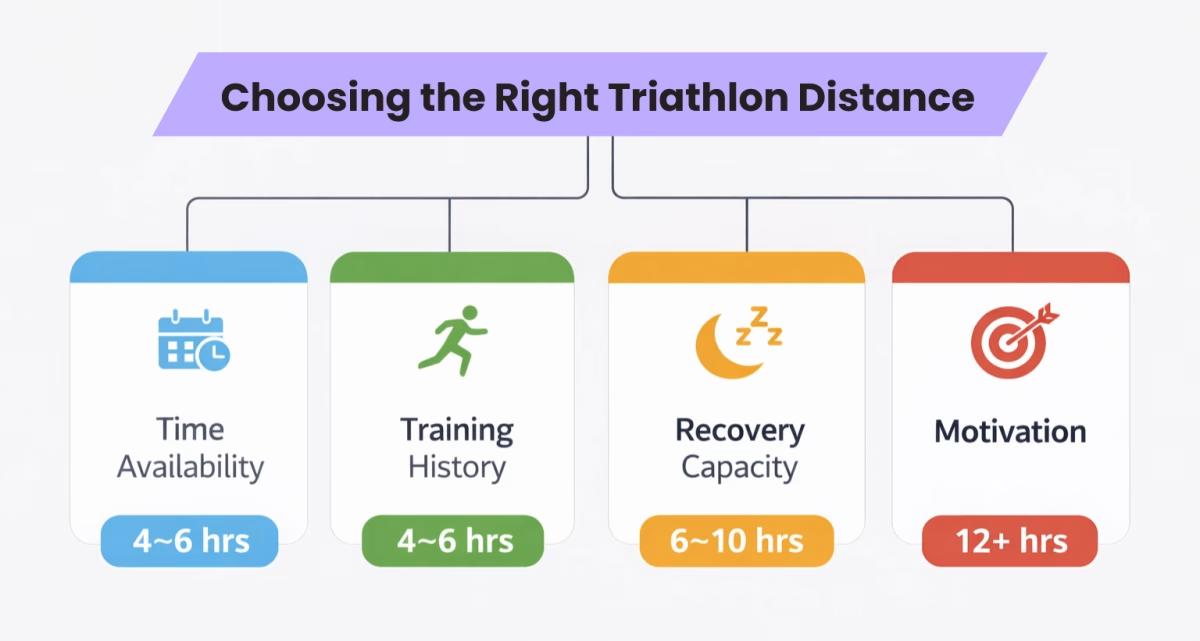
Helping a beginner choose the right triathlon distance is not about matching readiness to ambition. The role of the coach is to evaluate not just physical capacity, but context.
Start With Time Availability
Before discussing race goals, clarify weekly training reality.
An athlete consistently training 4–6 hours per week is best suited to Super Sprint or Sprint. Those training 6–10 hours may reasonably prepare for the Olympic format. Preparing for the longer half and full marathon, typically requires more than 10 structured hours per week during peak phases.
Distance choice must align with a sustainable weekly rhythm. Inconsistent training creates more risk than the distance itself.
Assess Training History
Coaches should consider previous endurance experience, injury history, and overall training consistency before recommending longer formats. An athlete with a cycling background may tolerate longer rides early, while a strong runner may struggle with the added bike load.
The right triathlon distance depends on how the three disciplines interact with the athlete’s background.
Evaluate Recovery Capacity
Beginners often underestimate recovery demands. Coaches should monitor sleep quality, stress levels, and the athlete’s ability to handle back-to-back sessions. Progression to longer formats should occur only when recovery patterns are stable.
A race distance should challenge the athlete, not overwhelm their system.
Clarify Motivation
Some athletes are motivated by completion. Others are motivated by performance. This distinction matters.
A completion-focused beginner may succeed at a longer distance with conservative pacing. A performance-driven athlete may benefit from excelling at shorter formats before moving up.
Distance selection should support long-term engagement, not short-term validation.
Think in Seasons, Not Events
Choosing a triathlon distance is not a single decision. It is part of a multi-season pathway.
A beginner’s first year should prioritize skill development, consistency, and confidence. Longer formats can be introduced once durability and aerobic capacity are established.
When coaches frame distance as progression rather than identity, athletes develop more sustainably.
Conclusion
The best triathlon distance for a beginner is rarely the most impressive one.
It is the one that aligns with training history, weekly availability, recovery capacity, and long-term goals.
Sprint, Olympic, half-distance, and full-distance formats all have value, but they serve different stages of development.
Coaches who guide athletes toward the right starting point build more than finishers. They build resilient, confident, long-term participants in the sport.
As athletes progress from one triathlon distance to the next, planning becomes more complex. Managing load across swim, bike, and run, while adjusting volume, intensity, and recovery, requires structure and visibility.
EndoGusto helps coaches plan that progression intelligently by providing visibility across swim, bike, and run load.
Choosing the right triathlon distance fosters ambition with safe and sustainable preparation and race day experience.