Olympic Triathlon Distances: Speed, Endurance, and Race Tactics
- Key Takeaways for Coaches
- Why Olympic Triathlon Is the First True Endurance Format
- The Swim: Positioning Matters More Than Time
- The Bike: Where Olympic Races Are Shaped
- The Run: Speed Under Fatigue
- Training for Olympic Distance Requires a Different Balance
- Why Olympic Distance Builds Better Long-Term Triathletes
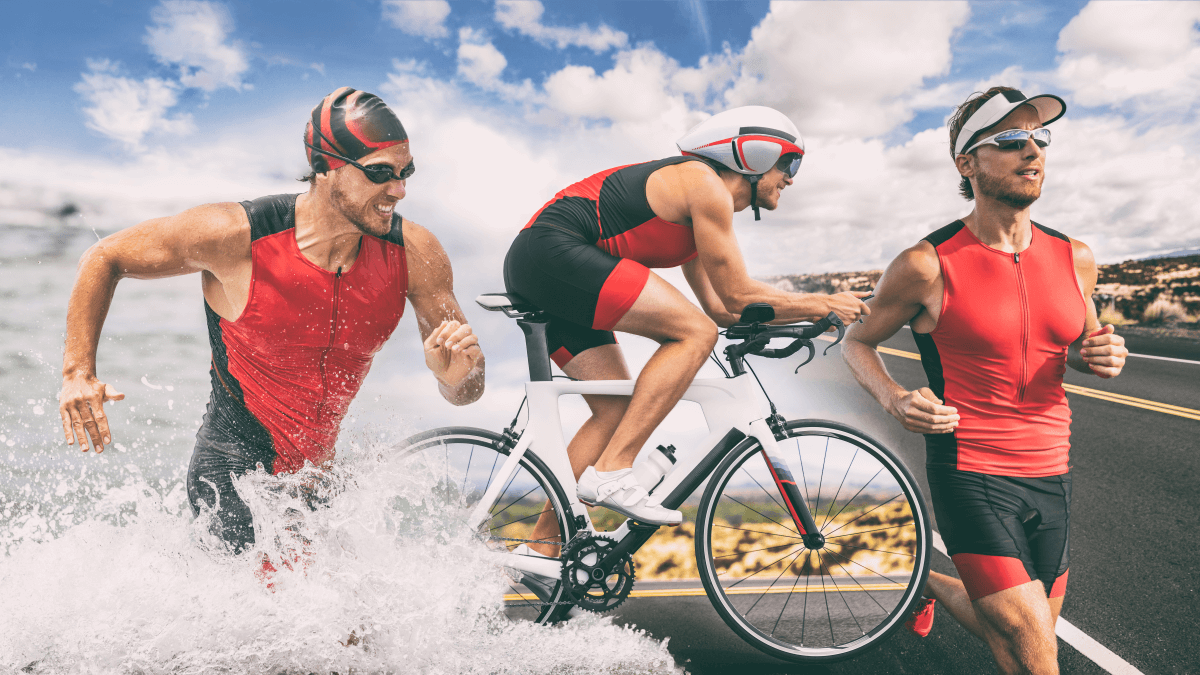
Olympic triathlon distances occupy a unique place in the sport.
Longer than sprint races but far shorter than half-distance or full-distance formats, Olympic racing sits precisely at the intersection of speed and endurance. It is often the first format where triathlon begins to resemble true endurance competition rather than simply participation.
For coaches, this distance introduces a new set of challenges. Athletes must sustain a high aerobic output for two to three hours while still executing tactical decisions across three disciplines.
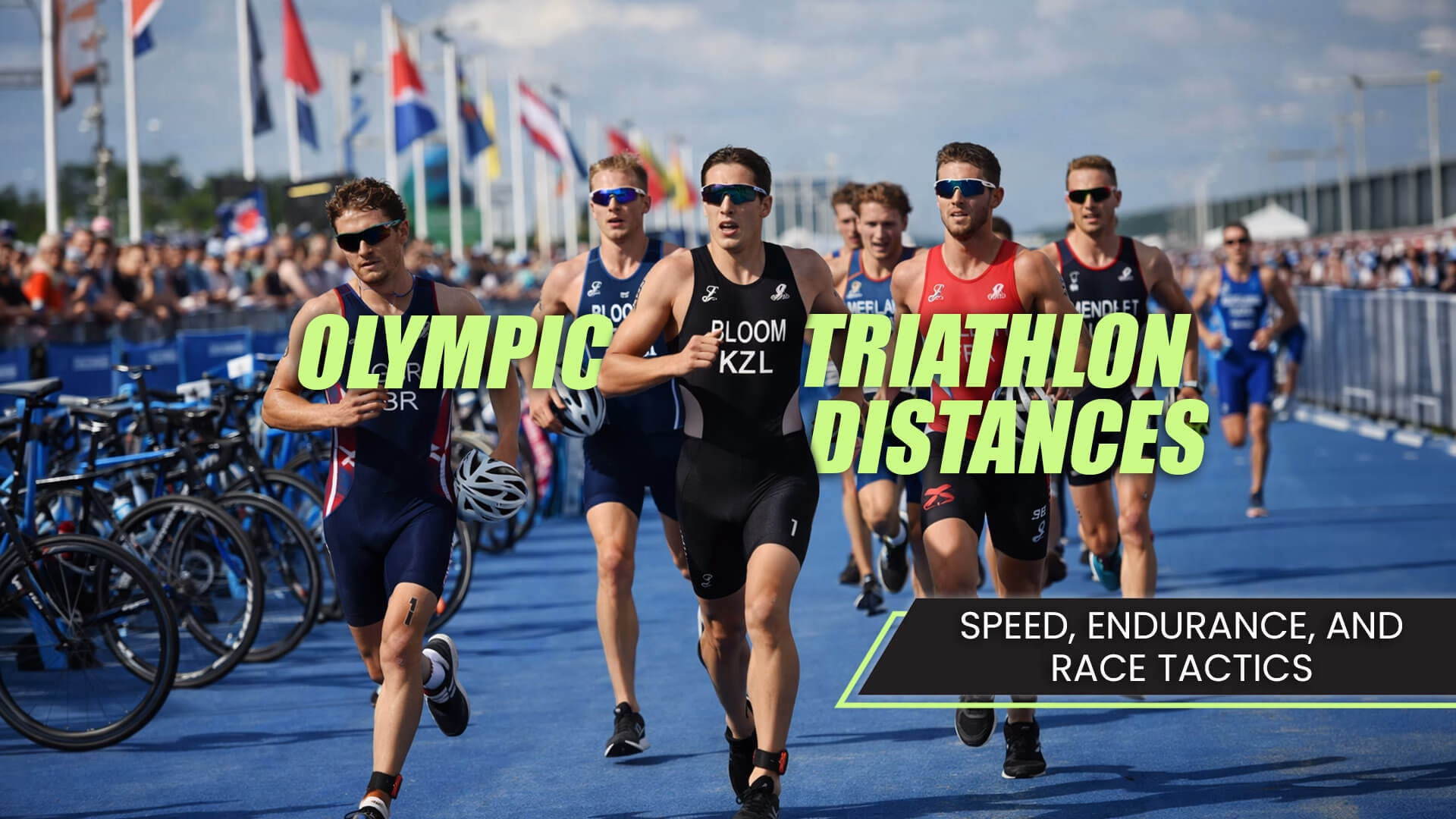
The standard Olympic format includes a 1.5 km swim, 40 km bike, and 10 km run. On paper, the numbers appear straightforward. In practice, the distance demands pacing discipline, race awareness, and durability that many beginners have not yet developed.
Unlike sprint racing, where intensity dominates and mistakes can sometimes be absorbed, Olympic triathlon rewards athletes who understand how to manage effort across the entire race.
This article explores why Olympic triathlon distances represent the first true balance between speed and endurance, and how coaches can help athletes approach the format with smarter tactics and training.
Key Takeaways for Coaches
- Olympic racing demands speed endurance, not just distance tolerance.
- Bike pacing strongly determines run performance.
- Swim positioning can influence the entire race dynamic.
- Tactical awareness becomes nearly as important as raw fitness.
- Training must balance threshold work with aerobic durability.
Why Olympic Triathlon Is the First True Endurance Format
Many athletes assume Olympic triathlon is simply a longer version of sprint racing.
In reality, the physiological demands are very different.
Sprint races often last between 60 and 90 minutes. Athletes can rely heavily on high intensity and aggressive pacing. Olympic racing typically extends to two or three hours, forcing athletes to manage effort far more carefully.
This shift changes the nature of the race.
Instead of short bursts of intensity, athletes must maintain controlled output while preserving enough energy for the final run. Small pacing mistakes early in the race often become visible later.
For example, a coach may see an athlete ride the bike leg of a sprint race aggressively and still produce a solid run. At Olympic distance, the same strategy frequently leads to a dramatic slowdown during the final kilometers.
In this sense, Olympic triathlon distances often serve as the first format where athletes must truly respect pacing discipline.
For a broader overview of how race formats differ structurally, see our article on Triathlon Distances Explained for Coaches.
The Swim: Positioning Matters More Than Time
In Olympic racing, the swim rarely decides the final result on its own. However, it can significantly influence how the race unfolds.
Many beginners focus exclusively on swim time. Coaches, however, often pay closer attention to positioning within the race pack.
Exiting the water slightly faster or slower may matter less than exiting with the right group of athletes.
Consider a common coaching scenario.
An athlete may exit the water twenty seconds ahead of another competitor. On paper, this looks like an advantage. But if the second athlete joins a stronger cycling group while the first rides alone, the gap disappears quickly.
Coaches preparing athletes for Olympic triathlon distances often emphasize:
- Efficient navigation
- Drafting awareness
- Controlled pacing in the opening minutes
The goal is not always to swim faster. Sometimes it is simply to exit the water in the right position to start the bike leg effectively.
The Bike: Where Olympic Races Are Shaped
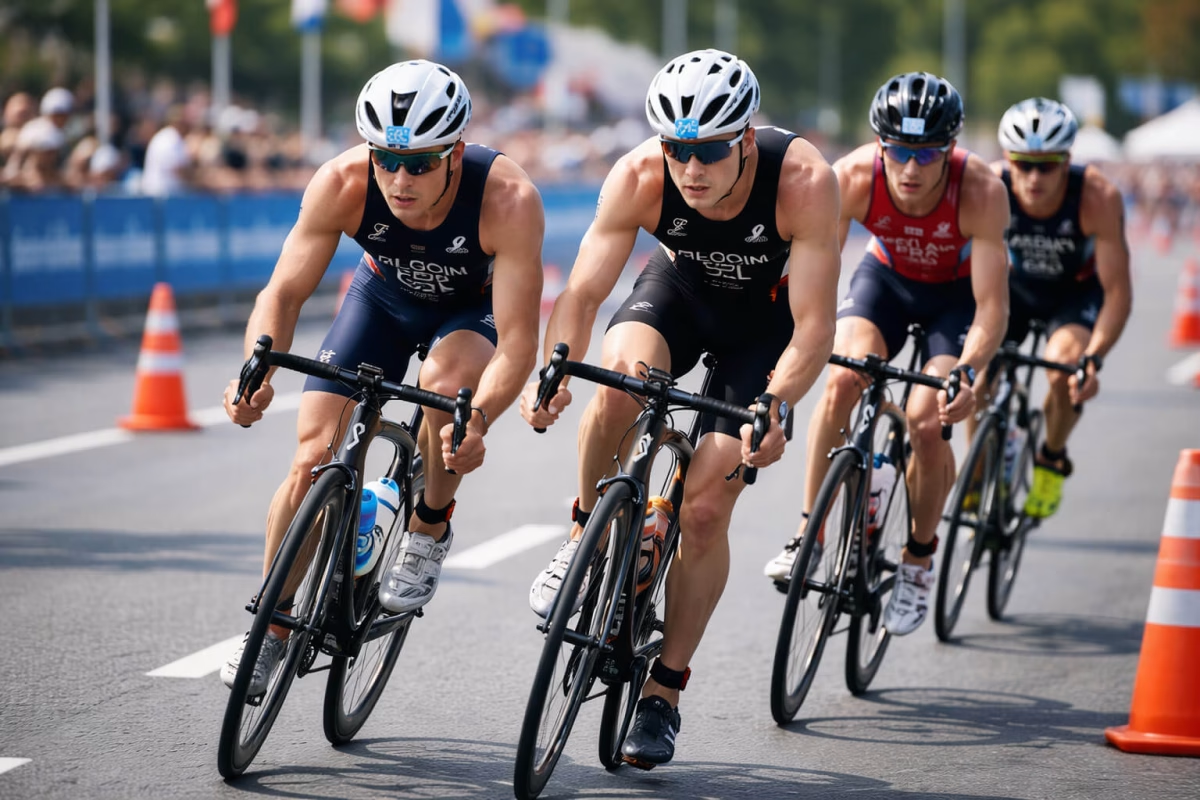
If the swim sets the stage, the bike leg usually shapes the outcome of the race.
The 40 km bike segment is long enough to accumulate fatigue but short enough that pacing mistakes carry real consequences.
Athletes who push too hard early often discover the cost during the final kilometers of the run.
For coaches, Olympic racing often becomes an exercise in controlled aggression.
A practical coaching example illustrates this well.
Imagine two athletes with identical fitness. One athlete rides slightly above sustainable effort, trying to gain time before the run, while another maintains controlled threshold effort.
When the run begins, Athlete A may have a small lead. But by kilometer six or seven, the fatigue from the bike effort begins to appear. Athlete B, with better pacing discipline, gradually closes the gap.
This pattern appears frequently in Olympic triathlon distances.
Successful athletes learn that the bike leg is not simply about speed. It is about arriving at the run with the ability to still race.
The Run: Speed Under Fatigue
The 10 km run at Olympic distance is where pacing discipline becomes visible.
Unlike sprint races, where athletes often run close to open 5 km intensity, the Olympic run requires athletes to manage fatigue accumulated over the previous two disciplines.
Many coaches describe the Olympic run as controlled discomfort.
A useful guideline is that the pace typically falls slightly slower than an athlete’s standalone 10 km performance. The difference may be small, but maintaining that pace after the swim and bike demands durability.
One common coaching strategy is to encourage athletes to run the first kilometer slightly conservatively. This allows heart rate and rhythm to stabilize before gradually increasing effort.
Athletes who attack the run immediately often fade in the final kilometers. Those who build their effort progressively tend to finish stronger.
The transition from sprint to Olympic racing often requires athletes to learn this patience.
We explore that progression further in our article From Sprint to Olympic: Managing the Transition Safely.
Training for Olympic Distance Requires a Different Balance
Preparing athletes for Olympic triathlon distances requires a different balance of training stimuli than shorter formats.
Sprint racing often emphasizes intensity tolerance. Sessions are shorter, and athletes can rely heavily on high effort across all three disciplines. Olympic racing, however, demands something more nuanced: speed endurance.
Athletes must sustain strong aerobic output for two to three hours while still producing controlled power on the bike and stable pacing on the run. The challenge is not simply covering the distance, but maintaining efficiency under accumulating fatigue.
For coaches, this means shifting the training focus toward threshold development, sustained tempo efforts, and disciplined pacing across multiple disciplines.
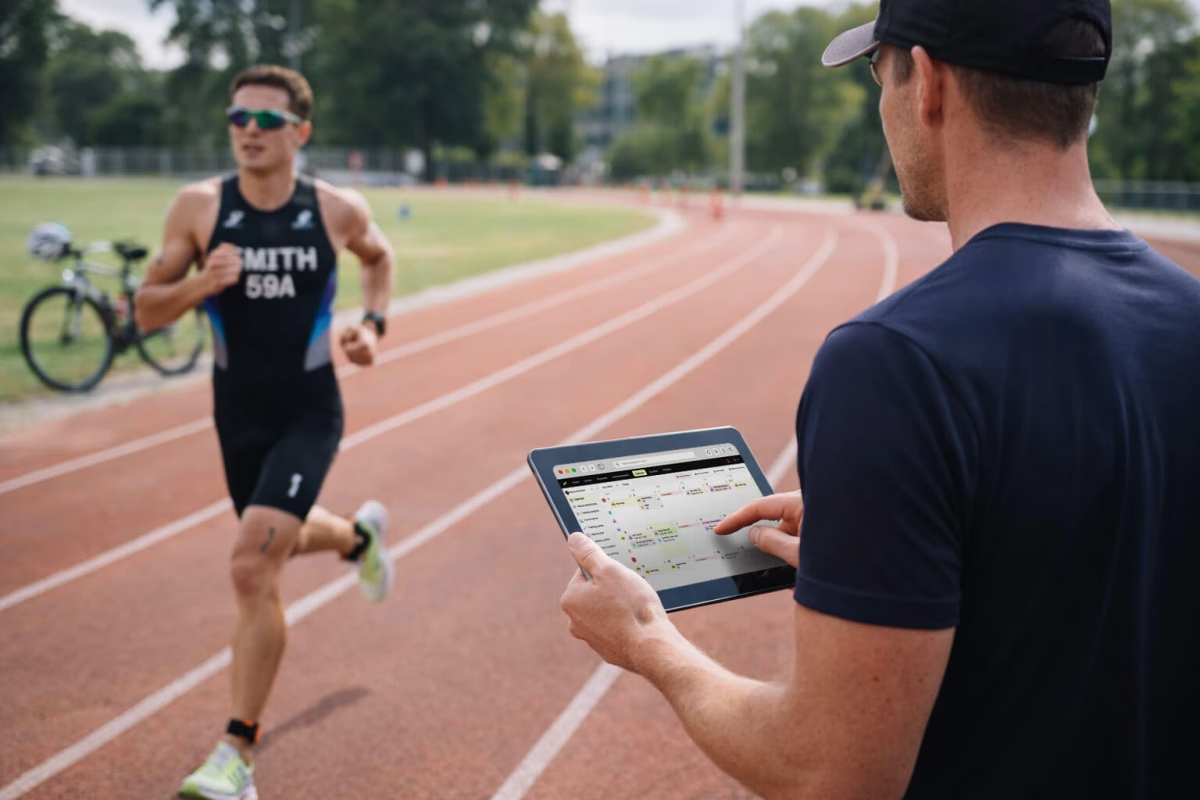
Instead of relying only on isolated workouts, Olympic preparation often benefits from sessions that simulate the interaction between disciplines. These sessions allow athletes to experience how pacing decisions in one discipline influence performance in the next.
Below are examples of coaching sessions that help athletes prepare for the specific demands of Olympic triathlon racing.
Coaching Workout Example: Bike–Run Threshold Brick
| Element | Details |
| Objective | Teach athletes to control bike pacing while preserving run performance |
| Bike Session | 3 × 12 minutes at Olympic race intensity with 3 minutes easy spinning between intervals |
| Run Session | 3 km progressive run immediately after the bike. First kilometer controlled, final kilometer approaching race effort |
| Coaching Insight | Athletes often ride slightly above sustainable effort during Olympic races. This session teaches how controlled bike pacing leads to a stronger run finish |
Coaching Session Example: Olympic Tempo Simulation
| Element | Details |
| Objective | Develop sustained output across all three disciplines |
| Swim Session | 3 × 600 m steady effort with 20 seconds rest |
| Bike Session | 40 minutes continuous tempo effort |
| Run Session | 5 km run with a negative split, gradually increasing pace |
| Coaching Insight | This session reinforces pacing discipline and teaches athletes how to maintain consistent intensity across multiple disciplines |
Coaching Session Example: Tactical Bike Session
| Element | Details |
| Objective | Show athletes how bike surges influence run performance |
| Bike Session | 20 minutes steady effort, followed by 5 × 3 minutes above race effort with 2 minutes easy between intervals, finishing with 15 minutes controlled pacing |
| Run Session | 2 km relaxed run followed by 3 km gradually building toward race pace |
| Coaching Insight | Olympic races often include tactical surges caused by hills or accelerations. This session helps athletes regain pacing control before the run |
Why These Sessions Matter
Olympic triathlon distances reward athletes who can manage effort across disciplines rather than simply producing the highest intensity.
Sessions like these help athletes understand how pacing decisions on the bike affect the run, how fatigue accumulates over time, and how to maintain efficiency during sustained efforts.
For coaches, the objective is not only to build fitness but also to develop race awareness and pacing discipline, two qualities that often determine success at Olympic distance.
Why Olympic Distance Builds Better Long-Term Triathletes
Olympic triathlon distances occupy a valuable position in the long-term development of triathletes.
While shorter formats introduce athletes to the sport and longer formats attract attention for their scale, Olympic racing sits at a point where athletes must begin combining endurance, pacing discipline, and tactical awareness. The distance is long enough to expose weaknesses in preparation, yet short enough to allow athletes to race with controlled aggression.
For coaches, this makes Olympic racing an ideal development platform.
Athletes learn how to manage energy across multiple disciplines, how to avoid early pacing mistakes, and how to maintain composure as fatigue builds. These skills are not only useful for Olympic races themselves, they form the foundation for progression to longer formats later in an athlete’s career.
An athlete who learns to pace a 40 km bike leg correctly and still run a strong 10 km develops habits that translate directly into half-distance and full-distance racing. Conversely, athletes who progress too quickly to longer formats often miss the opportunity to build this discipline.
This is why many coaches encourage athletes to spend time racing Olympic distance before moving toward longer events. The format teaches patience, awareness, and efficiency — qualities that are essential in endurance sport.
As athletes progress through different race formats, planning the interaction between swim, bike, and run training becomes increasingly complex. Coaches must balance volume, intensity, and recovery while maintaining consistency across all three disciplines.
EndoGusto helps coaches manage that complexity by providing clear visibility across swim, bike, and run training load.
Olympic triathlon distances represent more than just another race format.
They are often the point where triathletes begin to truly understand how endurance performance works.