How to Train for Your First Triathlon as a Coach
- Key Takeaways for Coaches
- What Is a Triathlon, and Why Does the Answer Matter for Coaching?
- The First Coaching Conversation: Assessing Before You Plan
- Building a Triathlon Training Plan for a First-Timer
- What Is a Triathlon Without Race Day? Preparing the Whole Experience
- After the Finish Line: What the First Race Teaches the Coach
- Train Smarter With EndoGusto
- Suggested References
An athlete walks in and says, “I want to do a triathlon.” Before the coach opens a training calendar, there’s a more important first step: making sure this person actually understands what a triathlon is and what it asks of the body.
Most first-timers don’t. They’ve watched a friend cross a finish line, scrolled through race photos, or signed up on a wave of motivation. But ask them what is a triathlon in practical terms, and the answers get vague fast. “You swim, bike, and run.” That’s technically correct. It’s also dangerously incomplete.
A triathlon is three consecutive endurance efforts with no rest between them, plus two transitions that demand their own preparation. The athlete who shows up expecting three separate workouts stitched together will hit the run course wondering why their legs feel like concrete. The one whose coach prepared them for the cumulative stress will recognize that feeling and push through it.
For coaches, the first triathlon is a design problem. You’re working with limited training hours, uneven sport backgrounds, and an athlete whose confidence matters as much as their fitness. Get it right, and you’ve built a foundation for years of development. Rush it, and the athlete’s first race might also be their last.
This article covers the full coaching process, from the initial assessment conversation through race day logistics, including a practical week-by-week plan built for true beginners.
Key Takeaways for Coaches
- Understanding what is a triathlon in physiological terms changes how you explain the sport to first-timers.
- The pre-training assessment matters more than the training plan itself.
- Four to five sessions per week is enough to prepare a beginner for a sprint triathlon.
- Brick sessions teach the body something that swimming, biking, and running alone never will.
- Race-day logistics cause more first-timer anxiety than the actual physical effort.
What Is a Triathlon, and Why Does the Answer Matter for Coaching?
Most coaches can define a triathlon in one sentence. Swim, bike, run, done in sequence, no break between disciplines. However, the definition that matters for coaching goes deeper than the format.
A triathlon is a sequential, multi-modal endurance event where each discipline compounds the physiological cost of the next. That compounding effect is what separates triathlon from simply doing three sports on the same day. The swim elevates heart rate, floods the upper body with fatigue, and disrupts breathing rhythm. The bike loads the quadriceps and hip flexors for anywhere from thirty minutes to several hours. Then the run asks the athlete to produce a controlled stride on legs that have been pedaling, not running, and on a cardiovascular system already working well above resting levels.
For a first-timer, this matters because they will almost certainly misjudge how it feels. An athlete who can run five kilometers comfortably on fresh legs might struggle to hold pace for three kilometers after a twenty-kilometer bike. The fitness is there. The readiness for sequential loading is not.
Transitions Are the Fourth Discipline
Coaches who’ve raced know this instinctively, but beginners rarely think about transitions at all. T1 (swim to bike) and T2 (bike to run) are timed segments of the race. They also carry real physiological consequences.
In T1, the athlete shifts from horizontal to vertical. Blood pressure adjusts. Vestibular orientation resets. Many first-timers report dizziness walking out of the water, and that’s before they’ve tried to pull on cycling shoes with wet hands. Maffetone and others have noted that the swim-to-bike transition produces some of the highest heart rate spikes in the entire race, not because of effort, but because of postural change.
In contrast, T2 is a different problem. The athlete dismounts after sustained cycling and immediately asks their legs to run. The quadriceps and hip flexors, shortened by the cycling position, resist the running stride. First-timers describe this as “running through mud” or “my legs wouldn’t do what I told them.” Coaches who have never prepared an athlete for this sensation are setting them up for a race-day shock.
Why This Understanding Shapes Your Coaching
When a coach truly grasps what a triathlon is at the physiological level, it changes planning decisions. As a result, you stop treating the three disciplines as independent training blocks and start thinking about how they interact. The long bike becomes a setup for the run, not an isolated session. The swim becomes a cardiovascular primer that affects everything after it.
The First Coaching Conversation: Assessing Before You Plan
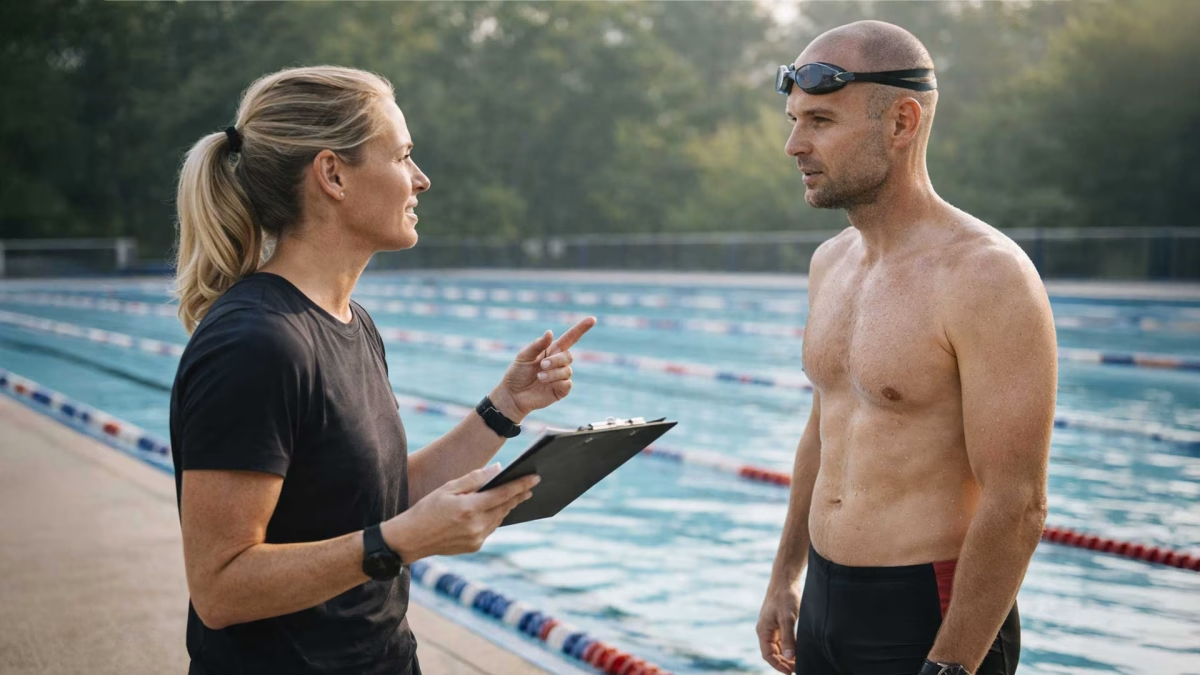
A triathlon training plan is only as good as the assessment behind it. Before writing a single session, the coach needs to understand who this athlete actually is, not who they hope to be on race day.
Swimming Comfort Is the First Question
In almost every case, the swim is the weakest discipline for a first-timer. Running and cycling are familiar movement patterns. Most adults have done both, even casually. Swimming, however, is different. It requires technical coordination, breath control, and comfort in an environment that many people find genuinely stressful.
The coach needs an honest answer to a simple question: can this athlete swim 200 meters continuously without stopping? Not beautifully. Not fast. Just continuously. An athlete who answers yes has a workable starting point. An athlete who hesitates, or who hasn’t been in a pool in fifteen years, needs a fundamentally different first phase of training. In that case, the initial weeks should prioritize water confidence over anything else. For coaches looking for a structured approach, building swim endurance and efficiency for triathletes starts with exactly this kind of honest assessment. No amount of cycling fitness compensates for an athlete who panics at the swim start.
Training Background and Available Hours
A former runner with three years of consistent training and a completely sedentary adult require different plans, even if both target the same sprint race. The coach should assess recent training history, specifically the last three to six months, not a peak from five years ago. Consistent activity means the body has a base to build on. A sedentary starting point means the first weeks are about establishing the training habit itself.
Equally important is available time. Not how many hours the athlete wants to commit in a burst of enthusiasm, but how many they can sustain for eight to twelve weeks. For most first-timers, four to five sessions per week totaling three to five hours is both sufficient and sustainable. A coach who programs seven sessions for a working parent with two young children is writing a plan that will collapse by week three.
Equipment Reality
This is a conversation many coaches skip. A first-timer needs a pool, a functional bike, a helmet, running shoes, and goggles. They do not need a triathlon-specific bike, a wetsuit (unless required), or a power meter. However, the bike matters more than beginners realize. An athlete training on a heavy mountain bike will develop a very different sense of pace than one on a road bike. The coach should know what the athlete is riding, because an athlete reporting exhaustion after 15 kilometers on an old hybrid may simply be fighting the equipment, not lacking fitness.
Race Timeline and Target Distance
Choosing the right race is a coaching decision, not an athlete decision.When a first-timer says, ‘I want to do a triathlon,’ the coach should steer them toward a sprint distance with at least eight to twelve weeks of preparation time. The reasoning behind that recommendation, and when exceptions make sense, is covered in detail in our guide to helping beginners choose the right triathlon distance. Shorter timelines are possible for athletes with a strong single-sport background, but they compress the margin for error.
Red flags at this stage include athletes who want to skip sprint and target a half-distance, athletes who have already registered for a race that is four weeks away, or athletes whose stated goal is to “win their age group” in their first event. None of these are disqualifying on their own, certainly. But each one tells the coach something about expectations that need to be managed early, before training begins and before reality collides with ambition.
Building a Triathlon Training Plan for a First-Timer
Once the assessment is done, the coach has what they need to start building. A plan for a genuine beginner looks nothing like one for an experienced multisport athlete. Volume is lower. Intensity is mostly absent. And the primary goal isn’t performance; it’s arrival. The athlete needs to reach race day healthy, confident, and prepared for what the body will feel.
Structuring the Week Around Four to Five Sessions
A first-timer targeting a sprint triathlon does not need to train every day. In fact, overloading the weekly schedule is one of the fastest ways to lose a beginner. Four to five sessions per week, totaling roughly three to five hours, gives the athlete enough exposure to all three disciplines without turning training into a second job.
The non-negotiable sessions are two swims and one bike-run brick. A typical five-session week adds one standalone bike and one standalone run. In a four-session week, the standalone run drops first, because the brick already includes running. Swimming appears twice because frequency matters more than duration in the pool for beginners. Two thirty-minute sessions build more comfort and technique retention than a single sixty-minute session.
An Eight-Week Sprint Triathlon Training Plan
The following plan assumes the athlete can swim at least 200 meters continuously, has access to a bike and a pool, and can commit to five sessions per week. All swim distances are in meters. Bike and run distances are in kilometers. Intensity should stay conversational for the first six weeks, with only modest race-pace efforts introduced in weeks seven and eight.
| Week | Swim 1 | Swim 2 | Bike | Run | Brick | Focus |
| 1 | 400 m (drills + easy) | 400 m (drills + easy) | 10 km easy | 2 km easy | Rest | Water comfort, gear familiarity |
| 2 | 500 m (drills + easy) | 500 m (build sets) | 12 km easy | 2.5 km easy | Rest | Breathing rhythm in the pool |
| 3 | 600 m (continuous + drills) | 500 m (build sets) | 15 km easy | 3 km easy | 10 km bike + 1 km run | First brick: keep effort very easy |
| 4 | 600 m (mixed sets) | 600 m (continuous) | 15 km easy | 3.5 km easy | 12 km bike + 1.5 km run | Transition practice in brick |
| 5 | 700 m (continuous + speed play) | 600 m (drills + build) | 18 km easy | 4 km easy | 15 km bike + 2 km run | Increase brick volume slightly |
| 6 | 750 m (race distance rehearsal) | 600 m (technique) | 20 km easy | 4 km easy | 15 km bike + 2.5 km run | First full swim distance; nutrition trial on bike |
| 7 | 750 m (with race-pace intervals) | 500 m (easy technique) | 22 km (with 5 min at race pace) | 5 km (with 2 min pickups) | 18 km bike + 3 km run | Race-pace exposure; rehearse transition setup |
| 8 | 400 m easy | 300 m easy | 15 km easy | 2 km easy | Rest | Taper, logistics check, mental rehearsal |
(Table: Eight-Week Sprint Triathlon Training Plan for Beginners)
A few things worth noting about this plan. First, the brick session doesn’t appear until week three. The athlete needs a base of standalone cycling and running before combining them. Introducing the brick too early, before the legs have adapted to each discipline independently, creates unnecessary soreness and discouragement.
Second, swim volume builds slowly but reaches the full race distance (750 meters) by week six. This gives the athlete two full weeks of knowing they can complete the swim before race day. Indeed, that confidence matters enormously. An athlete who has never swum 750 meters in training will spend the entire race-week anxious about the water.
Third, the plan is deliberately conservative on running volume. Connective tissue, particularly the Achilles tendon and plantar fascia, adapts more slowly than the cardiovascular system. A first-timer’s aerobic engine might tolerate a five-kilometer run by week four. Their tendons probably won’t. Keeping standalone runs short and adding running distance primarily through brick sessions distributes the load more safely.
Why Brick Sessions Deserve Priority Over Extra Volume
If a coach could only add one element to a beginner’s preparation, it should be the brick session. Nothing else replicates the specific demand of running immediately after cycling.
The sensation is distinctive and, for first-timers, alarming. The quadriceps feel heavy. The stride is shorter than normal. Heart rate is already elevated before the first running step. Athletes frequently describe the opening minutes of a post-bike run as the hardest part of the entire race. And yet, most beginner plans either skip bricks entirely or include them as a novelty in the final week.
That’s a mistake. The adaptation to bike-run transitions is neuromuscular, not just cardiovascular. The body needs repeated exposure to learn how to recruit running muscles that have been locked in a cycling pattern. Joyner and Coyle (2008) noted that the ability to transition between movement patterns under fatigue is a trainable skill, not a fixed limitation. In practice, this means an athlete who does five or six brick sessions across an eight-week plan will feel measurably better on race day than one who did none, even if their total training volume was identical.
The Brick as a Diagnostic Tool
For coaches, the brick also serves as a diagnostic tool. How the athlete responds in the first two minutes of running off the bike tells you a great deal about their pacing on the bike. If they consistently struggle to find a running rhythm, the bike effort is probably too high. Dialing back cycling intensity by even five to ten watts often produces a dramatically better run, a lesson that applies all the way up to full-distance racing.
The practical recommendation is simple. Introduce the brick in week three, keep the run portion short initially (one to 1.5 kilometers), and build gradually. The athlete doesn’t need to run far off the bike. They need to run off the bike often enough that the sensation becomes familiar rather than frightening.
What Is a Triathlon Without Race Day? Preparing the Whole Experience
Eight weeks of training can be perfect on paper and still fall apart on race morning. For first-timers, the physical preparation is only half the job. The other half is logistical, and it catches more beginners off guard than any swim, bike, or run session ever will.
The Taper Doesn’t Need to Be Complicated
Tapering a beginner is not the same as tapering a competitive age-grouper. An athlete who has been training four to five hours per week doesn’t carry the deep fatigue that justifies a ten-day unloading protocol. For most first-timers, three to four days of reduced volume is enough. The final week in the plan above reflects this: shorter swims, an easy spin, a short jog, and rest before race day.
However, the psychological effect of tapering matters more than the physiological one. Instead, beginners who suddenly have free time in their schedule start to worry. They feel like they should be doing more. Some try to squeeze in a last long ride or an extra swim “just to make sure.” The coach’s job during race week is to absorb that anxiety, not to add training. A brief phone call or message explaining why rest works is worth more than any final session.
Transition Setup Is a Rehearsal, Not an Afterthought
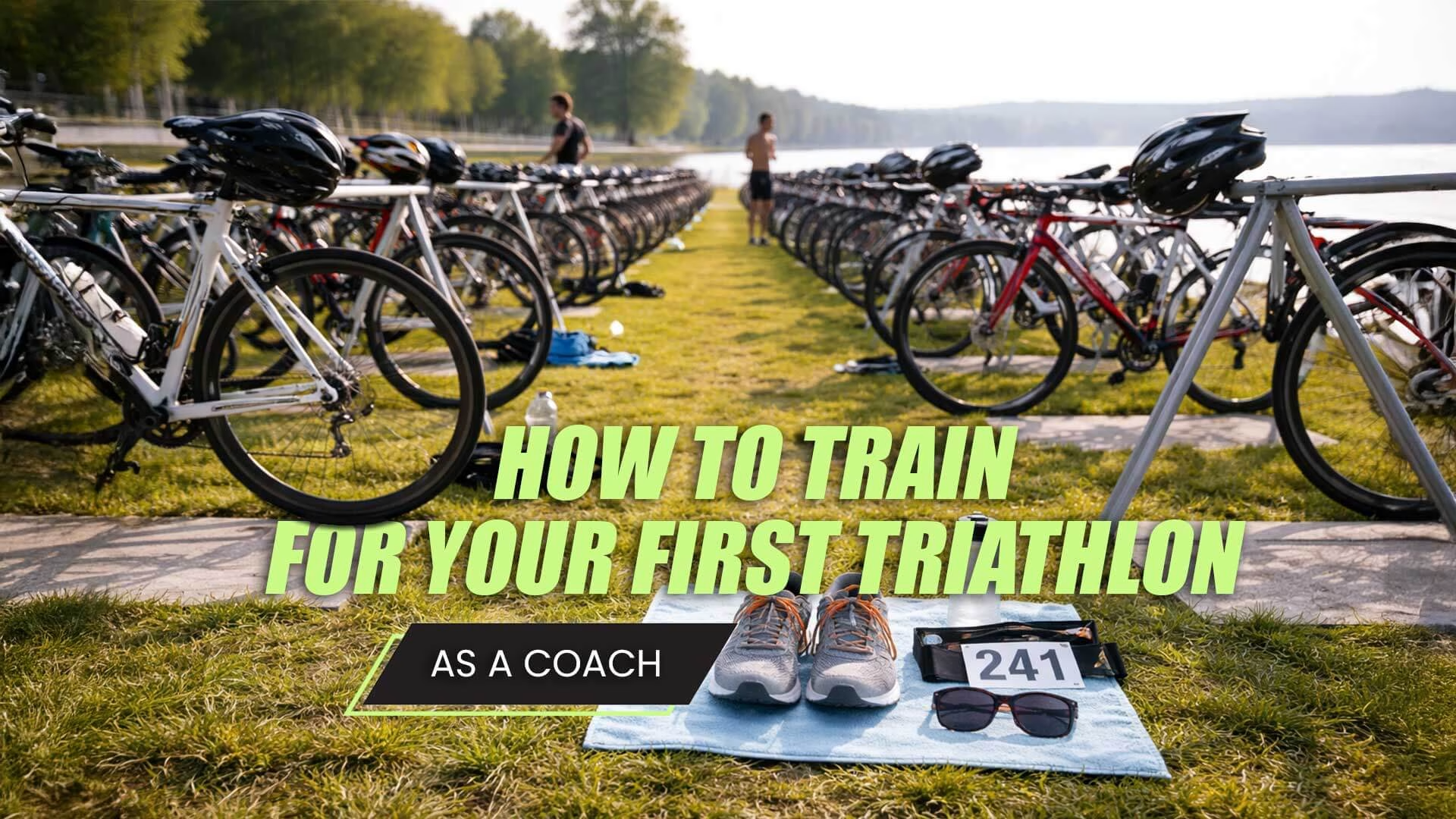
Ask a first-timer what they plan to do in transition and you’ll likely get a blank stare. The coach should walk the athlete through transition logistics at least once before race day, ideally during a brick session. Lay out the essentials in order. For T1: helmet, cycling shoes, sunglasses. For T2: running shoes, race belt, hat if wanted. Nothing else. In other words, every extra item costs time and creates decision fatigue.
One detail that surprises first-timers consistently: the helmet must be buckled before the athlete touches the bike, and unbuckled only after the bike is racked. Race officials enforce this strictly. Build it into the brick session rehearsal so it becomes automatic.
Race Morning: Simplify Everything
Anyone who truly understands what is a triathlon knows that race morning is as much a part of the event as the swim, bike, and run. Race mornings are sensory overload for beginners. Loud music, crowded transition areas, athletes in wetsuits stretching nervously, PA announcements about wave starts. The coach who has prepared their athlete for this environment has already won half the battle.
Three practical rules help first-timers manage race morning effectively.
First, arrive early. Ninety minutes before the start is not excessive. It allows time to set up transition, find the bathrooms, locate the swim entry and exit, and simply breathe. An athlete who arrives thirty minutes before the gun is already behind mentally.
Second, simplify nutrition. A familiar meal two to three hours before the start is the right choice. For a sprint lasting 75 to 90 minutes, the athlete doesn’t need on-course nutrition beyond water and one bottle on the bike.
Third, set a pacing intention, not a time goal. First-timers have no reference point for what a “good” triathlon time looks like. Telling them to target a specific finish time creates pressure without useful guidance. Instead, the coach should give a simple pacing cue for each leg. “Swim at a pace where you could talk if you needed to. Ride hard enough to breathe heavily but not gasp. Run the first kilometer slower than you want to.” These cues are actionable. A finish time is not.
After the Finish Line: What the First Race Teaches the Coach
The athlete crosses the finish line. For the coach, the real work starts in the days that follow. A first triathlon produces more useful coaching data than any training block. For instance, where did they feel strong? Where did they panic? An athlete who cruised through the bike but collapsed on the run was probably overbiking. An athlete who exited the water in distress needs more open-water exposure before the next race.
The first race also reveals something about motivation. Some athletes immediately want an Olympic distance. Others are in no rush to race again. Both responses are valid. The coach who listens carefully after race one will make better decisions about race two. In most cases, the best next step is simple. Rest for a week, review what happened, and ask one question: what do you want to do next?
Train Smarter With EndoGusto
Coaching a first-timer through their first triathlon is one of the most rewarding experiences in endurance coaching. It’s also one of the most detail-intensive. EndoGusto gives coaches the tools to manage that process efficiently, from building progressive training plans to tracking athlete readiness across all three disciplines. If you’re working with beginners and want a platform designed for how coaches actually think, EndoGusto is worth exploring.
Build Smarter Triathlon Training Plans With EndoGusto
Suggested References
- Joyner, M.J. and Coyle, E.F. (2008). Endurance exercise performance: the physiology of champions. Journal of Physiology, 586(1), 35–44.
- Maffetone, P. (2010). The Big Book of Endurance Training and Racing. Skyhorse Publishing.