Coach Spotlight: Mikey Wallis — The Heartbeat of Morley Triathlon Club
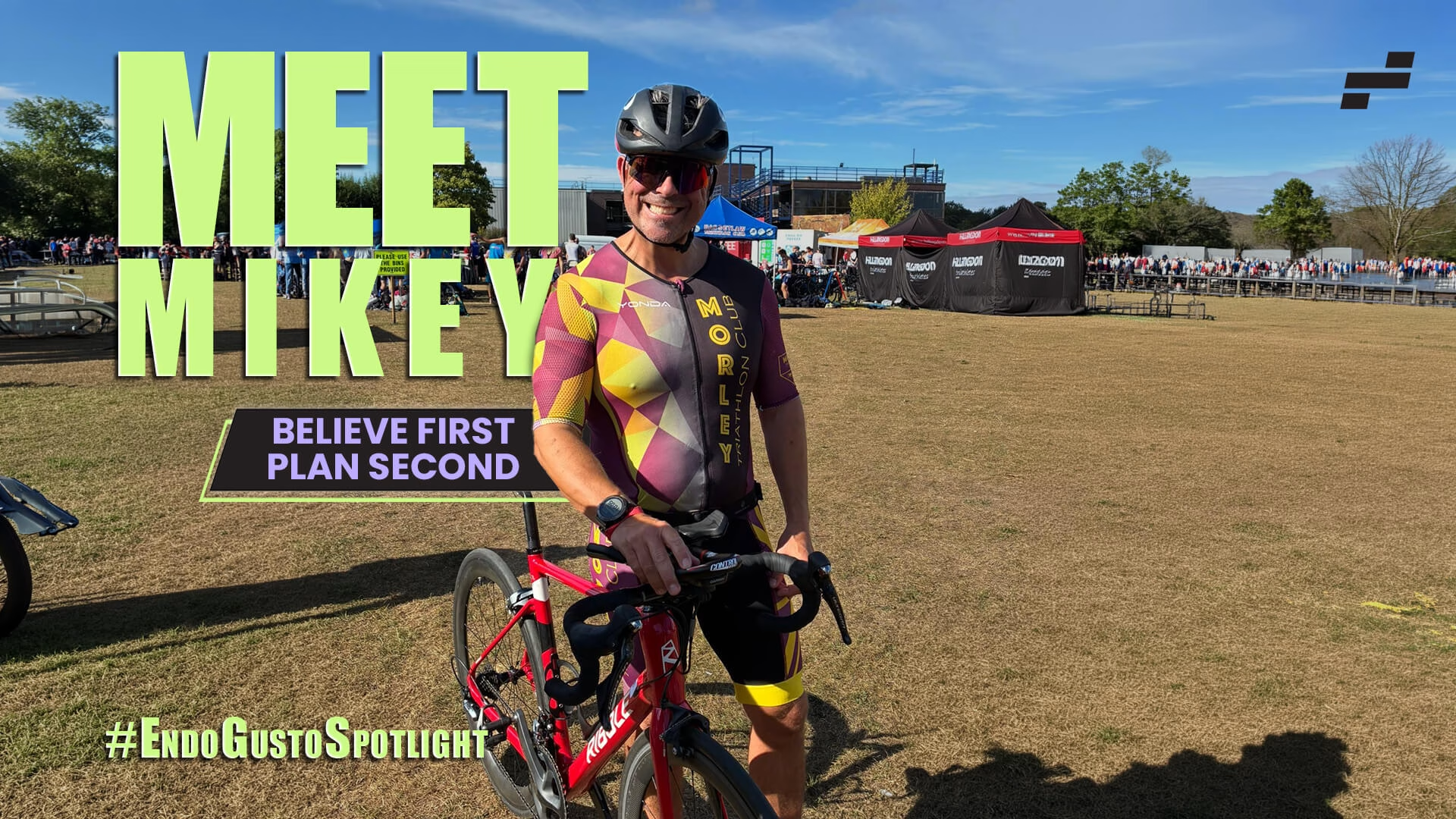
When Mikey Wallis got overtaken by a cyclist with a basket on the front, he knew it was time for a new bike. That was one of many early lessons from a disastrous first triathlon: the wrong wetsuit, no open-water experience, and a bike that had no business being on a race course. But, he loved every minute of it.
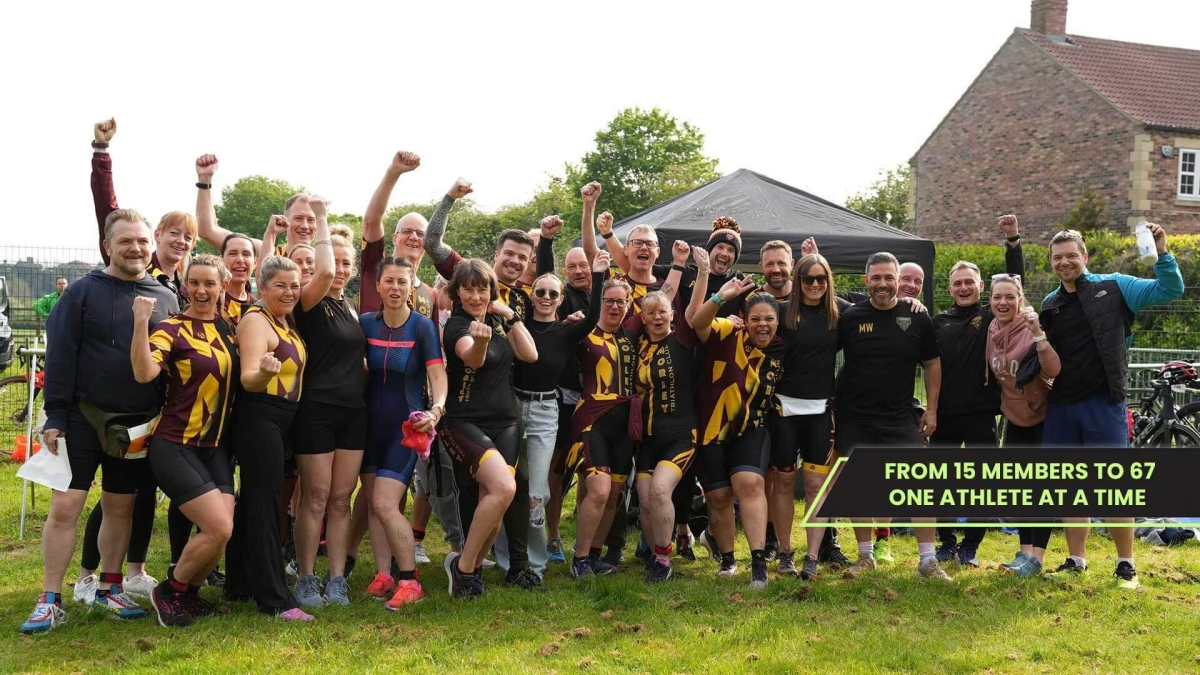
Now approaching his fourth year as chairman and head coach of Morley Triathlon Club in West Yorkshire, Mikey has turned a 15-member group into a 67-strong community. He personally coaches about ten athletes, organizes club sessions across three disciplines, sits on the Yorkshire Triathlon England coaching committee, and is training for Ironman Wales himself.
From Kayaks to Kit: A Military Athlete Finds Triathlon
Mikey joined the British Army at 16. Fitness was always central to military life, but his first sporting love was kayaking. He competed at a decent level in slalom and downriver racing, representing the Army team. His exposure to the water may have helped swimming come more naturally to him when he later moved to triathlon.
When he left the military in 2014 after a long career, the adjustment hit hard. “It was trying to find that sense of belonging again,” he says. The structure, the camaraderie, the shared purpose of service life had shaped him. He needed something to fill the gap.
Triathlon came about almost by accident. His first race was a sprint distance event that went wrong in every possible way. He bought the cheapest wetsuit he could find, a 5mm dive neoprene suit that made breathing almost impossible in open water. His bike leg was ridiculously slow. The whole thing was, by his own account, terrible. He was hooked anyway.
“I just fell in love with it,” he says. “I’ve always been into fitness, especially being in the military and competing in kayaking. Triathlon just sort of landed.”
Building Morley Tri From the Ground Up
Morley Triathlon Club was founded in 2019 by a local running club member. Mikey knew the chairman and started put himself through his coaching qualifications to join as one of the first coaches. Then COVID arrived, the chairman stepped down, and the club lost its swimming pool access.
With about 15 members left and another coach beside him, Mikey put his hand up to help take over the club. He got his Level 2 certification and took over as chair and head coach in 2022, but work was still to be done.
The first priority was finding a pool. Swimming is what brings a triathlon club together, and without it, the group was just runners and occasional cyclists meeting informally. He sourced a leisure center about three miles away that offered affordable lane hire and built the club’s weekly schedule around it.
Then came the investment in people. British Triathlon had introduced a leadership qualification called the Swim Bike Run Leadership Award, a fast, affordable credential for leading group sessions. Mikey funded several club members through the course, creating a squad of run leaders, bike leaders, and swim session leaders who could share the workload.
The result: Morley Tri now has group runs on Monday evenings, a Thursday swim session, and a group ride every two weeks. The club has 67 members, a growing race calendar, and recently sent a group to Mallorca for their first international triathlon.
“Everyone’s doing all sorts now,” Mikey says. “It’s phenomenal to see.”
Coaching Philosophy: Believe First, Plan Second
Mikey describes his coaching approach simply. “I’m a firm believer that if you put your mind to it and you really can do it realistically, then you can achieve it.”
That sounds straightforward. In practice, it means standing by athletes through the moments where belief runs out.
Five of his athletes are racing their first half-distance triathlon this year. One of them has been struggling with serious mental health issues. During a marathon three weeks earlier, she sent Mikey a message mid-race: “Hey, coach, just checking in. I’m struggling here.” He jumped on the phone immediately with a message that got her through. She finished.
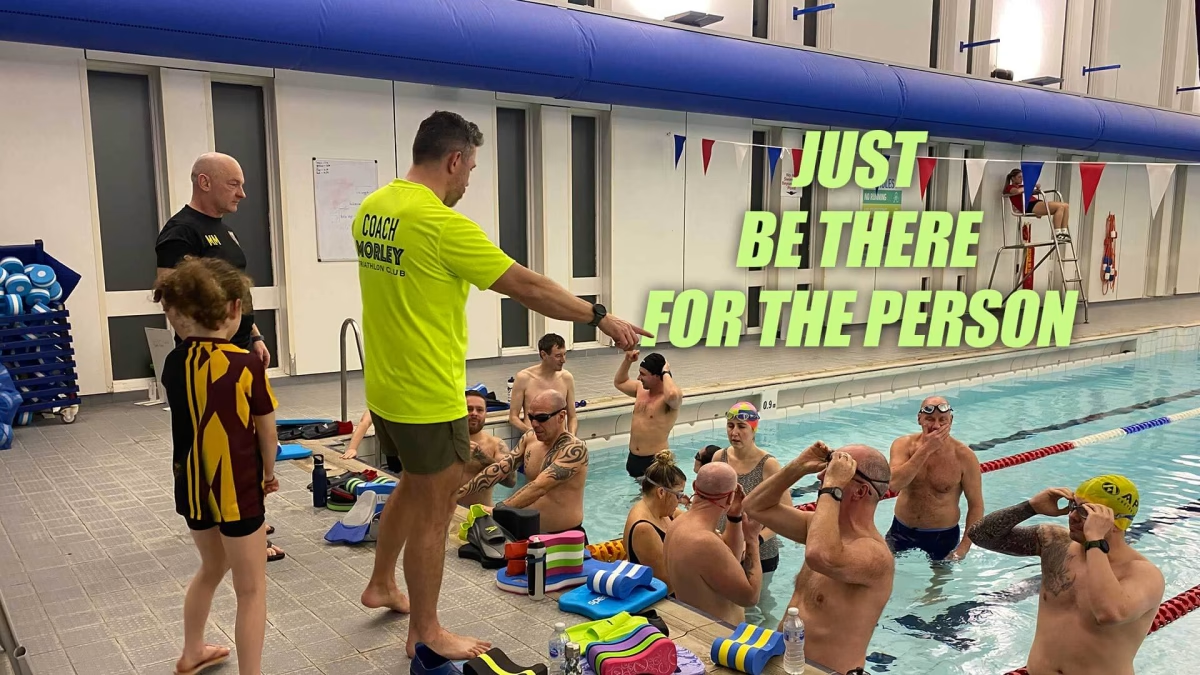
“A lot of people only focus on just the performance side of coaching,” he says. “You just literally need to listen to what they need to do, listen to their requirements, try and get it in there. Sure you look at all the numbers, but also just be there for the person.”
He points to one of his athletes, a club member who couldn’t swim at all in September. Mikey was the first one in the water with him, doing sink-downs in the shallow end, building confidence one session at a time. Months later, he completed a 44-minute open-water swim in Mallorca. “He’s dead chuffed. I’m chuffed for him.”
For Mikey, the coaching relationship is the product. The plans, the periodization, the heart rate zones all matter. However, what separates a coach from an app is the ability to pick someone up when they’re about to quit.
When the Right Coach Finds You
Sometimes coaching starts with timing.
At the 2025 World of Triathlon Expo in London, EndoGusto had a booth. Mikey stopped by. So did Tillie, a young athlete with a lot of enthusiasm and a frustrating recent history. She’d been working with a paid coach, spending serious money, but kept getting injured. The plans weren’t protecting her. Without the experience to manage her own training load, she tried going solo, but found herself overwhelmed by the planning, the structure, and the decisions that pile up when nobody’s watching the bigger picture.
Mikey happened to be there. The introduction was informal, almost offhand. But Tillie’s situation was exactly the kind he responds to: an athlete with real commitment who just needed someone to slow things down, listen, and build a path forward that didn’t break her.
Since working together, Tillie has stayed healthy. No more recurring injuries. No more guesswork. She’s building toward her first triathlon, the T100, in July. For an athlete who’d been burned by one coaching experience and overwhelmed by going it alone, the turnaround has been quiet but real.
“She’s young, really young, she doesn’t know what to expect,” Mikey says. “But she’s hitting all her numbers. She’s nervous, but she’s ready.”
It’s the kind of match that doesn’t happen through a marketplace or an algorithm. It happened because two people were in the same room at the right time, and one of them was the kind of coach who leads with listening.
Growing the Training Team
As chairman and head coach, Mikey hasn’t tried to do everything alone. He’s built what he calls a “training team” including: four senior coaches, four foundation coaches, eight to ten run leaders, and younger members coming through their qualifications.
“I’ve got a young one, Sophie, she’s 21. I’ve got another youngster going through as well. It’s all about the young ones, because that’s how the cycle continues.”
He recently earned his Level 2 coaching qualification, which allows the club to operate at a higher level of accreditation. Other coaches handle specific disciplines and group sessions, while Mikey takes on the one-to-one athlete work.
One surprising thing is he’s not getting paid for his coaching services. “People think it’s ridiculous,” he admits. “But I have a really good job. I’m passionate about being a coach. I don’t feel that at this time I’m in a position to charge.”
Instead, he’s positioning coaching as a club benefit. New members who want a personalized plan and a dedicated coach can donate to the club or pay a small fee that funds the EndoGusto subscription and covers club expenses.
“Suddenly, if somebody joins and says, hey, do you have a coach for us, I can say yes. Here’s Sam. Here’s Phil. Here’s your plan. Let’s go.”
Marauder Endurance: What’s Next
Mikey isn’t standing still. Under a brand called Marauder, he and a business partner are planning a move into the events space with ideas that tie into a broader endurance ecosystem.
“It won’t just be Marauder events,”
he says.
“It’ll be Marauder everything. Endurance coaching, events, the lot.”
He also co-founded the Yorkshire Ability Triathlon, now in its fourth year, a race for disabled children hosted at Leeds Beckett University. About 45 kids turn up each edition. It’s one of the projects he’s most proud of.
Mikey is also still racing. His next target is Ironman Wales, which means fitting 50-meter pool sessions and long rides around his day job as a software delivery project manager, on top of everything he does for the club.
His longer-term goal is to become a high-performance coach, capable of working with athletes chasing qualifying times and competitive age-group finishes. For now, he’s happy coaching the people who show up and say, “I’ve got an Olympic triathlon. Can you help me?”
“Yes, of course I can. I can put a plan together for you.”
For Mikey, the club and the coaching are the same thing. Both are built on the belief that if someone wants to do something badly enough, a good coach just has to show up and believe in them first.
Social media: