70.3 Triathlon Distance: Coaching the Middle Ground

The 70.3 triathlon distance presents one of the most commonly misread formats in endurance sport. On paper, the math is straightforward: a 1.9 km swim, a 90 km bike, and a 21.1 km run. Most coaches and athletes, however, treat the format as either a stretched Olympic race or a scaled-down Ironman. In reality, neither assumption holds up on race day.
Consider, for example, the athlete who averages 220 watts on training rides and decides to hold 210 for the bike leg. That ten-watt cushion feels conservative in the first hour. By kilometer seventy, though, glycogen stores are dropping faster than planned, heart rate is drifting upward, and the half marathon ahead looks very different than it did in T1. The problem is not fitness. Instead, the problem is that 70.3 racing punishes small miscalculations that shorter and longer formats often forgive.
This article breaks down what the 70.3 triathlon distance actually demands from a coaching perspective, and specifically how to structure training, pacing, and fueling so athletes arrive at each discipline transition with enough in reserve to execute the next one well.
Key Takeaways for Coaches
- 70.3 triathlon distance demands sustained sub-threshold execution, not maximal intensity.
- The format requires more volume than Olympic distance, but more precision than full-distance racing.
- Bike pacing is the primary determinant of the run outcome.
- The swim sets a metabolic tone for the bike and cannot be treated as “free speed.”
- Fueling becomes mandatory, not optional, and is less forgiving than in Olympic distance racing.
- Weekly structure must protect run capacity, while progressing bike endurance.
- 70.3 racing rewards pacing intelligence as much as fitness.
What the 70.3 Triathlon Distance Really Demands
The Sub-Threshold Problem
A 70.3 triathlon typically lasts between four and six hours for age-group athletes. That places it in uncomfortable physiological territory. Specifically, the duration is too long to sustain threshold-level output, yet too short to justify the deeply conservative pacing that works at full distance. Athletes must therefore hold a controlled, sub-threshold effort across all three disciplines, and even small lapses in discipline accumulate.
Imagine two cyclists with identical FTPs of 230 watts. Athlete A holds 185 watts for the bike leg. Athlete B, feeling strong, rides at 195. That ten-watt difference barely registers on perceived exertion at kilometer thirty. By the end, however, Athlete B has burned through roughly 15–20% more glycogen and generated meaningfully more muscular fatigue in the quadriceps. When both athletes start the run, Athlete A settles into 5:00/km within the first two kilometers. Athlete B, in contrast, starts at the same pace but drifts to 5:30 by kilometer eight and finishes the half marathon six to eight minutes slower. Ten watts. Ninety kilometers. A gap that didn’t exist on the bike becomes the difference on the run.
Two Stress Profiles in One Race
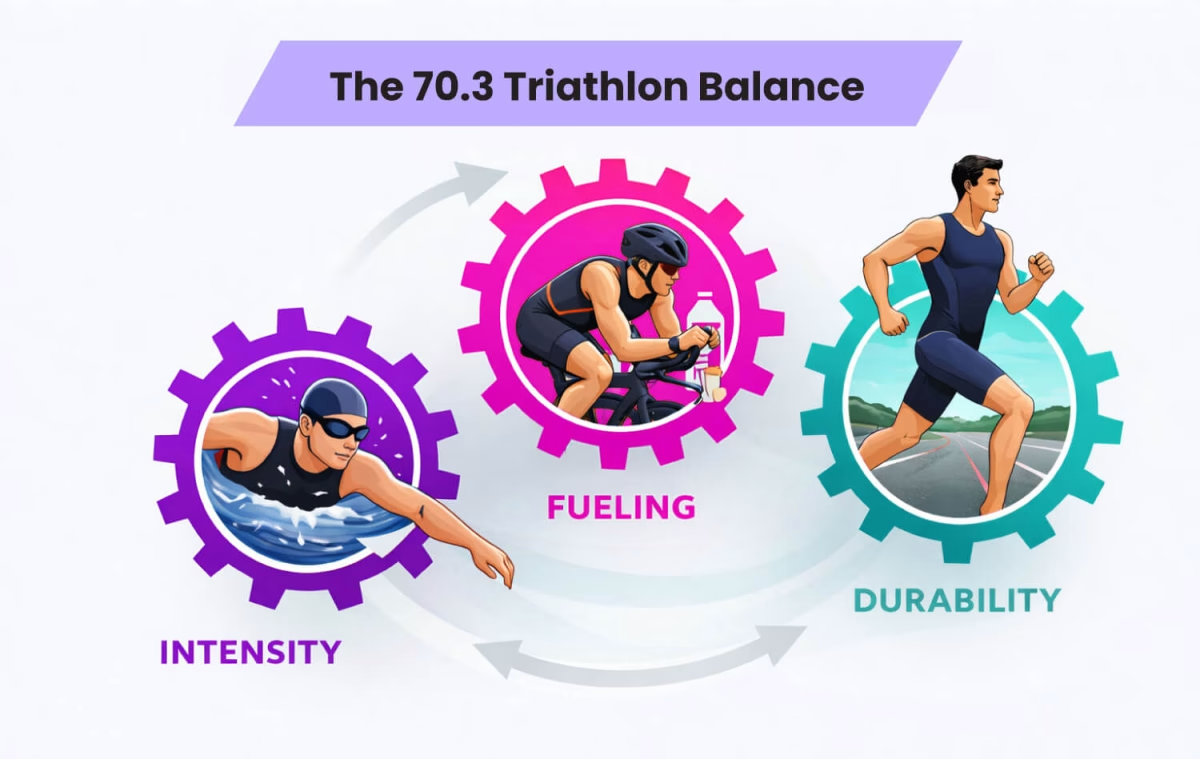
What makes coaching the 70.3 triathlon distance genuinely difficult is that the format blends two stress profiles that rarely coexist. Athletes need the intensity tolerance developed through Olympic-distance training and also the durability built through longer endurance work. Neglect either side and performance suffers in predictable ways. Too much threshold emphasis without sufficient long-ride progression, for instance, leaves athletes fast but fragile. Conversely, too much volume without structured intensity produces durability without race-specific sharpness.
The practical consequence for coaches is that 70.3 preparation cannot simply borrow from either end of the spectrum. Instead, it requires its own logic: progressive long rides with embedded tempo work, threshold sessions that teach sustained output rather than peak intervals, and run training that prioritizes consistency over heroic single efforts. Above all, structure matters more than volume. An athlete logging twelve well-sequenced hours will almost always outperform one logging sixteen hours of unstructured accumulation.
How 70.3 Changes Weekly Training Structure
Volume Is Not the Variable That Changes Most
Moving from Olympic-distance to the 70.3 triathlon distance typically adds two to four hours per week for intermediate athletes, bringing total volume into the ten-to-fourteen-hour range during build phases. Advanced athletes may reach fourteen to sixteen hours. The increase is meaningful but not dramatic. What changes more substantially, however, is how those hours are organized.
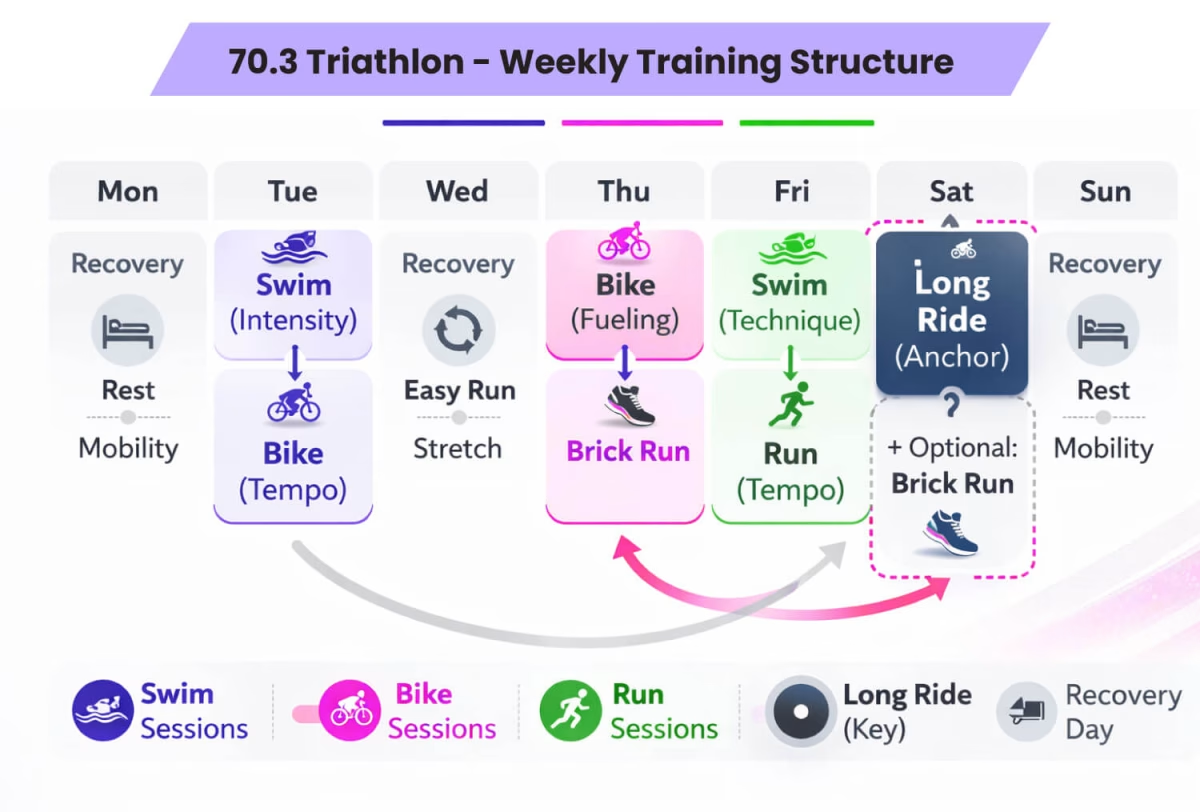
In Olympic-distance training, the week often revolves around key intensity sessions with supporting aerobic work. In half-distance preparation, by contrast, the long ride becomes the structural anchor of the week, and everything else must be arranged to protect its quality. A poorly placed threshold run on Friday, for instance, can compromise a three-hour Saturday ride with tempo blocks, which in turn compromises the Sunday long run. As a result, the sequencing of stress across the week matters as much as the total load.
As explored in Triathlon Periodization: Balancing Three Sports Without Burnout, intelligent sequencing of stress is what protects performance across disciplines.
Building the Long Ride
The long ride progresses through three broad phases. First, early in the training block, rides of 2-2.5 hours at steady aerobic intensity build foundational endurance and allow athletes to practice fueling and position. Then, during the mid-phase, rides extend to 2.5-3.5 hours with structured tempo segments of fifteen to twenty minutes embedded within the aerobic effort. Finally, in the peak phase, rides of 3-4 hours include sustained race-pace blocks where athletes practice holding target power while executing their fueling plan under fatigue.
The purpose of this progression is not simply to extend duration. It is to teach the athlete what sustained, disciplined output feels like when their legs are already tired, their concentration is drifting, and their bottle is half-empty. Coaches should watch for power surges, inconsistent cadence, and skipped fueling windows during these sessions. Those patterns predict race-day problems with remarkable accuracy.
Protecting the Long Run
One of the most common half-distance coaching errors is overextending the long run. Because the race finishes with a half marathon, athletes logically assume they need to run close to 21 km regularly in training. In practice, however, this creates more problems than it solves. Connective tissue, particularly the Achilles tendon, plantar fascia, and IT band, adapts far more slowly than the cardiovascular system. An athlete’s aerobic engine might absorb a 20-kilometer training run without difficulty. Their tendons, on the other hand, might not.
For most athletes, long runs of 75-100 minutes at conversational pace therefore provide sufficient stimulus. Occasional extensions beyond this range are appropriate during peak build weeks, but they should be the exception rather than the weekly standard. Essentially, frequency and consistency matter more than any single long effort. An athlete who runs five times per week for twelve weeks with a longest run of 90 minutes will arrive at the start line with better structural resilience than one who runs three times per week but regularly pushes past two hours.
Intensity Distribution
Half-distance preparation is not purely aerobic work. Structured tempo and threshold sessions remain essential for developing the sustained output that the 70.3 triathlon distance demands. A typical training week might include one bike threshold session (such as 2 x 20 minutes at FTP or 3 x 12 minutes slightly above), one tempo run with twenty minutes at projected half-marathon effort, and swim sessions that include race-pace segments within an aerobic framework. In addition, the long ride itself often contains tempo blocks in the mid- and late-build phases.
The key distinction from Olympic-distance training is that intensity becomes more sustained and less spiked. Instead of short, sharp VO2max intervals, the emphasis shifts toward longer efforts at or just below threshold. Similarly, instead of track repeats at 5K pace, the run sessions target half-marathon effort for extended blocks. This shift in intensity character is subtle but critical. It teaches the neuromuscular system to hold steady output without the surges and recoveries that shorter racing permits.
Sample Weekly Structure for an Intermediate Athlete
| Day | Focus |
| Monday | Recovery swim (technique focus) + mobility work |
| Tuesday | Bike threshold intervals (2×20 min at FTP or 3×12 min slightly above) |
| Wednesday | Aerobic run (60–70 min) with 6–8 strides |
| Thursday | Swim steady-state + tempo run (40–50 min with 20 min at half-marathon effort) |
| Friday | Recovery spin (45–60 min, truly easy) |
| Saturday | Long ride (2.5–3.5 hr with tempo blocks) + short brick run (15–20 min) |
| Sunday | Long aerobic run (75–100 min, conversational pace) |
The defining feature of this structure is not the volume. It is the sequencing. High-quality intensity sessions are protected by recovery days. The long ride anchors the weekend, and the Sunday run follows it deliberately, training the athlete to run on pre-fatigued legs. Each session has a clear purpose, and the recovery sessions are genuinely easy, not moderate efforts masquerading as rest.
The Swim–Bike Relationship in 70.3
How the Swim Sets the Metabolic Tone
In half-distance racing, the swim rarely determines who wins. It frequently, however, determines who loses. A 1.9 km open-water swim is long enough to create real metabolic cost, especially when athletes start aggressively, conditions are rough, or pack dynamics encourage surges. Unlike a sprint-distance swim where an aggressive effort can be absorbed during a short bike, and unlike a full-distance swim where most athletes pace conservatively by necessity, the 70.3 swim sits in a dangerous middle ground where overexertion feels manageable but has downstream consequences.
For instance, an athlete who swims 1.9 km at 160 bpm instead of 150 bpm arrives on the bike with an elevated heart rate, accelerated glycogen depletion, and a nervous system that needs time to settle. As a result, the first ten to fifteen minutes of the bike become a recovery effort rather than a pacing effort. Fueling gets delayed because the athlete is still catching their breath. Target watts feel harder than expected. The athlete may still post a reasonable bike split, but they arrive at T2 carrying a deficit that compounds across the half marathon.
Stabilization, Not Aggression
Well-coached athletes treat the first ten to fifteen minutes of the bike as a stabilization window. Heart rate settles. Breathing normalizes. Then fueling begins. Target power is approached gradually rather than attacked. This is, importantly, a trainable skill, and it should be rehearsed in every swim-to-bike simulation session during the build phase.
For strong swimmers, the temptation to bank time early is particularly acute. Coaches should, however, reframe this instinct. In the 70.3 triathlon distance, a two-minute swim advantage gained at high metabolic cost frequently converts into a five-minute run disadvantage. The math rarely favors aggression. Swim training should therefore emphasize controlled race-pace efforts, even-split execution in open water, and technical efficiency under moderate fatigue rather than peak speed.
Practical Coaching Application
During race simulation sessions, practice swim-to-bike transitions at controlled effort. Include a 10-15 minute stabilization segment before any structured bike intensity. Rehearse early fueling immediately upon mounting. The goal is to make this transition automatic and calm. Reactive, emotional transitions are where races start going wrong, not at kilometer seventy, but at minute one on the bike.
The Bike–Run Relationship in 70.3
Why Overbiking Is the Biggest Risk
If the swim sets the metabolic tone, the bike determines the outcome. In half-distance racing, the relationship between bike pacing and run quality is tighter than in almost any other endurance format. The athlete rides hard enough to feel competitive but long enough for small errors to compound. Specifically, five to ten watts above sustainable output over 90 kilometers increases glycogen depletion, elevates muscular fatigue in the quadriceps and hip flexors, and raises perceived exertion entering T2. None of these effects are dramatic in isolation. Together, however, they reshape the run.
Reading the First Five Kilometers
Coaches can diagnose bike pacing quality by watching the first five kilometers of the run. In a well-paced race, the athlete settles into rhythm quickly. Cadence is stable. Stride length is consistent. Perceived effort matches target pace. When bike pacing was too aggressive, by contrast, those early kilometers tell a different story: cadence drifts downward, stride shortens, and the athlete reports feeling harder effort than the pace should demand. By kilometer ten, consequently, the gap between the well-paced and overpaced athlete often exceeds thirty seconds per kilometer, and it continues to widen.
This is why brick sessions in 70.3 preparation need to focus on quality, not volume. The purpose of a Saturday long ride followed by a fifteen-to-twenty-minute brick run is not to simulate the full race. Rather, it is to teach the athlete what running off fatigued legs feels like, and to practice finding rhythm quickly instead of panicking at the initial heaviness. Effective half-distance bricks accordingly emphasize steady cadence, controlled breathing, and postural awareness rather than pace targets.
Structural Durability Versus Aerobic Fitness
Many athletes possess sufficient aerobic capacity for 70.3 racing. What fails them, in fact, is structural durability. After 2.5-3 hours on the bike, hip stability declines, core engagement fades, and running economy deteriorates. This is not a VO2max problem. It is, rather, a fatigue-resilience problem, and it responds to progressive long-ride exposure, conservative run volume, and consistent strength and mobility work that preserves mechanics under load.
The athlete who runs well in a 70.3 triathlon is rarely the one who rode the hardest. It is almost always the one who arrived at T2 with the most left in reserve. Coaches should therefore emphasize this point repeatedly: the bike is not where the race is won. It is where the race is most easily lost.

Plan Smarter Half-Distance Training
Fueling as a Performance Constraint in 70.3
Why Fueling Becomes Mandatory at This Distance
In sprint and Olympic racing, an athlete can get away with minimal fueling. Endogenous carbohydrate stores, if adequately loaded, carry most athletes through 60-90 minutes of racing without significant depletion. Full-distance racing, on the other hand, has such an obvious fueling requirement that most athletes take it seriously from the start. Half-distance, however, sits in the gap where fueling is absolutely necessary but often treated as optional.
At competitive 70.3 intensity, most athletes require 60-90 grams of carbohydrate per hour on the bike, beginning within the first fifteen to twenty minutes. Athletes who delay fueling, whether because of swim-related nausea, discomfort, or simple forgetfulness, rarely make up the deficit later. As a result, the consequence is not a dramatic bonk. It is a progressive erosion of output: power drops by 3-5% in the final thirty minutes of the bike, perceived exertion rises disproportionately on the run, and the athlete finishes five to ten minutes slower than their fitness would predict.
The Bike as the Primary Fueling Window
The bike leg is where fueling either succeeds or fails. The aerodynamic position is stable, intensity is steady, and the athlete has both hands available to manage bottles and gels. Once the run begins, by contrast, fueling options narrow significantly. Stomach tolerance decreases, mechanical jostling increases, and most athletes can only manage small amounts of carbohydrate and fluid at aid stations.
Coaches should consequently structure long rides during the build phase as full fueling rehearsals. Athletes practice their exact race-day nutrition plan at race-day intensity. They test specific products, practice timing, and learn to eat and drink on schedule even when they do not feel hungry or thirsty. The goal is to make fueling automatic — something the body expects rather than something the mind has to remember.
Gut Training Is Not Optional
Absorbing 60-90 grams of carbohydrate per hour is a trained physiological response. Athletes who attempt this intake level on race day without prior practice frequently experience cramping, bloating, or nausea. Gut training, which involves progressively increasing carbohydrate intake during training rides over several weeks, improves gastric emptying rate and intestinal absorption capacity. Indeed, research from Jeukendrup and colleagues has shown that the gut adapts to carbohydrate feeding during exercise, and that trained athletes can increase absorption rates by 20-30% through consistent practice.
From a coaching perspective, fueling rehearsal should therefore begin at least eight weeks before the target race. Start with 40 grams per hour on long rides and gradually increase by 5-10 grams per week until the athlete can comfortably tolerate their target intake at race intensity. Athletes who skip this process and simply follow a fueling plan from a nutrition guide are essentially gambling with their race.
Common Coaching Mistakes in 70.3 Preparation
The 70.3 triathlon distance exposes subtle coaching errors more clearly than most formats. The race sits between intensity and durability, and applying the wrong philosophy leads to stagnation or inconsistent results.
Training It Like an Extended Olympic
The most frequent error is approaching the 70.3 triathlon distance as Olympic-distance training with more volume. The coach adds longer rides and runs but keeps the intensity structure unchanged: lots of threshold work, VO2max intervals, speed-focused run sessions. The result is an athlete who is fast but fragile. They can hold high output for forty-five minutes but fall apart when the bike extends past two hours and the half marathon follows. Half-distance racing, in short, requires a fundamental shift in intensity character, not just duration.
Treating It Like a Shortened Ironman
The opposite error is equally common. Some coaches default to long-course logic: heavy volume, low intensity, endless aerobic base work. Structured tempo sessions get replaced by more slow miles. The athlete consequently arrives at the start line durable but blunt, capable of finishing but without the race-specific intensity to compete. Half-distance triathlon is still a fast format. An age-group athlete targeting five hours is running close to half-marathon personal-best pace off a 90 kilometer bike. Removing structured intensity from their preparation therefore leaves them unprepared for that demand.
Running Too Long, Too Often
Because the race ends with 21.1 km, coaches sometimes prescribe regular training runs approaching that distance. This typically generates more orthopedic stress than fitness benefit. Accumulated tendon and joint fatigue, for example, compromises bike quality mid-week, increases injury risk, and often forces unplanned rest days that disrupt the training block. Consistent 75-100 minute long runs, supported by strong bike durability, prepare the legs more effectively than infrequent long efforts that leave the athlete recovering for three days afterward.
Ignoring How the Swim Shapes the Bike
Some athletes and coaches treat the swim as an isolated discipline. They focus on swim-specific fitness without considering how swim execution affects the rest of the race. An aggressive swim start that elevates heart rate and delays stabilization on the bike has consequences that extend all the way to the run. In half-distance racing, consequently, discipline transitions matter as much as discipline fitness. Training should rehearse controlled swim-to-bike transitions, not just fast swimming.
Accumulating Grey-Zone Volume
Half-distance training has a particular tendency to drift toward moderate intensity. Sessions that should be easy become moderate. Sessions that should be hard become moderately hard. As a result, the athlete spends most of their training week in a zone that is neither easy enough to promote recovery nor hard enough to drive adaptation. Over time, this gray-zone accumulation produces stagnation rather than progression. Coaches should therefore audit training data regularly, looking for the telltale pattern of sessions clustering around 70-80% of threshold. Clear separation between easy and hard protects both durability and performance.
Why 70.3 Is a Standalone Performance Format
It Tests Integrated Execution
Half-distance racing is long enough to require metabolic discipline, short enough to demand competitive intensity, and technical enough to punish small execution errors. No single quality, whether aerobic capacity, muscular durability, or fueling consistency, is sufficient on its own. The 70.3 triathlon format, rather, tests how well an athlete integrates all of them under fatigue. An athlete with a strong bike and poor fueling will fade on the run. Similarly, an athlete with excellent run fitness who overswims will never reach their potential off the bike. The format rewards completeness above all else.
Restraint Outperforms Aggression
Race-day data from half-distance events consistently shows that negative or even splits predict better overall times than positive splits. Athletes who hold back slightly on the bike and maintain consistent effort on the run outperform those who ride aggressively and then lose time progressively through the second half of the half marathon. This pattern, importantly, holds across ability levels, from front-of-pack competitors to mid-pack age groupers.
Preparing athletes for this reality requires more than just fitness development. It also requires training emotional discipline. Athletes must learn to tolerate feeling slightly underspeed on the bike, to trust the process when other competitors surge past in the early kilometers, and to execute their fueling plan regardless of how easy the effort feels. Coaches who build this psychological resilience alongside physiological fitness consequently produce athletes capable of consistent performances rather than occasional breakthroughs followed by disappointing collapses.
A Format That Deserves Its Own Preparation
When 70.3 events are treated purely as preparation for full-distance racing, pacing discipline is often neglected, race-specific intensity goes underdeveloped, and competitive execution suffers. Half-distance triathlon is not half of something else. It is, instead, a complete performance format with its own physiological demands, its own pacing logic, and its own training requirements. Coaches who recognize this distinction and build dedicated 70.3 triathlon preparation blocks, rather than treating them as mid-season tune-ups, consistently produce better outcomes.
Final Coaching Perspective
The most successful half-distance athletes are rarely the most aggressive. They are even-paced, fueling-consistent, mechanically efficient, psychologically disciplined.
Preparing athletes for the 70.3 triathlon distance is not about maximizing training load. It is about sequencing stress, preserving durability, and refining execution. When approached with this level of deliberation, half-distance racing becomes a genuine test of coaching quality, not just accumulated fitness.
Applying 70.3 Triathlon Distance Training in Practice
Designing effective 70.3 preparation requires more than session selection. It requires visibility across three disciplines, awareness of how fatigue accumulates across the week, and clarity around pacing and fueling progression as race day approaches.
As long rides extend and tempo work increases, coaches must track bike load progression, run durability trends, discipline balance, and accumulated fatigue before key sessions. Managing these variables manually grows complex quickly—especially when working with multiple athletes at different stages.
EndoGusto supports this process. It provides a structured environment to plan, monitor, and adjust swim, bike, and run load within one integrated system. By visualizing discipline-specific stress over time, coaches can make decisions that protect performance and prevent unnecessary fatigue accumulation.
Half-distance racing rewards precision. Coaching should be equally precise.